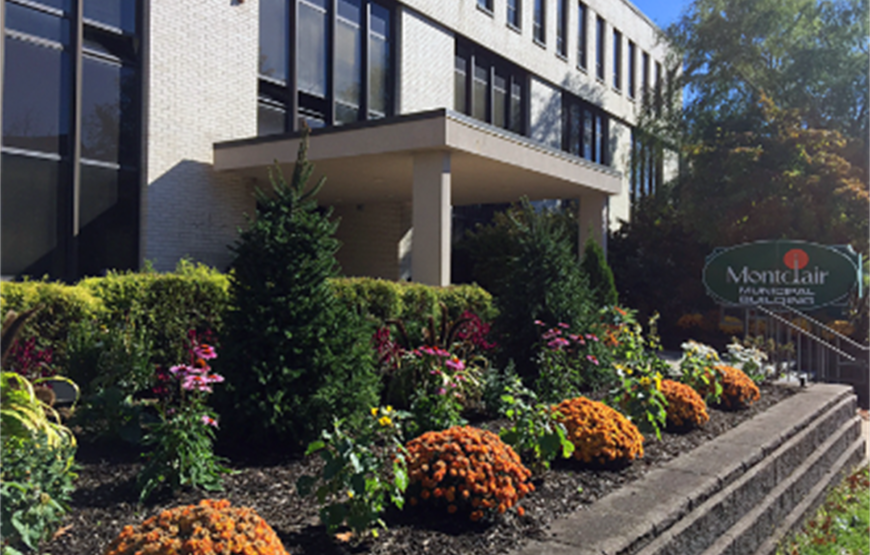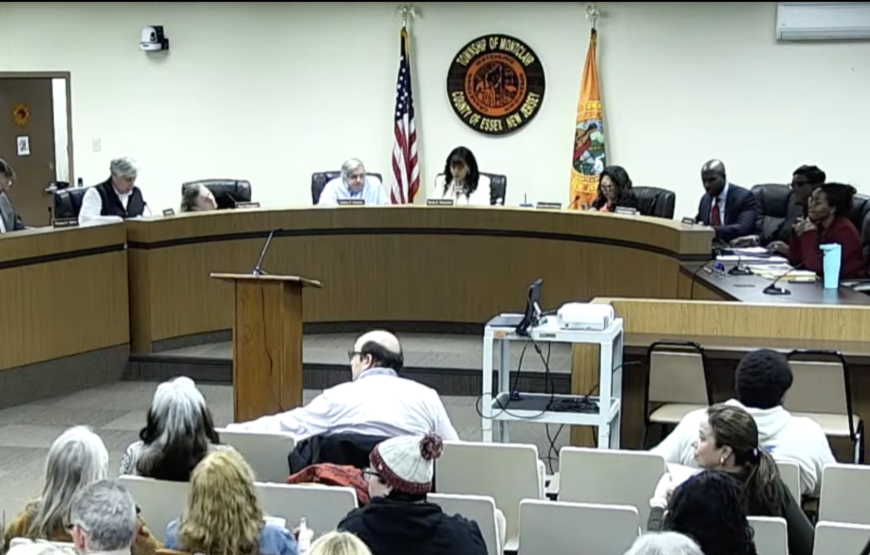
Every November, Montclair’s department heads go before the township manager and make their case for next year’s money. Over two public sessions, on Nov. 2 and Nov. 9, 2026, 17 departments and units laid out what the 2027 municipal budget would need to cover: more firefighters, a short-staffed health department, a failing municipal building, a townwide property revaluation and health insurance costs that keep climbing. Here is what each one asked for, organized so you can see the big picture or go straight to the department you care about.
- The hearings
- Monday, Nov. 2, and Monday, Nov. 9, 2026, at Town Hall, about six hours in all. State law requires department heads to present their requests to the manager at a public meeting in November.
- Who listened
- Township Manager Stephen Marks, CFO Peter George and human resources director Alisha Dawkins, joined on Nov. 9 by Mayor Renée Baskerville, with council members asking questions.
- What’s driving costs
- Health insurance is up about 14%, roughly $1.7 million, and the police and fire pension bill is up almost $1.1 million. A family health plan now costs the township about $77,000 a year.
- What happens next
- Marks turns the requests into a proposed budget. The council typically introduces it in late March or early April, followed by a public hearing and a vote.
Our reporting on each session: Montclair Budget Hearings Begin (Nov. 2) and More Firefighters, Fewer Nurses, Higher Ice Rates Floated (Nov. 9).
The big themes in Montclair’s 2027 budget requests
Six threads ran through both hearings. Each one shows up in more than one department.
Benefits are eating the budget
Pensions are a state bill the town can’t negotiate, and health benefits are locked into union contracts. “Last year was 36 and a half, so I’ll take a 14,” George said of the health insurance increase. Finance
Full-time jobs turning part-time
Marks said every departure now gets a full-time or part-time review, because part-timers working up to 28 hours a week get no health plan or pension. Health, the court, Law and Parking all lean on part-timers. Manager’s office
205 Claremont is falling apart
A roof estimated at about $700,000, a curtain wall pulling away from a floor plate and an elevator that leaks can knock out for weeks, in the same building at the center of the PSE&G substation fight. Manager’s office
Public safety staffing
Police have six fewer officers than in January and expect eight more retirements. Fire wants to grow from 70 to 77 firefighters and reopen Station 3. Police and Fire
Every home gets a new value
Inspectors start knocking in late January 2027 for a townwide revaluation that resets every assessment for the 2028 tax year. It reshuffles who pays what; it doesn’t raise the total. Tax assessor
Fees and outside money
Higher ice rates at Clary Anderson Arena, non-resident pool badges, older adoption and inspection fees up for review, and grants paying for parks, a water well and safer school crossings. Compare by issue
Every department at a glance
Each card links to a full rundown with key points, background and what we’re watching.
Nov. 2
Public Works, water and sewer
A $3 million road program, two park grants to match and no new garbage trucks.
read the full rundownNov. 2
Planning and Community Development
A flat $692,854 budget, a shelved police station plan and a push to buy 16 Miller St.
read the full rundownNov. 2
Complete Streets
In-house engineers, safer crossings at the high school and data showing Maple Avenue slowed down.
read the full rundownNov. 2
Finance and debt
Health insurance and pensions push costs up while township debt payments fall.
read the full rundownNov. 2
Tax assessor and the revaluation
Every property reinspected in 2027, new values for 2028.
read the full rundownNov. 2
Police
A $22.2 million request, rising overtime and a $2.36 million plan to move 911 dispatch.
read the full rundownNov. 2
Municipal Court
A smaller budget, fewer staff and climbing interpreter bills.
read the full rundownNov. 2
Law Department
A new township attorney who wants to bring more legal work in-house.
read the full rundownNov. 9
Parking utility
About $800,000 in capital for vehicles, faded garage striping and new security cameras.
read the full rundownNov. 9
Clary Anderson Arena
A first season under township control, a projected profit and higher ice rates.
read the full rundownNov. 9
Recreation and Cultural Affairs
500 out-of-town pool families and a George Washington Field deal up for renewal.
read the full rundownNov. 9
Code Enforcement
A flat budget, vacant homes, leaf blower summonses and lead inspections.
read the full rundownNov. 9
Manager’s office and Housing Services
The 205 Claremont repairs, the part-time shift and a new housing department.
read the full rundownNov. 9
Information Technology
$1.8 million in capital, led by a separate police network.
read the full rundownNov. 9
Health and Human Services
A nurse shortage, cut senior hours and fewer children coming in for vaccines.
read the full rundownNov. 9
Sustainability
A grant-funded office and hard questions about 399 Orange Road.
read the full rundown
Compare by issue
Pick an issue to see what every department said about it, side by side.
Staffing
Who is short, who wants more people and who is turning to part-timers.
Manager’s office
Every departure now gets a full-time or part-time review. A family health plan can cost more than the salary, and civilian pensions add 17.5% of pay.
full rundownFire
Wants 77 firefighters, up from 70, which the chief says would cut overtime by about $400,000.
full rundownPolice
Six fewer officers than in January, at least eight more retirements expected and $1.6 million in overtime.
full rundownHealth and Human Services
Lost full-time nurses and senior staff; part-time nurses are hard to find, and vaccines need two nurses in the room.
“Definitely not sufficient.”
full rundownInformation Technology
Wants two new positions so the network and servers don’t depend on one person.
full rundownMunicipal Court and Law
The court’s salaries fell about 7% from vacancies and it wants two part-timers. Law plans a part-time assistant attorney, cheaper on pension and insurance.
full rundownParking utility
Eight of its 11 enforcement officers are part-time, and four new part-timers are in training.
full rundownComplete Streets
Wants about $200,000 more to hire its own engineers and planners instead of borrowing them from Public Works.
full rundown
Health insurance and pensions
The two costs the township has the least control over, and how they ripple through departments.
Finance
Health insurance up about 14%, roughly $1.7 million. Police and fire pensions up almost $1.1 million, to $8,866,236; civilian pensions to $2,285,521.
“Last year was 36 and a half, so I’ll take a 14.”
full rundownManager’s office
Union raises of about 3%, plus health and pension increases, make it hard to stay under the 2% cap on the tax levy.
full rundownWater utility
Operating budget up about 14.6%, driven by health insurance. Utilities pay their own benefit costs from water and sewer bills.
full rundownLaw Department
Its new assistant attorney would be part-time partly to avoid pension and insurance costs.
full rundown
Buildings
Aging township buildings showed up in almost every capital request.
205 Claremont
Roof estimated at about $700,000, a curtain wall separating in the northwest corner, single-pane windows and an elevator shaft that floods in heavy rain.
full rundownPolice headquarters
$2.36 million to move 911 dispatch inside and $850,000 in repairs from Public Works, while a plan to redevelop the site was shelved.
full rundownFirehouses
$900,000 to finish reopening Station 3; headquarters and Station 2 are more than 100 years old.
full rundownClary Anderson Arena
A roof that still leaks after repairs, plus a new ice resurfacer and dehumidification to stop fog on the ice.
full rundownAnimal shelter and Edgemont
A shelter roof over 20 years old (about $55,000) and leaking windows at the Edgemont senior space.
full rundownParking garages
Faded striping, even at the new Midtown garage, and analog cameras to replace one garage a year.
full rundown
Fees and revenue
Where departments see room to charge more, and where they say they shouldn’t.
Clary Anderson Arena
Ice is $525 an hour at prime time; Montclair State charges over $700. Gradual increases recommended, pending council approval.
full rundownRecreation
About 500 non-resident families paid $500 for pool badges, double the $250 resident rate.
full rundownHealth
Pet adoption fees, about $150, haven’t changed in at least 10 years; a fee ordinance for senior programs is in the works.
full rundownCode Enforcement
Vacant property fees and registrations brought in $62,117 this year.
full rundownMunicipal Court
The judge pushed back on calling the court a revenue source.
“It’s about justice, not revenue.”
full rundownParking utility
Operating costs fell because some credit card fees now fall on customers.
full rundown
Grants
Outside money helps, but most grants are reimbursements, so the township pays up front.
Parks and water
Green Acres grants for Canterbury Park ($1.5 million) and Mountainside Park ($1.4 million); a $2 million federal grant for treatment at Rand Well, aiming to bid by June 2027.
full rundownComplete Streets
Safe Routes to School work near the high school, estimated under $1.4 million, plus federal Safe Streets for All demonstration projects.
full rundownSustainability
$1 million for urban forestry, $327,000 for water quality at 399 Orange Road and $241,000 for food waste reduction, among others.
full rundownFire
A $200,000 state grant toward Station 3, which still needs $900,000 more.
full rundownManager’s office
Grants cover roads and parks but not routine maintenance, which is why 205 Claremont falls on taxpayers.
full rundown
Safety and technology
New tools for emergencies, traffic and the township’s networks.
Police
Axon 911 would let callers send live video and photos, with real-time translation, for $560,000. A “drone first responder” is on the wish list.
full rundownInformation Technology
$832,000 to separate the police network under federal rules and $65,000 for 911 dispatch’s own internet line.
full rundownComplete Streets
Speed humps on Maple Avenue cut average speeds by 4 mph. A traffic signal costs $500,000 to over $1 million; a stop sign, “a couple hundred bucks.”
full rundownParking utility
New cameras at Midtown first, for hit cars, graffiti and things thrown off the deck, not payment tracking.
full rundownFire
A CERT-style auxiliary program for volunteers and PFAS-free turnout gear on a 10-year replacement schedule.
full rundown
What happens next with the 2027 budget and the revaluation
Dates officials gave at the hearings. Some are targets and may move.
- Nov. 2 and Nov. 9, 2026Department budget hearings.
- Nov. 24, 2026Public Works said a stricter ordinance limiting utility cuts into newly paved roads is planned for this date.
- Dec. 7, 2026The state is due to return Montclair’s updated tax maps after a first review.
- Late January 2027Revaluation inspectors start knocking on doors.
- Late March or early April 2027The council typically introduces the municipal budget, followed by a public hearing and adoption.
- June 2027Target to put Rand Well treatment out to bid.
- Oct. 1, 2027Valuation date for the revaluation.
- Late December 2027 or early January 2028Letters with each property’s new assessment go out.
- May 1, 2028Deadline to appeal a new assessment to the county tax board or state Tax Court.
Department by department
Each rundown draws on the hearing video and public records. Dollar figures are department requests, not final budget numbers. Quotes are lightly edited to remove verbal filler.
Public Works, water and sewer
Public Works is holding most lines flat and skipping new garbage trucks, while asking for about $3 million in road paving. The water and sewer utilities face rising costs they can’t yet price.
- Presented by
- Michael Primavera, acting public works director and water and sewer utility director
- Hearing
- Nov. 2, 2026
- Headline asks
- About $3 million for roads; matching money for two park grants; $850,000 for police headquarters repairs
Key points
- Mostly flat. Salaries total about $5.78 million, with raises set by union contracts. Roads, traffic and storm crews merged into one division, and Shade Tree joined parks as Parks and Forestry. The motor pool is up about 6% because parts cost more, and county dump fees rise $2 a ton.
- Roads. About $3 million, including $1 million to finish Upper Mountain Avenue between Bellevue and Bloomfield avenues with a roughly $400,000 state grant. The rest goes to the worst-rated roads and streets PSE&G has dug up.
- Utility cuts. The biggest resident complaint is fresh pavement torn up by utilities. Woodland and Littledale are slated for 2027 paving after water main work.
- Parks. A $1.5 million Green Acres grant for Canterbury Park requires $3 million in capital, half reimbursed by the state. Mountainside Park has a $1.4 million grant, with $1.45 million already set aside.
- Trucks and trees. No new garbage trucks this year because the budget is tight, though a late-1990s appliance truck needs replacing. Money for tree removal and replanting for an “aging canopy.”
- Water. Salaries $1.5 million; operating up about 14.6%, driven by health insurance. Montclair buys about 95% of its water and budgeted a 6% increase from its regional supplier, which hasn’t set its rate. Capital includes water mains, lead service lines and more water meters.
- Sewer. Budgeted 3.6% for the regional treatment authority, whose number comes in mid-December. Groundwater seeping into old pipes during storms means Montclair pays to treat water that isn’t sewage.
Background
- Primavera has been acting public works director since September while the township searches for a permanent director.
- Rand Well had “unacceptably high” PFOS and perchlorate levels when then-Rep. Mikie Sherrill secured $2 million in federal money in 2022. Four years later, the treatment project hasn’t gone out to bid.
What we’re watching
- What the new road-opening ordinance will require of utilities.
- Why Rand Well treatment has taken four years to reach bidding.
Planning and Community Development
A flat budget, but two items tie into bigger stories: a shelved plan for the police station site and an effort to buy land for affordable housing.
- Presented by
- Janice Talley, director of planning and community development
- Hearing
- Nov. 2, 2026
- Request
- $692,854, flat
Key points
- Staff. About $400,000 for four positions; two more staffers are grant-funded. Advertising was cut because legal notices no longer have to run in local papers.
- The police station plan. A 2026 redevelopment plan for the police station “got pulled” because “everything’s in the air.” Instead the department finished a plan for the municipal complex, Montclair Center Gateway Phase 2, which covers 205 Claremont, the site of the substation proposal.
- Affordable housing. Scattered-site plans are on hold while the township tries to buy 16 Miller St., next to the township-owned 14 Miller St.
- Master plan. The reexamination report wraps up this year and will set planning priorities for about 10 years.
- Who pays for reviews. Developers’ escrow deposits pay consultants to review their applications, not taxpayers.
- Housing Commission. It has 17 seats, which the director and the mayor want to make “more manageable.”
Background
- The township lists Gateway Phase 2 as a designated redevelopment area. The last master plan was adopted in 2016.
What we’re watching
- Whether moving the police department is still under discussion.
- The status of the 16 Miller St. purchase.
Complete Streets
The newest department wants its own engineers and a capital budget built around grants, and it brought data to make the case.
- Presented by
- Jacob Nieman, Complete Streets director
- Hearing
- Nov. 2, 2026
- Request
- Operating about $425,000, up about $200,000; capital $2.7 million
Key points
- Mission. To “eliminate serious injuries and fatalities on Montclair streets.”
- In-house staff. The extra operating money would let the department hire engineers and planners directly instead of going through Public Works.
- It worked on Maple Avenue. Speed humps, painted narrowing and delineators near Glenfield School cut average speeds by 4 mph; most drivers now go under 21 mph.
- Safer walks to the high school. A Safe Routes to School project would add a raised intersection at Midland and Chestnut, a pedestrian signal at the Park Street midblock crossing and bollards at Park and Chestnut. Estimated under $1.4 million, mostly federal money, with the state covering the match.
- Demonstration projects. A temporary Park Street bike lane, a narrowed intersection with street art at Cedar and High by Nishuane School and paper-plane art at North Fullerton and Claremont outside Town Hall. Traffic counts and a resident survey are measuring them.
- What things cost. A complex traffic signal runs over $1 million, a simple one $500,000 to $600,000, a set of speed humps about $20,000 and a stop sign “a couple hundred bucks.” With 87 miles of road, “the resources are not there” to answer every request.
Background
- Montclair adopted New Jersey’s first Complete Streets policy in 2009 but built few complete streets in the years after. A 2025 ordinance created the department and a public oversight board. Read our interview with Nieman on making streets safer.
What we’re watching
- What the demonstration counts and survey show, and when the local safety action plan reaches the council.
- When the Midland and Chestnut work gets built.
Finance and debt
Health insurance and police and fire pensions are pushing the 2027 budget up, and the township has little say over either. Debt payments, by contrast, are down.
- Presented by
- Peter George, chief financial officer
- Hearing
- Nov. 2, 2026
- Department request
- Salaries about $570,933; no capital
Key points
- The big line. Almost $45 million covers all debt service plus pensions and health insurance.
- Health insurance. Up about 14%, roughly $1.7 million. A family plan now costs about $77,000 a year, up from about $65,000; a single plan $25,000 to $30,000.
- Pensions. The police and fire contribution rises almost $1.1 million, to $8,866,236; the civilian contribution rises about $58,000, to $2,285,521. Pensions are a state bill the town can’t negotiate.
- Debt. Township debt service falls about $1.7 million, to $6,876,862.50. School debt the township issues for the district is about $7.98 million.
- Short-term borrowing. A $6.3 million tax anticipation note, short-term borrowing against taxes not yet collected, is due April 29, 2027.
- Utilities pay their own way. These figures cover the general fund only; water, sewer and parking pay their own pension and health costs.
Background
- Montclair left the State Health Benefits Plan, whose costs rose 36.9% for 2026. Group insurance was still the largest increase in the 2026 budget, which carried a 2.5% township tax increase.
What we’re watching
- Why the township needed a $6.3 million tax anticipation note this year.
- What the health and pension increases will mean for the average 2027 tax bill.
Tax assessor and the 2028 revaluation
Every property in Montclair will be reinspected in 2027 and reassessed at market value for the 2028 tax year. The total levy doesn’t grow because of it; each owner’s share does change.
- Presented by
- The township tax assessor
- Hearing
- Nov. 2, 2026
- Request
- $680,712, plus a $30,000 vehicle; the revaluation is funded separately
Key points
- Who ordered it. The Essex County Board of Taxation. The valuation date is Oct. 1, 2027, and the assessor said Montclair is on schedule.
- Who’s coming. The same firm that did the 2018 revaluation, with about eight residential and two commercial inspectors for more than 10,000 homes. Inspectors will wear clothing reading “Professional Property Appraisers” and carry municipal IDs.
- How visits work. No appointments at first: inspectors knock, leave a note and try three times. If no one lets them in, the interior is estimated “to its highest reasonable potential,” so owners can still call to schedule a visit.
- Zero-sum. The tax rate is the total levy divided by total taxable value, so as values rise the rate falls. The goal is to fix uneven assessments.
- Letters and appeals. New assessments arrive in late December 2027 or early January 2028, with an informal review with the firm first and a formal appeal deadline of May 1, 2028.
Background
- State rules treat an assessment-to-market ratio of 85% or lower as out of compliance. Montclair’s had fallen to 61.60% by 2023. The council approved $2 million for the revaluation in November 2025. We walked through it on the podcast in What Your House Is Worth.
What we’re watching
- Which neighborhoods have appreciated fastest since 2018, since those owners are likeliest to see higher bills.
- Whether the township will publish a calculator or sample impact letters before values go out.
Police
Short officers and expecting to lose more, the department’s biggest jump is overtime. Its top capital priority is moving 911 dispatch into police headquarters.
- Presented by
- Chief Todd Conforti, Deputy Chief Wilhelm Young and Capt. Dean Berardi
- Hearing
- Nov. 2, 2026
- Request
- About $22.2 million; capital about $3.25 million
Key points
- Overtime. $1.6 million. The department has six fewer officers than at the start of the year, expects at least eight more retirements and has two officers going on military leave.
- Dispatch. $2,357,000 to move dispatch from fire headquarters to police headquarters. Dispatchers now have no supervisor on site, and the chief described a recent dangerous call handled without one. No new staff would be needed.
- Axon 911. Callers could send live video and photos, with real-time translation and call summaries for officers: $560,000 up front or spread over five years.
- Cars. Leasing has replaced buying: 21 leased cars by next year and a goal of 30 by 2028, each replaced every three years.
- Wish list. A “drone first responder” launched from the headquarters roof to reach scenes first, and rifle-rated vests for the tactical team. The department already has two drones and five FAA-licensed officers.
Background
- Police headquarters is at 647 Bloomfield Ave. Public Works wants $850,000 for repairs there, and a plan to redevelop the site was shelved this year.
What we’re watching
- How many sworn officers Montclair has now, compared with its authorized strength.
- Whether video calls and drones would come with a public use policy.
Municipal Court
The court is cutting its budget while interpreter costs climb.
- Presented by
- Judge Joseph C. Angelo and court administrator Constance Newton
- Hearing
- Nov. 2, 2026
- Request
- Salaries down about 7%; operating down from about $72,000
Key points
- Staffing. A staff of eight handles traffic, parking, quasi-criminal and code cases. Salaries fell because of vacancies; the court is asking for two part-timers.
- Interpreters. Phone interpretation is the largest increase, now used at the violations window as well as in court. Anyone who says they’re more comfortable in another language gets an interpreter, with “absolutely no discretion,” the judge said.
- Postage. Cut from $25,000 to $15,000 because the state judiciary now sends most notices.
- Not a revenue source. “It’s about justice, not revenue,” Angelo said.
Background
- In 2024 the state judiciary settled a Justice Department investigation by agreeing to strengthen interpreter services.
What we’re watching
- Which languages are driving interpreter costs.
Law Department
Montclair’s first permanent township attorney in about five years wants to handle more cases in-house.
- Presented by
- Chantal M. Borroum, township attorney and law director
- Hearing
- Nov. 2, 2026
- Request
- Salaries $484,210; professional services $593,500
Key points
- Salaries rise on paper. The interim attorney had been paid as a contractor. The line also covers the prosecutor’s office and a planned part-time assistant attorney.
- Lawsuits. The township won the challenges to its gas leaf blower ban and the Lackawanna Plaza redevelopment plan, Borroum said, though appeals were pending. The state’s joint insurance fund handles money-damage claims; she wants cases like the leaf blower suit handled in-house.
- Not for residents. The office can’t give residents legal advice and refers them to legal directories or Essex County Legal Services.
Background
- Borroum, a former Newark city attorney, was sworn in Aug. 11, 2026, ending nearly five years of interim leadership. A federal court dismissed the landscapers’ remaining claim against the leaf blower ban in June 2026.
What we’re watching
- How much the township has spent on outside counsel for the leaf blower and Lackawanna Plaza cases.
Parking utility
Paid for by meters and permits rather than property taxes, the utility wants about $800,000 in capital for aging vehicles, faded garage striping and new cameras.
- Presented by
- Emanuel “Manny” Germano, parking utility superintendent
- Hearing
- Nov. 9, 2026
- Request
- About $3.6 million; capital about $800,000
Key points
- Budget. Salaries $906,580 with a 3% raise; operating about $2.7 million, down because some credit card fees now fall on customers.
- Lots and garages. 29 surface lots, eight of them for commuters. Six badly damaged lots have been repaved and eight remain, three of them urgent. Striping in the four garages has faded, even at the new Midtown garage.
- Cameras. Garage cameras are old analog systems. Replacing all of them would cost about $780,000, so the plan is one garage a year, starting with Midtown, which has four or five cameras and none on its upper levels. Germano said they’re for safety, not payment tracking.
- Overnight enforcement. Parking took it over from police, covering 2 to 5 a.m. Asked whether 11 officers is enough, Germano said to ask again in four to six months.
- EV charging. More residents are asking for stations; grants for some are in the works.
What we’re watching
- How many tickets overnight enforcement has written since parking took it over.
Clary Anderson Arena
In its first season under township control, the rink projects a modest profit for 2027 and wants to raise ice rates.
- Presented by
- Kevin McCormack, president of Emerald Sport Management, the township’s arena consultant
- Hearing
- Nov. 9, 2026
- 2027 projection
- About $923,000 in revenue and $68,000 in operating profit
Key points
- Self-funding. Like parking, water and sewer, the arena “must be” self-liquidating, Marks said.
- First-season revenue. $369,000 from mid-August to Oct. 31, mostly ice rental. McCormack expects $550,000 to $600,000 by year’s end. Birthday parties have been popular.
- Rates. Ice is $525 an hour at prime time and $325 off-peak; the rink at Montclair State charges over $700. He recommends gradual increases, which need council approval.
- First electric bill. About $15,000 a month, plus repayments to PSE&G for new LED lighting.
- Wish list. A new ice resurfacer, dehumidification to stop fog on the ice, a new roof and, in a few years, a new ice slab and dasher boards.
Background
- The township created a municipal utility to run the rink in July 2025, with immediate repairs estimated at $1 million.
What we’re watching
- How a rate increase would affect Montclair High School and youth hockey.
- Whether the profit projection accounts for the township-funded repairs.
Recreation and Cultural Affairs
A flat budget, with the news in the Q&A: out-of-town families at the pools and a shared field that needs new turf.
- Presented by
- Garland Thornton, director, and Megan Ginter, activities coordinator
- Hearing
- Nov. 9, 2026
- Request
- About $1.17 million; capital limited to two ADA pool lifts
Key points
- Pools. After the state’s Green Acres program required Montclair to admit non-residents, about 500 out-of-town families joined, paying $500 to residents’ $250, with no capacity problems. Thornton expects that number could double.
- Programs. Montclair still runs all its own programs, with about 6,000 participants a year including pools. Girls flag football and adult kickball are being tested.
- George Washington Field. Shared with Glen Ridge under a policy tied to the fire services contract, which has expired or expires this month. Glen Ridge wants to renew, and the turf may need a six-figure replacement within two years.
- Fourth of July. The township puts about $40,000 into the parade, and a volunteer committee raises the rest.
Background
- Non-resident pool passes went on sale in June 2026 under a new township ordinance. Glen Ridge’s 10-year contract covered both fire service and the field; in 2022 the borough sought bids from Montclair and Bloomfield.
What we’re watching
- What the turf will cost and who pays if the Glen Ridge agreement lapses.
Fire
The department’s request assumes seven more firefighters, which the chief says would pay for itself in lower overtime, and $900,000 to reopen Station 3.
- Presented by
- Chief Robert Duncan and Deputy Chief Kevin Stoute
- Hearing
- Nov. 9, 2026
- Request
- About $12.74 million; capital about $1.08 million
Key points
- 77 firefighters. Up from 70, following one of the options in last year’s outside study. Going to 77 would cut overtime by about $400,000, Duncan said. Overtime is budgeted at $1.322 million.
- Station 3. A $200,000 state grant is in hand, and the department wants $900,000 more to finish renovations. Duncan said reopening would improve response times in its district by about two minutes.
- Gear. $55,000 for PFAS-free turnout gear on a 10-year replacement schedule; a set costs about $5,000.
- A fuel truck. A replacement pickup with a diesel tank to refuel generators at Town Hall, fire and police headquarters and the water tower, and engines at long fires.
- Volunteers. An auxiliary program will follow the national CERT volunteer model, Stoute said.
Background
- The township lowered daily minimum staffing from 16 to 14 in March 2026, citing health care costs. Station 3, which serves the South End, closed for repairs in July 2023.
What we’re watching
- Whether Station 3 would need more firefighters to staff it.
- When the auxiliary program launches and how residents can join.
Code Enforcement
Now a division of the fire department, code enforcement is holding its budget flat for a fifth year.
- Presented by
- Carmine Davino Jr., code enforcement operations supervisor
- Hearing
- Nov. 9, 2026
- Request
- $654,660; no capital
Key points
- Staff. Seven inspectors, one full-time and six part-time, with two working nights and weekends.
- Vacant homes. About 52 vacant and 30 foreclosed properties, inspected at least monthly. Snow removal and cleanups there are charged back to owners as liens.
- Leaf blowers. The gas leaf blower ban goes straight to a summons, with no warnings, and complaints are way down.
- Sidewalks and lead. About 300 sidewalk violations a year, mostly from complaints. 1,175 lead-safe rental inspections put Montclair second in Essex County.
- Report a problem. Call 973-509-5703 or use the township’s Q-Alert system.
Township manager’s office and Housing Services
Marks presented his own budget, then laid out the problems at 205 Claremont and why departing full-timers are often being replaced by part-timers.
- Presented by
- Stephen Marks, township manager
- Hearing
- Nov. 9, 2026
- Request
- Manager’s office about $1.43 million; Housing Services about $1.38 million in salaries plus about $50,000 to operate
Key points
- 205 Claremont. The roof was estimated at about $700,000 last year. The curtain wall is separating from the floor plate in the northwest corner. Heavy rain leaks into the elevator shaft and can disable the elevator for weeks, leaving residents unable to reach the health department and building permits upstairs, which Marks called a legal problem under the ADA. A contract for architects and engineers to price the repairs was on the council’s Nov. 10 agenda.
- Who pays. Grants cover roads and parks but not routine maintenance, so the building’s repairs fall on taxpayers.
- The 2% squeeze. Union raises of about 3%, plus health and pension increases, make it hard to stay under the cap. Every departure now gets a full-time or part-time review.
- Capital plan. Marks is building a 2027 capital program and six-year plan from every department’s requests, for the council and planning board.
- Housing Services. A new department combining Section 8, rent control, the building department and a new homeless and unhoused services unit. Its only new hire is a director.
Background
- The township hired an architect in December 2025 for roof replacement and an elevator assessment at 205 Claremont, the same site PSE&G proposed for an electrical substation. Read Why 205 Claremont? and our coverage of the tabled substation vote.
What we’re watching
- How many full-time jobs became part-time in 2026, and in which departments.
- Who will run the new homeless and unhoused services unit.
Information Technology
In his first budget hearing, the new IT director asked for two more staff and $1.8 million in capital, led by a separate network for police.
- Presented by
- Devin Close, director of information technology
- Hearing
- Nov. 9, 2026
- Request
- About $2.38 million including phones and internet; capital about $1.8 million
Key points
- Scale. More than 500 employees, about a dozen buildings and over 900 devices. Close, hired in May, has replaced the core network and started moving phones to the cloud.
- Staff. Two new positions, for networks and servers, so the work doesn’t depend on one person.
- Savings. Moving phone numbers to the cloud lets the township drop two carriers that cost about $17,000 a month.
- Capital. $832,000 to separate the police network under federal criminal justice data rules; $315,000 for battery backups in five buildings; $280,000 for fiber at police buildings; $65,000 for dispatch’s own internet line; and $275,000 for aging computers.
- Accountability. “Next year I can tell you how fast we fix things. This year I currently can’t.”
Health and Human Services
After losing nurses and senior services staff, the health officer said staffing went from “barely sufficient” to “definitely not sufficient” while demand rises.
- Presented by
- Amy Monaco, health officer and director
- Hearing
- Nov. 9, 2026
- Ask
- One full-time nurse and one full-time senior services worker
Key points
- Nurses. Vaccines and home visits require two nurses for safety, so with one out, the office has turned residents away. Part-timers are hard to recruit, and two senior nurses may retire in a little over a year.
- Seniors. Two full-timers left and program hours were cut. The $175,000 county senior transportation contract is a “lifeline,” Monaco said.
- Rising demand. More lead cases, hoarding and mental health calls, and more seniors at risk of losing their housing.
- Fewer children’s vaccines. Monaco partly attributed the drop to “the ICE issue” and partly to vaccine hesitancy. The department is considering ending its children’s vaccine program.
- Shared services. Council members questioned whether contracts with Cedar Grove and West Caldwell cost more than they bring in. Marks said they should at least break even.
- Animal shelter. A leaking roof over 20 years old (about $55,000), new computers, a van and a generator.
Background
- The township moved offices this year to create a senior hub at 205 Claremont, the building with the leaking elevator.
What we’re watching
- How many children the department vaccinated in 2025 compared with 2026.
- What the shared service contracts cost once staff time is counted.
Sustainability
The smallest request of the hearings comes from an office that pays for much of its work with grants. Most of the questions were about 399 Orange Road.
- Presented by
- Dr. Lisa Johnson, sustainability director
- Hearing
- Nov. 9, 2026
- Request
- About $275,000
Key points
- Grants. $1 million for urban and community forestry, $327,000 for water quality at 399 Orange Road, $241,000 for food waste reduction and more. Grants cover a third staffer and part of Johnson’s own salary.
- 399 Orange Road. The resiliency park on the former gas station site should break ground next year, with trees and underground stormwater storage. Mayor Baskerville asked why a project she pushed for trees became a water quality project.
- Neighbors’ concerns. Fourth Ward Councilor Aminah Toler said residents have video of contractors pouring material into storm drains at the site. Johnson said the township is waiting on state sign-off that cleanup is complete and will share test results.
- Trees. A second draft of the community forestry plan is back and will go to the council and the public. The township plans to hire a part-time forester instead of an outside contractor.
Background
- The township has worked to clean up the site since 2008; remediation was scheduled for fall 2025.
What we’re watching
- When the state confirms the site is clean, and whether results will be posted.
About this guide
This guide is based on the township’s recordings of the Nov. 2 and Nov. 9, 2026, departmental budget hearings, checked against township records and news coverage. Figures are what departments requested; the township manager will turn them into a proposed budget, and the council will vote on the final numbers in the spring. We’ll update this page as the 2027 budget moves forward. Spot something we should fix? Let us know.