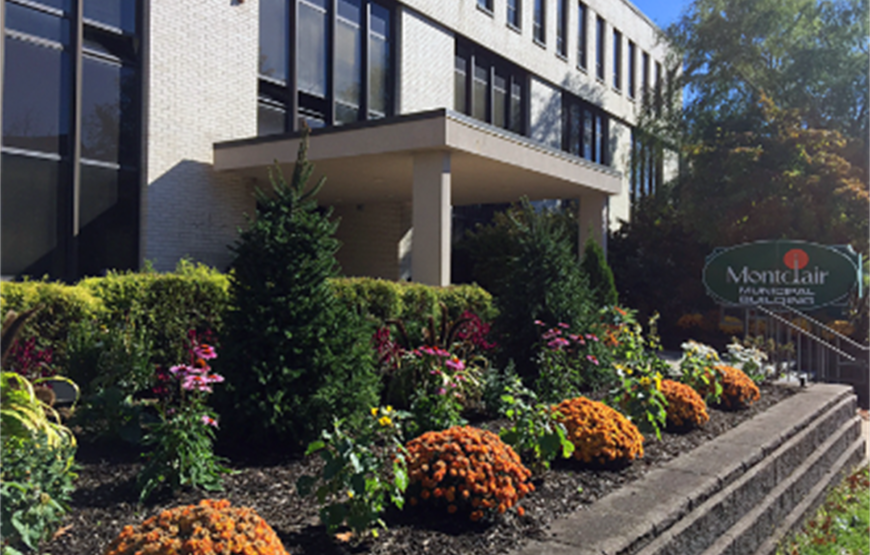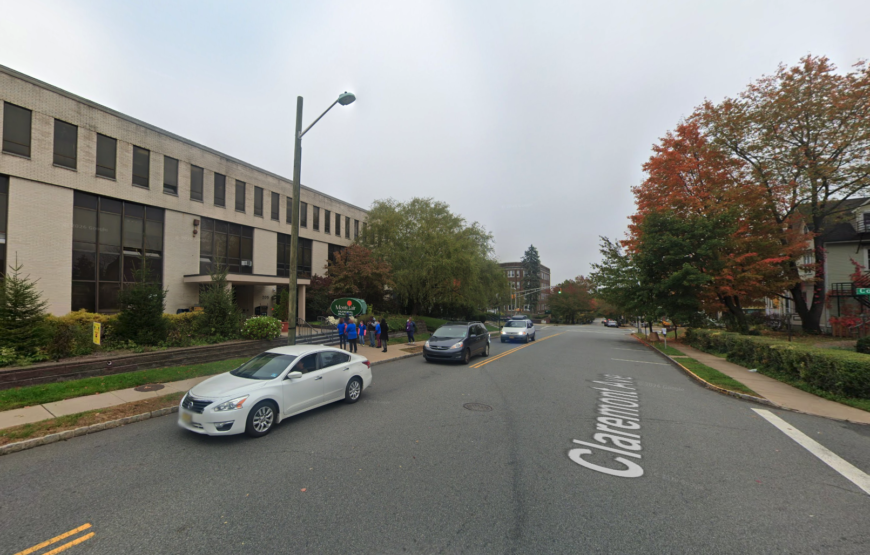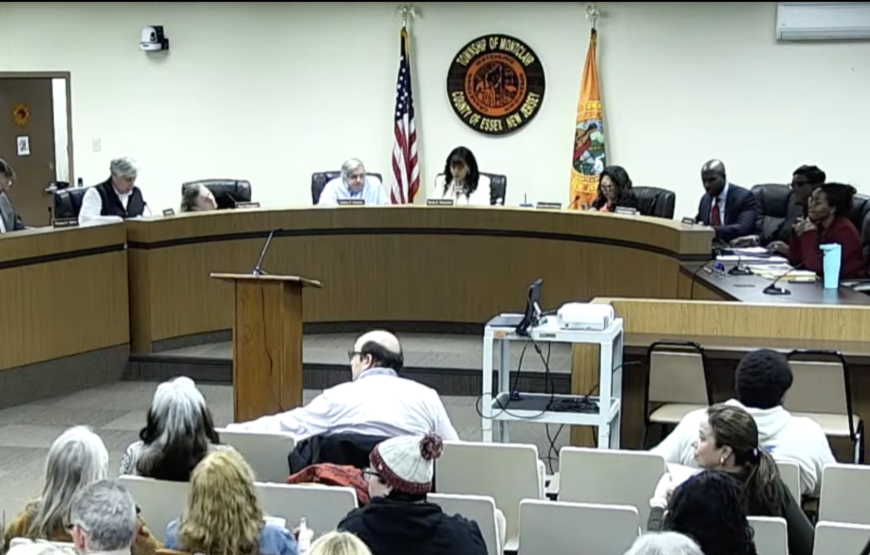
Montclair residents packed the Nov. 10 Township Council meeting for the Montclair substation vote, ready to argue against a PSE&G electrical substation at the municipal complex, 205 Claremont Ave. They got their say, but only after a procedural move came within a roll call of pushing it to another night.
By the end, the council had voted 5-2 to table the plan indefinitely, setting it aside with no date to return. Ordinance O-26-39 would have adopted a redevelopment plan for the site, a set of rules that overrides normal zoning, and it listed public utilities among the allowed uses. With the plan shelved, the site stays zoned for public use only, and nothing clears the way for a substation there.
How public comment on the Montclair substation vote almost got pushed off
The tension started before the ordinance even came up. During general public comment, the open-floor period early in the meeting, Mayor Renée Baskerville told speakers to save their substation remarks for the ordinance’s public hearing later that night. Residents who spoke with The Pod said they had never seen a similar instruction enforced. A resident who ran for the open at-large council seat Nov. 3 objected on the spot.
“Mayor, I first have to begin by objecting to the way you segregated comment tonight. That is not our tradition or our practice, and I don’t believe it is true that people cannot comment on certain things during public comment,” the resident said.
When the ordinance came up for its final vote, At-Large Councilor Bill Harrison, who joined the council a little over a year ago and was at his last meeting, moved to amend the ordinance and strike “public utilities” from the plan’s allowed uses on the 1.96-acre site. The substation fight, he argued, had buried the town’s real problem: a municipal building that has needed work for more than 20 years.
Township Attorney Shantel Borum then explained what the amendment would cost the people in the room.
“So, if you do vote to do the substantive change, you can actually not vote for a second reading and do public comment. It has to go back. So it would have to go for second reading at the next agenda meeting. So public comment will not happen on this matter. I just wanted to make that clear,” she said.
The second reading is an ordinance’s final round, the one where the public gets its formal say before a vote. Under New Jersey law, an ordinance that changes substantially at that stage has to be republished and heard again. The hearing would have moved to another night, not vanished. For residents who had waited hours to speak, it still meant coming back.
Baskerville said she would join Harrison and called for a roll call. Harrison cut in before it got far. First Ward Councilor Erik D’Amato then withdrew his second, the backing a motion needs from another member before it can go to a vote, and the amendment died.
The first resident at the microphone spoke for the room. “What just happened was very confusing,” the resident said.
Another resident went further. “First of all, Mayor, I don’t think what you did tonight was right. That was not right. I don’t even understand what happened, and many people here do not understand what just happened with the ordinance or what have you. And so many people came here to speak.”
Baskerville said she would take responsibility. “I’ll take that, because I signed up for that as the mayor,” she said. Earlier she had told Harrison he shared his plan with her before the meeting and that she “tried to abide by what you wanted.” When a resident said Harrison “suggested the whole plan,” she answered, “I was agreeing with him.”
With the hearing finally open, residents used every minute of it.
What residents told the council about the 205 Claremont substation
One by one, residents offered their opinions. Here were some of them.
Glenn Pascrell, a neighbor who owns the building next door, and says so every time he speaks, walked through months of grievances, from appraisers hired before the plan reached the council to committee notes he never received through nine public records requests.
“Some have called this a NIMBY fight. This is what I hear all the time from the council and from our manager: it’s a NIMBY fight. We said yes to a new substation from the first night. What we said no to was a decision made in private and sold to us as engineering. ‘Not in my backyard’ was never our ask. ‘Not without the evidence’ was. That’s all we’ve ever asked for,” the neighbor said.
Another resident aimed at the council itself.
“Transparency in government isn’t going upstairs and talking among yourselves. It’s coming back to us. That’s not happening,” the resident said. Later the resident added, “Keep excluding us and you will keep getting large crowds of people coming up to you saying we don’t want this.”
A resident who has lived in Montclair since 1963, three blocks from the site, asked the council to slow down.
“I have lived in Montclair for more than six decades. I have witnessed its growth and transformation, and I understand that progress sometimes requires difficult decisions, but progress should not come at the expense of transparency, thoughtful planning, and meaningful community participation,” she said.
The town’s own preservation commissioners joined the opposition. A member of the Historic Preservation Commission read a letter written with two fellow commissioners, as individuals, because the commission never got to review the plan. It noted that the site sits in the Walnut Street area that the master plan, the township’s long-range planning guide, flags as a potential historic district. Another resident added that 620 people had signed the petition against the plan.
“I just kept thinking throughout this whole process: confusion obfuscates transparency,” another resident said.
“I think the process by which you make decisions matters as much as the decisions themselves,” said another.
One more resident asked where the municipal offices would go if the land were sold. “Where does the Montclair Municipal Building exist? Where would that be? No one said anything, as far as I know,” the resident said.
Speaker after speaker asked to see how PSE&G picked this site. Part of that answer had gone online that morning.
What PSE&G’s substation site survey shows
PSE&G ranks 205 Claremont first among nine properties it studied, according to its property analysis and siting survey, now posted on the township’s substation page. The utility decided in 2020 that its 1925 substation on Valley Road needed full replacement at a new location. It prefers 205 Claremont for its size and for having fewer pipes and cables already crowding the ground beneath it. The lots at Valley Road and Portland Place, beside police headquarters, are the backup.
The survey is dated Oct. 20, the night PSE&G presented to the council. It was on the township’s website by the morning of Nov. 10, according to a resident who spoke at the hearing and to Councilor Harrison. Township Manager Stephen Marks told the Pod in late October that PSE&G hadn’t given the township the list of its nine sites, and that he knew of five.
Township Manager Stephen Marks has told the Pod the town can’t direct where PSE&G builds. The survey shows the township did help point the way. It says 103 Grove St. was “originally identified with assistance from the Township” and credits the prior administration with helping find the Valley Road lots. PSE&G dropped two Bloomfield Avenue sites in February 2024 after, the survey says, it was advised that the Montclair Center Business Improvement District, the downtown business group known as the BID, and the previous administration did not favor the location, a history the Pod laid out in full. And one option is back in play: the owner of 101 Greenwood Ave., known as the DeCamp property, turned PSE&G down in 2020 but may now consider selling.
For 205 Claremont, PSE&G wrote that because the site is in a redevelopment area, “it is presumed there would not be zoning constraints encountered with other properties.” The plan that would have set the rules for that site is the one the council tabled Tuesday.
Why Montclair tabled the municipal building plan
Most councilors wanted to know what shape the building is in before deciding what it is worth. Deputy Mayor Susan Shin Andersen pointed to the building assessment on that night’s agenda.
“So unless someone convinces me that this is something where the time is of the essence that we pass a redevelopment plan right now, I would like to put it aside altogether,” she said.
Harrison tried again, proposing to rezone the lots to O-3, the zone that surrounds them, which allows homes, apartments, offices and mixed-use buildings but not utilities. His reason: the township’s appraiser won’t value the land on a hypothetical, and Borum said its current public-use zoning “severely limits the value of the property.” The motion failed 2-5, with only Harrison and Fourth Ward Councilor Aminah Toler in favor. The vote to table passed 5-2, with the same two opposed.
Even the councilors who voted to shelve the plan said the need for power hasn’t gone away.
“I don’t want a substation next to my house either. However, I want electricity. There’s folks in town that frequently get blackouts, and we need to have stable electricity. So that may be a little bit frustrating, but it’s a reality that we’re going to have to accept,” Third Ward Councilor Rahum Williams said.
“People call me when the electricity is out and they have a refrigerator and a freezer full of food. The food is spoiled, and it happens regularly,” Baskerville said.
For now, the property stays zoned for public use. PSE&G has committed to a town-wide meeting and a separate one for nearby residents, according to the township, with no dates set. Any new version of the plan would have to start over with a fresh introduction and a full public hearing, the step residents nearly watched slip to another night.
Also at Tuesday’s Montclair council meeting
The substation wasn’t the only fight over process. Harrison and Toler pressed the Complete Streets department, which runs the town’s street safety projects, over the Harrison Avenue bike lane, striped before residents could weigh in on the parking it removes. “Could there have been more outreach on this project? Evidently that is the case,” the Complete Streets director said. The council also unanimously introduced a new tree ordinance, and several residents returned to ask, again, for an ordinance governing police surveillance technology.
How to weigh in on the Montclair substation
The next chance to be heard is Tuesday, Nov. 24, when the council meets at the Municipal Building, 205 Claremont Ave. General public comment comes early in the meeting, and speakers get up to three minutes. On Nov. 10, speakers were told to hold comments on an ordinance up for a hearing until that item came up, a practice at least one speaker said is not the town’s tradition. You can also email the mayor and council before then; their addresses are on the township’s council page.
Read PSE&G’s siting survey, FAQ and slides on the township’s substation page, and watch for dates on the two meetings PSE&G has promised. For the full timeline, every site PSE&G considered and our interviews, see the Pod’s interactive guide to the Montclair substation.
Image credit: Montclair Government/YouTube