A single out-of-district placement can cost the Montclair school district more than $70,000 a year for one student. Multiply that by the dozens of Montclair students who need one, and it helps to explain why special education spending has become such a contentious issue. This spring, the Montclair Moms, Dad and Parents Facebook group claimed special education was, in one community member’s words, “eating Montclair schools alive.”
Superintendent Ruth Turner says the numbers point the other way. Here is what an out-of-district placement actually is, how Montclair decides who gets one and what a family’s rights look like when they disagree with the district.
What Is an Out-of-District Placement, and Who Decides?
New Jersey law sets a default: a student with a disability stays in a general classroom, in their home district, unless the district genuinely cannot meet that student’s needs there. State regulation calls this the “least restrictive environment,” and it governs every placement decision a district makes. Only when a child’s needs go beyond what Montclair can provide in-house does an out-of-district placement become an option. That could mean a specialized program run by another district, a county school or a private school approved by the state.
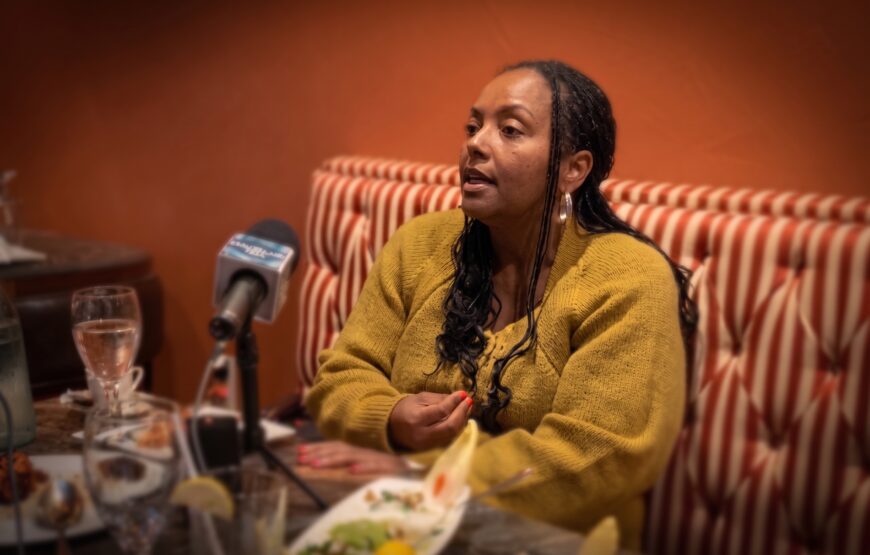
The decision is not the superintendent’s to make alone. It belongs to the student’s Individualized Education Program team, which includes the student’s parents and district staff, and may include the student, particularly when transition planning is involved. During the latest installment of Supper with the Super, Turner described the standard the district is supposed to apply. “We’re not denying kids what they need. We’re making sure that the students who get out-of-district placements are the ones where we genuinely can’t provide that level of education within our own school system,” she said.
Before a placement becomes official, a case manager visits the proposed program with the student and family. If the family agrees to move forward, state law requires a new IEP be completed and an IEP meeting held at the new Out-of- district placement within 30 days of placement.
That standard sounds straightforward. The price tag attached to it is not.
Why These Placements Cost So Much
Montclair’s tuition spending on out-of-district placements rose from $5.6 million in the 2023-24 school year to a projected $7.9 million for 2025-26, according to the district’s budget filings. That increase happened even as the district was actively trying to contain placement-related costs and reduce its reliance on outside placements, suggesting that rising per-student costs were offsetting any savings from lower placement counts.
Statewide, tuition at an out-of-district program, public or private, routinely runs past $70,000 a year for a single student, and sometimes well past $90,000 for higher-need cases. New Jersey helps districts cover those costs through state aid, but the formula adjusts a portion of that aid for local property wealth, meaning a district with Montclair’s tax base receives less assistance than a poorer district facing an identical placement. A separate program called Extraordinary Aid is supposed to help cover the most expensive cases. The program has frequently been underfunded below the reimbursement levels, leaving districts to absorb a larger share of high-cost special education expenses.
That math is exactly what fed the Facebook post claiming special education was draining the district. Turner said she does not use social media and had not seen the post, but she addressed the claim underneath it directly. “If you look at the five-year numbers, you’ll see that out-of-district placement has decreased,” she said.
Turner’s underlying point holds up over the long run. A 2019 Montclair Local report found the district placed 101 students out of district in 2018-19, up from 89 the year before. At an April 2026 special education town hall, the district’s Pupil Services director put the total current count at 76 students placed across all out-of-district programs, with officials saying Montclair has “reduced reliance on out-of-district placements by expanding in-district programs.” Measured against where the numbers stood seven years ago, the available data suggest a meaningful decline.
The more recent picture is murkier. The district’s own budget filings track private school placements specifically and those held flat at 73 students across 2023, 2024 and 2025. That figure is broadly consistent with the 76 total placements recorded at the April 2026 town hall, suggesting most of the longer-term decline happened before 2023 rather than as a result of more recent policy or budget decisions. At the April 2025 budget presentation, then-Business Administrator Christina Hunt confirmed the district cut $300,000 specifically from out-of-district placements heading into the 2025-26 budget and the district’s corrective action plan, drafted after the $19.6 million deficit became public, listed placements as a line item to evaluate for both academic and financial reasons. So even as the headcount came down, the bill kept going up.
The Earlier, the Better: How Montclair Wants to Change the Conversation
Turner points to identification, catching a struggling student before a crisis forces the issue, as the place where Montclair can actually move the numbers. “There’s a tendency in education to say, let’s let a student mature a little bit. She’s only in kindergarten, let her get acclimated to being a first grader. And then it hits hard in third and fourth grade,” she said. Catching those students sooner may raise how many kids the district formally identifies as needing services, and Turner said she is not troubled by that, as long as the need is real.
She also pushed back on the idea that special education operates as its own silo inside the district. “The students with IEPs don’t belong to the special ed department. The multilingual learners don’t belong to the multilingual department. All students are ours, and ensuring that as a school and as a school district we’re honoring that is also an area where I feel we can do a better job,” she said.
That same shift toward earlier identification is what’s driving Montclair’s other big change: how openly the district talks about special education at all. Montclair’s Special Education Parent Advisory Council, known as SEPAC, has pushed for more of these conversations directly. The group hosted Turner for a community discussion on special education on October 29, 2025, and continues to meet monthly with families navigating the same questions this guide is meant to answer.
What Are Your Rights if You Disagree With the District?
Parents who think the district’s placement decision is wrong have real legal options. They can request mediation through the state Department of Education’s Office of Special Education Programs, where two trained, impartial mediators hear both sides and try to work out an agreement. If mediation fails, or a family skips past it, they can request a formal due process hearing in front of an administrative law judge. It functions like a trial without a jury, with both sides presenting evidence. If mediation fails, families may request a formal due process hearing before an administrative law judge. Either side may appeal the judge’s final decision to state or federal court.
If parents timely request mediation or due process after receiving written notice of a proposed change, the district generally cannot change the child’s placement while the dispute is pending. Turner has acknowledged that disputes over placement decisions sometimes end in litigation, and that it happens more often than she would like.
Most Montclair families never reach that point. The district says its real strategy happens earlier, before a placement decision is even on the table.
If you think your child is not getting what they need, the first step is simple: put it in writing. Email or call Montclair’s Pupil Services Department at 22 Valley Road or 973-509-4020, and request a formal evaluation for special education eligibility. The Child Study team includes district specialists who evaluate students for special education services, and they are the ones who can begin a formal evaluation. You do not have to navigate what comes next alone. Montclair’s SEPAC (Special Education Parent Advisory Council) meets monthly and exists for exactly this. Another great resource is 1 in 6 Support, a Montclair non-profit that provides support, resources and advocacy for children with disabilities.
Image credit: Montclair State University