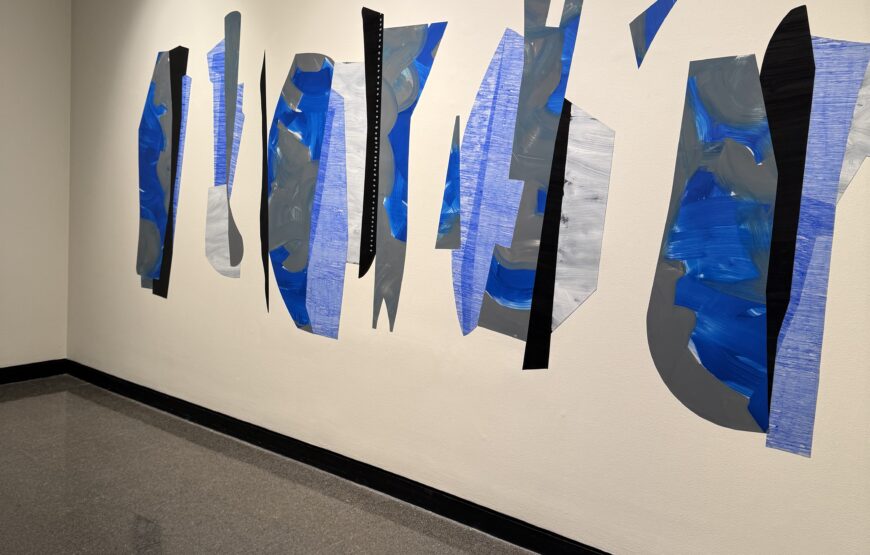
Pictured above: The 2025 Nanette Carter exhibit at The Montclair Art Museum.
Montclair gets called the cultural capital of northern New Jersey often enough that the phrase has started to feel like marketing. Whenever the claim gets made, by real estate sites, by the township itself, or by people who’ve lived here, it tends to rest on the same handful of things: a real 19th-century artist colony, the state’s first public art museum, and a very active music and film scene.
Here’s what that actually looks like.
How Montclair Became an Art Colony
The town’s reputation starts with one painter, though he wasn’t the first artist to notice Montclair. Illustrators Harry Fenn and Charles Parsons had already been commuting from town to their New York studios since the 1860s. In 1885, landscape painter George Inness moved to Montclair and set up a working studio at the corner of Grove and Columbus streets. He stayed until his death in 1894, producing some of the most recognized American landscapes of the 19th century. The Montclair Times, covering the scene he helped build, wrote in 1922 that the town would be “indelibly associated” with his name. A small colony grew up around Inness: sculptors Jonathan Scott Hartley, who was also his son-in-law, and William Couper, along with stained-glass artists Emilie and Walter Greenough, who moved to town in 1890 and turned their home on Highland Avenue into a gathering spot for pageants, poetry readings and concerts among the group.
The circle Inness drew to town created enough density that in 1914, William T. Evans and Florence Rand Lang founded the Montclair Art Museum, New Jersey’s first public art museum and the first in the state devoted solely to art. Evans’s founding gift alone ran to 54 paintings and two sculptures, including work by sculptor Daniel Chester French and painters Theodore Robinson and Julian Alden Weir alongside Inness. MAM now holds more than 20 paintings, two watercolors and one etching by Inness, the finest collection of his work anywhere.
That reputation for drawing serious artists didn’t end with Inness’s generation. Don Miller, who came to Montclair from Jamaica as a young child and lived here the rest of his life, painted his best known work in his Montclair studio: a mural of the Rev. Martin Luther King Jr. and the civil rights movement, later installed at the Martin Luther King Jr. Memorial Library in Washington, D.C. Miller died at Mountainside Hospital in Montclair in 1993.
Today, the MAM’s programming is still active. The Yard School of Art runs classes for children as young as six, and rotating exhibitions run alongside permanent galleries of American and Native American art, including works by Georgia O’Keeffe, John Singer Sargent and Mary Cassatt alongside Inness.
The MAM isn’t the town’s only museum. A few blocks away, the Montclair History Center preserves the town’s broader history across three buildings on Orange Road, including the Federal-style Israel Crane House, listed on the National Register of Historic Places.
More than a century after Inness arrived, Montclair remains one of New Jersey’s most active arts communities, with galleries, working artists and cultural institutions continuing the tradition he helped establish.
Performing Arts: Theater and Live Music
In 1971, actors Olympia Dukakis and her husband, Louis Zorich, founded the Whole Theatre in Montclair, staging works by Tennessee Williams, Eugene O’Neill and Samuel Beckett with casts that at various points included well know stars like Blythe Danner and Colleen Dewhurst. It ran for 19 years before closing in 1990 amid a national funding fight over the arts. Dukakis stayed in Montclair through her 1988 Oscar win for “Moonstruck,” and the town threw her a parade. A documentary about her life was later screened at the Montclair Film Festival in 2019.
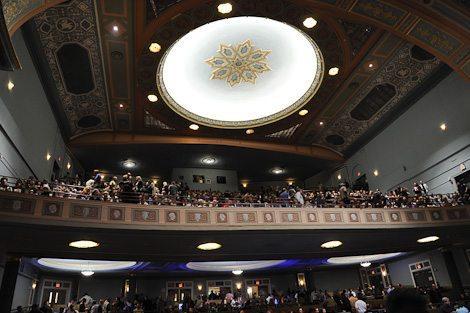
Live music runs through a different set of institutions, but the same density applies. The Wellmont Theater at 5 Seymour Street opened in 1922 as a vaudeville house, hosted Charlie Chaplin, and today books national acts through Live Nation. With 2,500 seats and an intact historic interior, it remains one of the more intimate large venues in the region.
Below that level, a few smaller venues keep a regular calendar going. Outpost in the Burbs, a nonprofit concert series running since 1987, books touring folk and singer-songwriter acts into local venues around town. The Meatlocker has built a reputation as the area’s underground punk and hardcore room, hosting generations of local and touring acts. Just Jake’s runs live music and dancing most weekends, alongside a rotating regional supper club run by its chef. Down on Valley Road, Tierney’s Tavern has been pouring drinks since 1934, family-run for five generations, and still books bands upstairs most Friday and Saturday nights, sometimes Thursdays too. USA Today named it one of the country’s best bars in 2024.
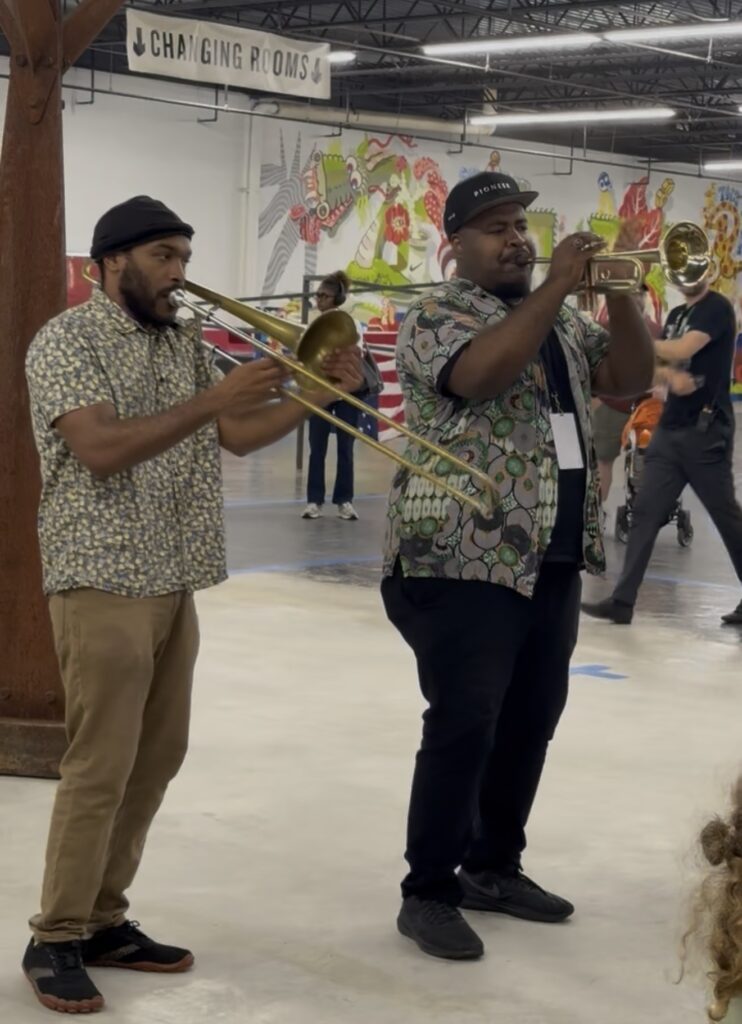
Jazz House Kids, the Montclair-based nonprofit founded and run by singer Melissa Walker, runs year-round jazz education programs and produces the Montclair Jazz Festival each summer, with her husband, 11-time Grammy winner Christian McBride, as artistic director and festival curator. Since launching in 2010, it has grown into the largest free jazz festival in the New York area, drawing more than 25,000 people to stages along Bloomfield Avenue.
Upper Montclair has its own train station and its own commercial strip, but until this year, nothing on the festival calendar specifically tied to it. Dan Campeas, who owns Dan & Day’s Burger Place with his partner Dayanna Ordonez, noticed the gap and posted an idea: a music festival of Upper Montclair’s own. The reaction told him he wasn’t the only one who’d been thinking it. “It felt like everybody had the same thought, but nobody had actually said it out loud yet,” Campeas told the Pod. “Then we posted it, and it was like the whole town collectively exhaled and said, yeah, of course.” The result, Uptown Sound Fest, which is happening in Upper Montclair on September 26 in what’s set to be its first year.
Montclair’s Film Culture Goes Beyond the Festival
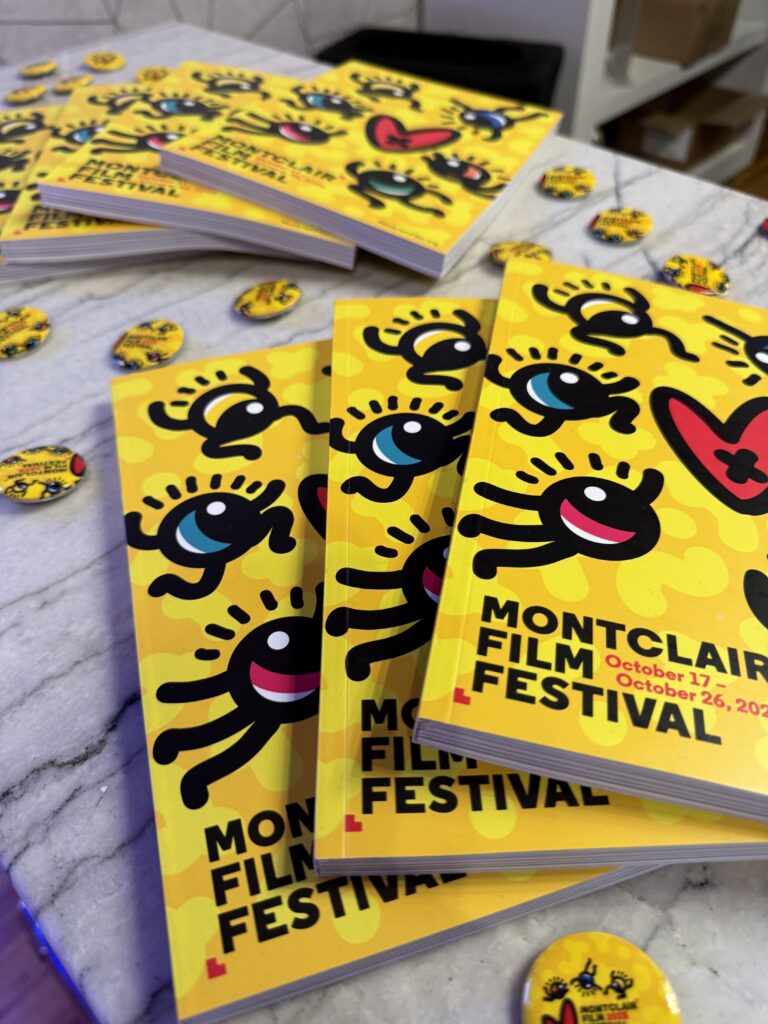
The Montclair Film Festival gets the headlines every fall, but the town’s relationship with film runs year-round and goes back further than the festival itself. Montclair Film operates two cinemas in town: The Clairidge at 486 Bloomfield Ave. and the Bellevue, which the organization acquired and reopened in October 2025. The 10-day festival each fall draws filmmakers and audiences from across the region. The organization was founded by Bob Feinberg, a former WNET-TV executive, with Montclair resident Evelyn McGee Colbert as founding board member. Her husband, comedian Stephen Colbert, has been a fixture of the festival from its early years as a longtime supporter and advisory board member, frequently moderating onstage conversations with visiting directors and actors.
Beyond the festival, Montclair shows up on screen more than most towns its size. “The Sopranos” filmed multiple scenes here, including at Montclair High School. Interior shots of Montclair High also stood in for “North Shore High” in “Mean Girls.” In 2024, Pedro Almodóvar’s “The Room Next Door,” starring Tilda Swinton and Julianne Moore, filmed at Montclair Book Center and Montclair State University with a screening at The Clairidge. No backlot required.
The Cultural Infrastructure Most Towns Don’t Have
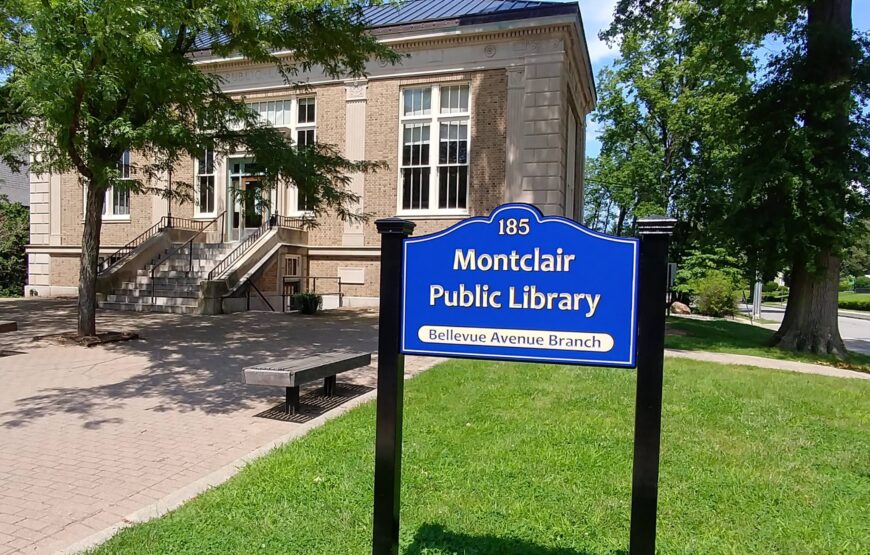
The $36.6 million awarded to the Montclair Public Library in June 2026 is the most concrete measure of where the town’s cultural investment stands right now. The New Jersey Economic Development Authority granted the funds through its Cultural and Arts Facilities Expansion program, known as CAFE, which awards transferable state tax credits, meaning developers can purchase them to offset their own tax liability, providing the library with upfront capital for construction. It was the first time a public library in New Jersey received CAFE funding. The library’s own FAQ is clear that it’s a tax credit award, not cash in hand yet. The Bellevue Avenue branch slated for those upgrades is the same building where the Bruce Springsteen biopic “Deliver Me From Nowhere” filmed in October 2024. Library Director Radwa Ali told Montclair Local at the time of the filming that the building, a 1914 Carnegie gift, was chosen because “it really does harken back to the days of 1914.”
Underneath that institutional layer is a quieter network of galleries and studios, some resident-run, some backed by larger organizations. Studio Montclair, a nonprofit with more than 500 member artists, runs three gallery spaces around town, including the Leach Gallery at 641 Bloomfield Ave. Across the street from MAM, the Bravitas Group, run by Montclair resident Bob Silver, has helped fund and curate gallery space out of buildings that would otherwise sit empty. Ria Mulvey runs a combined gallery and custom-framing business on Bellevue Avenue, with the framing side sustaining the gallery side. “The gallery is a labor of love,” she told the Pod. “The framing business sustains it.” A few blocks away, Tiny Gallery, founded by Francesca Castagnoli and David Moore, turned front-lawn exhibition boxes, modeled on Little Free Libraries, into a growing network across Montclair, Glen Ridge and Bloomfield. “You’re walking your dog, and suddenly you stumble across something tiny and exquisite,” Castagnoli told the Pod. “It stops you in your tracks.”
The Calendar Rarely Goes Empty
Ask what’s happening in Montclair this week and the answer is rarely nothing. Earth Fest kicks off the season each April at South Street Park. In May, the Walnut Street Fair, presented by the Junior League of Montclair-Newark, closes Walnut Street from Grove to Forest streets for a day of more than 200 vendors, live music and local food. Later that month, AAPI New Jersey’s Lantern Festival for Justice and Unity fills Edgemont Memorial Park at night with more than 1,000 lit lanterns, food trucks and live performances, a free event that has drawn thousands since the organization founded it in 2021. The Montclair African-American Heritage Parade and Festival follows the first Saturday in June, filling Nishuane Park. Montclair Pride downtown rounds out the summer, with the 2026 edition moved to October 11 at Lackawanna Station after financial and logistical challenges pushed it off its original June date. The Jazz and Film festivals anchor the fall. Most weeks, something is happening somewhere in town. The Montclair Pod tracks the full calendar. Worth bookmarking before you assume there’s nothing to do.
Image credit: Montclair Art Museum