Business owners in Upper Montclair got one last chance Monday night to put their frustrations on the record before the township decides what shapes the neighborhood for the next decade. The meeting, held August 10 at the Bellevue Avenue library branch and running two and a half hours, was the final ward session in Montclair’s legally required master plan reexamination, the process that sets the township’s priorities for land use, development and public investment for the next 10 years. (See the full plan)
“The goal of tonight was really to get a lot of feedback from business owners and property owners in specifically Upper Montclair on what some of their pressure points are and whether there’s some inconsistencies in the master plan as it stands that they think should, could stand to be addressed,” said Daniel White, Montclair’s Economic Development Coordinator, who ran the meeting alone.
What Upper Montclair Business Owners Want Fixed
The complaints break into roughly five categories.
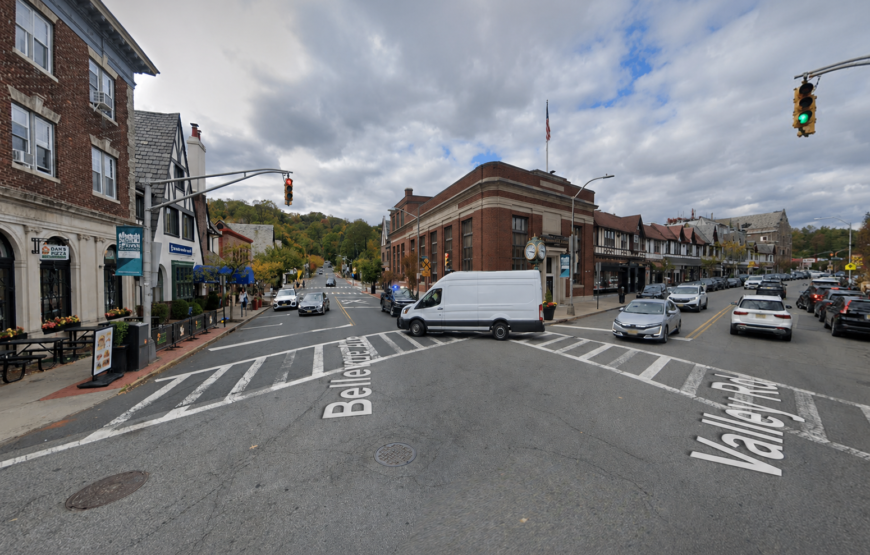
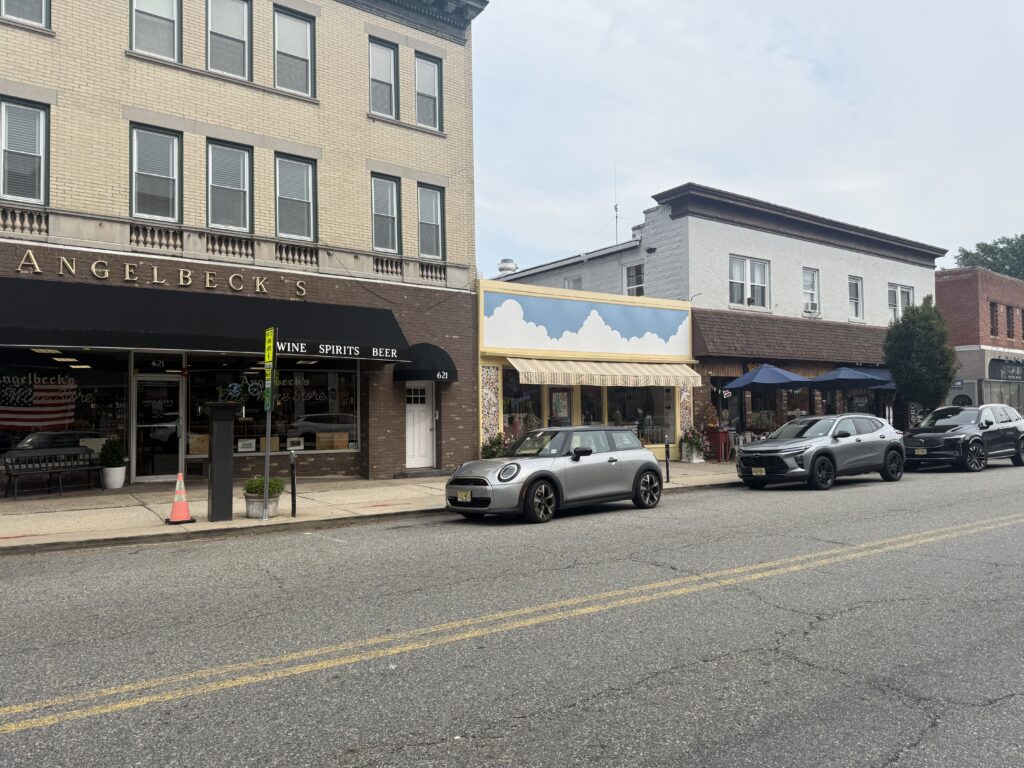
Parking leads every time, and not because there isn’t enough of it. The friction is paying for it: the meters and apps that turn a five-minute errand into a multi-step task. Traffic circulation on Valley Road runs a close second. Wendy Lacey, owner of The General Store at Cornerstone Montclair, raised curb safety, pointing to Uber Eats and delivery drivers who double-park along the corridor, and pushed the township to think harder about designated curb space. Then come the maintenance complaints that have circulated for years without resolution: the parking lot behind the fire station needs cleaning up, the same trees and the same tired stretch show no real improvement, and dumpsters sit out in plain view on streets residents say the town never sweeps, with complaints about nighttime lighting along the corridor. One attendee suggested concealing the dumpsters and adding more green space to the commercial strip, a small fix nobody in the room seemed to argue with.
Holly Felber has watched this list stay the same for two decades. She and her husband have run Barbara Eclectic, the Valley Road clothing store, for 22 years. The store itself has operated for 50.
“We always have parking issues,” Felber said. “I am also concerned about safety issues with pedestrians and cars, and we have so much more traffic in Upper Montclair. I think it’s things we have to think about and discuss as a community.”
Asked whether she’s optimistic the meetings will lead anywhere, Felber responded, “I’m not that hopeful. I hope to be more hopeful,” she said. “It seems like we are getting a few more people to come to town meetings. It would be great if more people would come to a planning board meeting, a zoning meeting, a town council meeting, because we can’t make changes unless people participate.”
The turnout Monday night made her point for her. About 10 to 12 people showed up, Ward 1 councilmember Erik D’Amato among them. Rain and it being a weeknight during the summer probably didn’t help.
The Push to Keep Development From Pricing Out Small Business
Parking and trash are fixable with a work order. What worries some business owners more is what Upper Montclair looks like once property changes hands.
Arielle Eckstut has run the Book Doctors and Pitchapalooza out of Upper Montclair for 20 years, and she used her time at the microphone to make a case for the town’s independent businesses.
“I think it’s so important that we are focusing on what can keep these small businesses in town because so many of them are closing and facing so many headwinds nationally, internationally, etcetera,” Eckstut said. “So we need to support them… when we bring in large developments and we let them be developer-led developments instead of town-led developments, we often end up with businesses that are not part of the culture of this town.”
That distinction, town-led versus developer-led, came up again with the ACME lot, the long-discussed redevelopment site that has sat unresolved for years. Participants agreed that any plan there should start with residents, not developers.
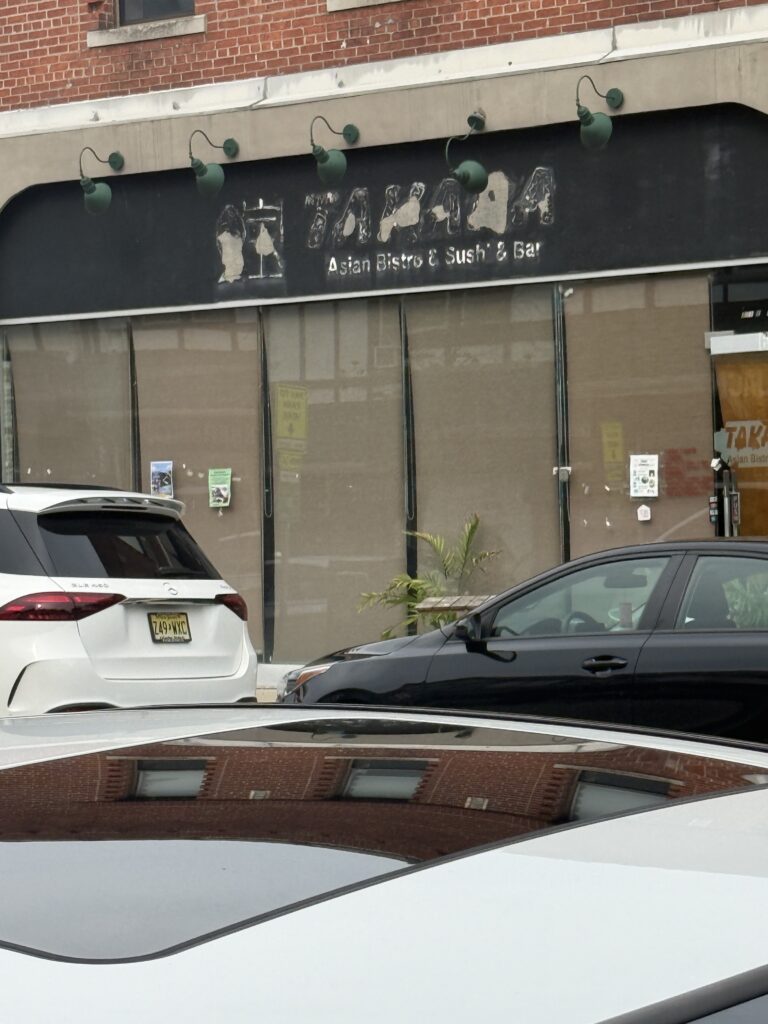
That worry isn’t hypothetical. Upper Montclair has already lived through it. Pod co-host Mike Schreiber has pointed to the loss of Saunders Hardware and the neighborhood’s longtime stationery store as the moment daytime foot traffic uptown really dropped off, not because anyone stopped loving the restaurants, but because those two stores gave people a reason to be uptown outside of dinner.
Why Upper Montclair Doesn’t Have a Business Improvement District
That anchor-store gap is part of why the BID question keeps coming up. A business improvement district, or BID, is a formal funding structure where property owners pay an assessment that gets pooled into district-wide marketing, cleanup and beautification. Montclair Center has one. Upper Montclair does not.
What it has instead is UMBA, the Upper Montclair Business Association, a volunteer nonprofit representing more than 60 businesses and merchants. UMBA offers networking, advocacy and some marketing support, but it was never built to do what a BID does. A BID would let Upper Montclair pool dues from property owners to fund beautification, cleanliness and marketing at a scale volunteer hours can’t match. Standing one up, though, is not simple.
White explained that a BID can’t come from the township. It has to be, in White’s words, a groundswell: it falls on business owners, not the town, to organize and fund it themselves.
And there’s a catch underneath the catch. Upper Montclair’s retail vacancy rate is low, low enough that the district technically doesn’t qualify as a neighborhood “in need” of economic redevelopment, one of the usual triggers for forming a BID. The district is doing well enough on paper to disqualify itself from a tool that might help it do even better.
Not everyone in the room was sold on the idea anyway. Erik D’Amato described feeling “healthy ambivalence” about pushing Upper Montclair toward a BID, worried a new assessment could nudge commercial rents higher at a moment when small businesses are already stretched thin. A former BID treasurer in the room pushed back, arguing BID dues are typically small enough that they shouldn’t move rents much at all. Neither side settled it Monday night, and one attendee put the more practical hurdle plainly: people will write a check before they show up to volunteer, and a BID needs volunteers to run it.
There’s a middle path. The South End, which has more vacant storefronts and an easier case for redevelopment, recently secured 501(c)(3) status, the same nonprofit designation used by charities, which unlocks eligibility for Main Street America grants, a state and federal program that funds downtown revitalization work, without committing to the full structure of a BID.
But it’s not that straightforward for Upper Montclair. To justify 501(c)(3) status, a district typically has to show it’s fighting some form of deterioration, present or predicted, not just trying to boost commerce that’s already healthy. Upper Montclair would have to reframe its pitch around public-facing improvements such as streetscaping, lighting, tree planting or historic walking tours, then qualify independently under educational or public-benefit purposes, separate from the economic redevelopment argument that currently disqualifies it.
Then, maybe, it has a case.
What Happens Next With Montclair’s Master Plan
Monday’s meeting was the last of four ward sessions the township held this summer to revisit a master plan that has not been touched since 2016. New Jersey requires municipalities to reexamine their master plans roughly every 10 years, and Montclair’s window is closing. Everything raised across all four meetings now gets folded into a draft reexamination report, expected this fall, before it goes to the Planning Board for review and a public hearing.
Worth remembering: the master plan is an aspirational document. It carries no legal force of its own. What happens next depends on whether the township turns a decade of repeated complaints into something more than a list.
When the draft report lands this fall, the Planning Board’s public hearing will be the last formal chance to weigh in before anything is adopted. Worth putting on the calendar now.
Image credit: Google Maps (improved with AI)