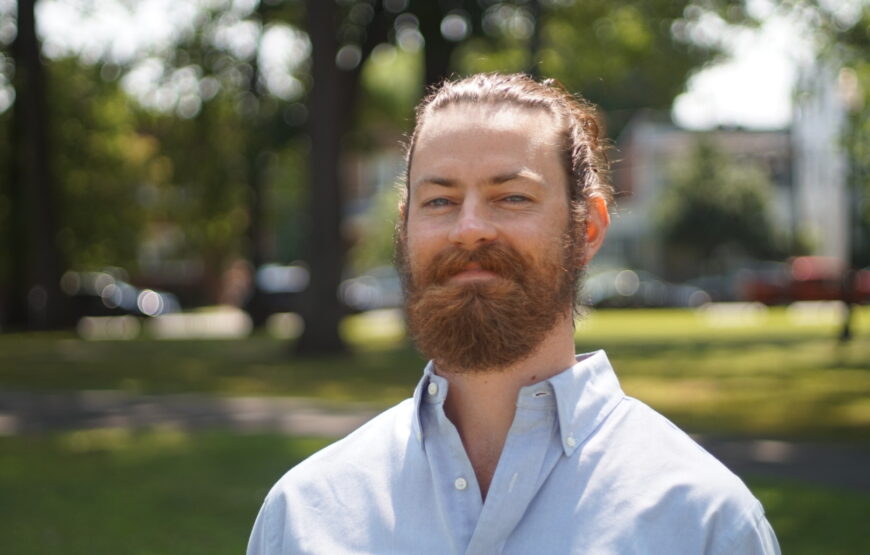
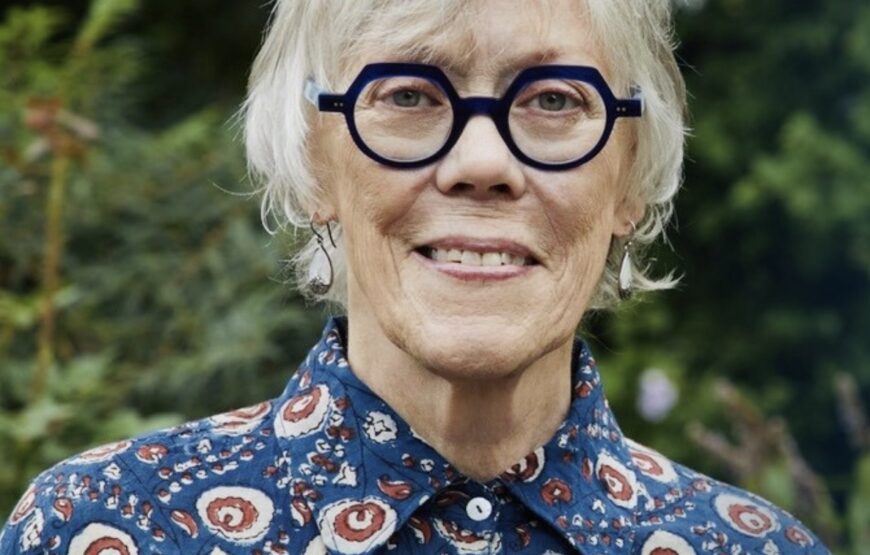
The Montclair Pod asked all three candidates for Montclair’s councilor-at-large seat the same seven questions about their experience, priorities, and plans for the township—from property taxes and development to school finances and everyday services.
Below are Antoinette “Toni” Martin’s responses. Read the other candidates’ answers in our separate Q&As with Mariana Horta and Kyle Porro.
Responses have been lightly edited for clarity and formatting.
The Montclair Pod: What makes you the best candidate for this seat? Please point to specific experience or accomplishments.
I came to Montclair 30 years ago with two young children and fell in love with this town’s unique character, green spaces, neighborhoods, and mix of people. Today, my grandchild attends school here. I’ve been a homeowner, renter, journalist, nonprofit tutoring director, and advocate for tenant rights, open government, and residents-first planning. As a journalist, my work appeared in numerous publications, notably over a decade with the Detroit Free Press and another decade covering real estate for The New York Times. My job was to uncover the facts to keep people informed. That’s what I intend to do as a councilor-at-large.
I have attended nearly every council meeting through three Town Hall administrations. As a candidate for at-large Councilor, I am committed to the people in each and every ward. I offer steadiness, civility, bridge-building, and a commitment to ethical behavior and integrity.
I will always be guided by community first. My instincts and considered opinions spring from caring and respect for my fellow neighbors, not cronyism or enriching those who wish to profit off our residents. I stand for: thoughtful budgeting, not throwing money at incompetent contractors and vendors; setting priorities that benefit the largest number of people and uphold our values; sufficient public meetings–from the get go–regarding new developments and projects. Too many important decisions have been made in backrooms at the last minute.
I believe in sustainability for our Montclair way of life. Our government must support the special character of each of our treasured neighborhoods, honor all wards equally, and all residents.
TMP: What are the top three issues facing Montclair residents right now, and which one would you tackle first?
- Affordability/Livability: I want the people who made this community to be able to stay here. We can welcome investment and growth while still protecting the economic diversity Montclair was built upon. Our government must focus on what benefits all residents, not just those who can afford our increasingly expensive town.
- Land Use/Sustainability: I want to fiercely protect our legacy of natural resources, especially our tree canopy now under threat. Flood prevention is increasingly critical. Neighborhood-focused development, not developer-led projects is the way to build a lasting future.
- Good Governance/Accountability: I want our government to spend responsibly. Open discussion of priorities is also fundamental to a high-functioning municipality. Information is power, and it must be shared and freely exchanged.
TMP: Montclair has added large apartment projects while longtime residents say they’re being priced out. What should the council do differently on development and housing costs?
Affordability is a national issue right now, and here in our town the issue is stark in its urgency. Montclair residents, even families that have lived here for many decades, are being forced out. I hear it every day, in neighborhoods all over town, and every new census report adds chapters to the story. Our very identity as a unique place to live, with a remarkable diversity of people and housing stock, is at stake. If we don’t get smarter about planning and development, the Montclair “vibe” simply won’t survive.
The township must encourage development and redevelopment to create a sustainable future. However, as a citizen “watchdog” for about a decade, I have observed a playing field built to favor developers and large property owners. We need to put the needs and nature of our existing neighborhoods first in planning the future. We need to have them foremost in mind when negotiating with developers.
Also, we must rigorously enforce the township’s commitment to providing 20 percent of housing in any new development, as Montclair failed to do in the past.
The town has not done well by our elders who want to age in place, either. We need to get creative and be consistent with programs and planning that will keep them in the town they helped make great for all of us. For residents who rent – about 40% of our housing is rental – a town ordinance adopted four years ago caps annual increases at 4 percent, or 2.5 % for those over age 65. I sit on the town’s Rent Control Board composed of landlords, tenants, and a homeowner. The board enforces the ordinance after a full hearing of both sides in a dispute. We sort through claims, financial reports and testimony before we rule. In a red-hot real estate market, where all parties may feel extreme economic pressure, we are charged with deciding what is fair and legal. This is the approach – fair and balanced – we must take on all questions of housing and affordability going forward.
The reality is economic pressures are challenging our values. Past mistakes have compromised our financial health. Too much bickering among town leaders only served to fray our unique culture. As costs continue to climb, the decision-making just gets harder and harder: Insurance, maintenance of our buildings, parks and streets, all weigh heavier on the ledger. Like any of us at the grocery store or the gas pump, our Town Council must be mindful of overall priorities with every single expenditure. To do this, there must be honest and open communication among Council members, citizens, and community leaders, and maximized responsiveness at Town Hall.
TMP: The council doesn’t run the school district, but the district’s deficit hits every taxpayer. What, if anything, should the council do to help stabilize school finances?
Town and school government got a divorce five years ago, by the will of the citizens who chose to move to an elected, independent school board. The school and town budgets are now drawn up and negotiated entirely separately. That said, the quality of our schools remains a chief concern for every citizen and taxpayer. The children – our future – must always be a top priority. The town made an appropriate move when it decided to use its borrowing power to help smooth the impact on taxpayers after a referendum vote for a one-time tax hike to cover a massive board of education deficit. We are, after all, still in this together.
While a Town Councilor-at-large role does not involve any jurisdiction over school budgets, every town official – in fact, every resident – should be aware of the need to protect the quality of our schools. Only about a third of households currently have children attending the public schools. But the entire town benefits from a healthy school system. Perhaps most importantly, the quality of our education system will determine our future by shaping those who will one day lead it.
TMP: Beyond raising property taxes, how should Montclair bring in revenue?
We must seize on opportunities – such as the one that opened up with cannabis licensing – with speed and efficiency. Other towns are already raking in profits from cannabis while the process in Montclair got stuck in the “weeds,” if you will. We must be relentless whenever such opportunity arises.
Our administrators at Town Hall must be constantly alert to federal and state grants and tax credit programs in an environment where such programs are diminishing and highly competitive—and to use the funds once granted (which hasn’t always happened in the past). These programs can be leveraged with town investment in projects, such as the Public Library renovation, that would otherwise have to be funded entirely through property taxes.
TMP: Tell us where you stand on Payment in Lieu of Taxes, including whether the schools should get a share.
In Montclair, PILOT agreements have benefited developers in the short term but have not significantly shifted tax burden off residential taxpayers. There is no hard evidence, no economic research, that shows PILOT programs reduce the burden on residential property taxpayers over the long term.
These financial arrangements, typically made for 20-30 year terms, allow developers to pay much lower taxes over much of the course of that term, with a promise of paying more than they otherwise would toward the end of the term.
I am opposed to granting any more of these tax breaks to developers. Our real estate is obviously highly desirable, and PILOTS are unnecessary to stimulate development as PILOT programs were originally designed to do.
With the town already almost completely built out, I doubt there will be many – or any – opportunities to consider new PILOT agreements. The existing agreements cannot legally be renegotiated to divert any funds to our schools.
If the situation changes in the future, I believe Montclair could create a new type of PILOT agreement granting a percentage of proceeds to our school budget. Township schools currently operate under state-imposed budget restraints, and an “equalized” state funding formula that is unfair to Montclair’s prized and proven magnet school system.
TMP: A councilor at-large represents the whole town, not one ward. Name one specific thing you’d push for in your first six months, and how you’d get other votes for it.
One critical thing I would push for right away is a tree protection ordinance. Montclair is known and loved for its trees. They are critical to the health of the people in our community, the value of our property, and to protect against climate change and related flooding. Between 2000 and 2025, however, nearly 5,000 trees were removed on public and private town property. State law requires a tree ordinance to protect our mature tree canopy. Yet a draft of such an ordinance has languished in Town Hall committee rooms for more than a year. This ordinance represents the kind of planning for the future that we often neglect across the board, whether that be financial, related to infrastructure, or the long-term health of the community.
This is the kind of townwide issue that would have benefitted from an open forum held early in the process. Not just 3-minute “sound bites” during public comment at council meetings, but a session on one important topic, where any citizen is entitled to say their piece before committees deliberate. We have so many residents with true expertise. We need to start having forums where people can contribute and all can develop more informed opinions.
When information is freely shared, consensus is also far more likely to blossom among council members. Yes, there are rules about more than three councilors meeting outside of council meetings. However, in open forums, councilors can always sit in the audience and listen. If I am elected, I pledge to be open and honest with fellow councilors, and to listen with respect and attention.