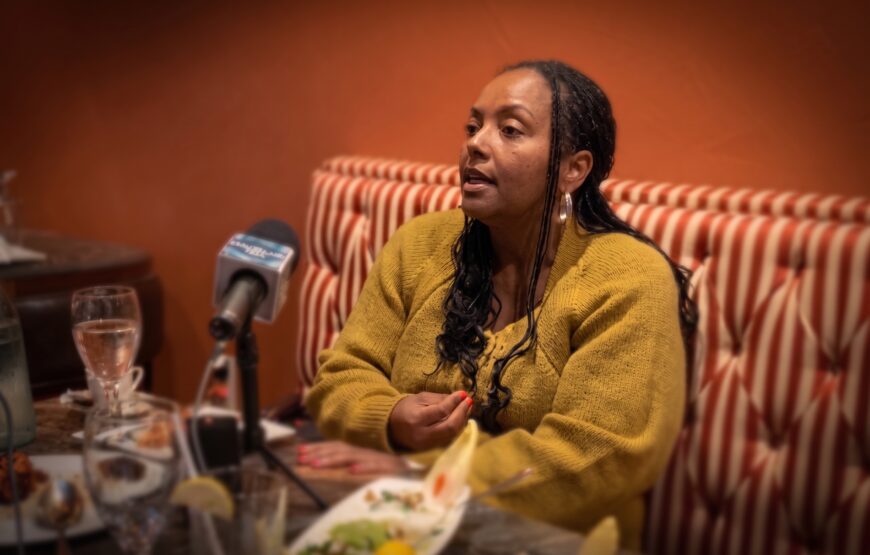
It’s the second time in three months Superintendent Ruth Turner has had to publicly defend Montclair’s handling of special education against the suspicion that money, not need, is driving decisions.
In June, The Montclair Pod examined a claim from a parent in the Montclair Moms, Dads and Parents Facebook group that special education was “eating Montclair schools alive,” pointing to out-of-district placements that can cost the district more than $70,000 a year per student, with total placement spending rising from $5.6 million in 2023-24 to a projected $7.9 million this year. Turner’s response then was to point to the long view: “If you look at the five-year numbers, you’ll see that out-of-district placement has decreased.” The data backed her up, if imperfectly: placements had fallen from 101 students in 2018-19 to 76 by this spring, though private-placement counts had held flat at 73 students since 2023, meaning most of that decline predates the district’s current budget crisis. Even as headcount held roughly steady, the bill kept climbing, a function of rising per-student tuition costs rather than the district placing more kids.
Now, in a new “Supper with the Super” interview, Turner is fielding a related but distinct version of the same worry: not about costly placements outside the district, but about services inside it. Some families have described experiences where a child had an IEP last year and doesn’t this year, with no clear explanation beyond a reevaluation. Could a reduction in IEPs be a trend, as the district grapples with fiscal challenges.
“Without a shadow of a doubt, the budget has nothing to do with it,” Turner said. “I’ve been very clear, even though I’ve felt a lot of pressure from folks who say special education services are draining our system. I make no apologies for that. Any student who needs something to succeed academically, we have a moral obligation to provide it.”
Turner drew a distinction between individual cases and the pattern families are describing. She said it isn’t unusual for a service to end once a reevaluation shows it’s no longer needed, sometimes within 30 days of that determination, and that this should be read as a success rather than a loss. “That should be celebrated,” she said.
Her strongest evidence against a budget motive is the same kind of trend-line argument she made in June, just pointed at a different number: Montclair’s declassification rate, the share of students who lose special-education status entirely, which she described as “very, very low.” That’s low enough, she said, that the district “gets dinged” for it, since state expectations generally assume some students won’t need services for their entire academic careers if the right supports are in place. “That’s absolutely not happening in the way that families think it’s happening,” she said of budget-driven cuts. She said staff have not received any budget-related directive regarding IEP decisions. “They’re not over there thinking, let me see what I can save the district,” she said.
Turner also described a concern that cuts the opposite way: that in some cases, services continue for years without any change, partly because families resist modifications, something she called “problematic” in its own right and unrelated to cost.
She spoke from personal experience, too. Her own daughter received special education services, Turner said, and she remembers how “nerve-wracking” it was as a parent to be told what needed to happen. That’s part of why, she said, she doesn’t want to dismiss every family’s concern outright, even as she stands behind the district’s process. “I don’t want to speak in blanket terms, because I don’t want to say that everyone’s concern is unjustified,” she said. “We can look at it case by case. But I think there are stories that get told that aren’t always based on reality.”
The broader special-education picture Turner described lines up with priorities she’s laid out before. In the June interview, she pointed to earlier identification, catching struggling students before a crisis forces the issue in third or fourth grade, as the real lever for reducing costly placements down the line rather than under-classifying kids to save money. This fall, she pointed to a school climate and culture survey launching with Ruckus in October, tied in part to a disproportionality citation the district received over classification rates for Black students with IEPs, as the next piece of that effort, work she said is being led by Renaissance’s former principal in a newly created district-wide role.
For families who remain unconvinced, the path Turner and the district have both pointed to is the one that’s existed all along: raise a specific concern in writing with Pupil Services, and if it can’t be resolved, mediation or a due process hearing through the state remain available, though Turner has acknowledged that route sometimes ends in litigation more often than she would like. Whether her numbers settle the broader anxiety, or simply shift where it’s aimed, may become clearer as this year’s reevaluations play out.