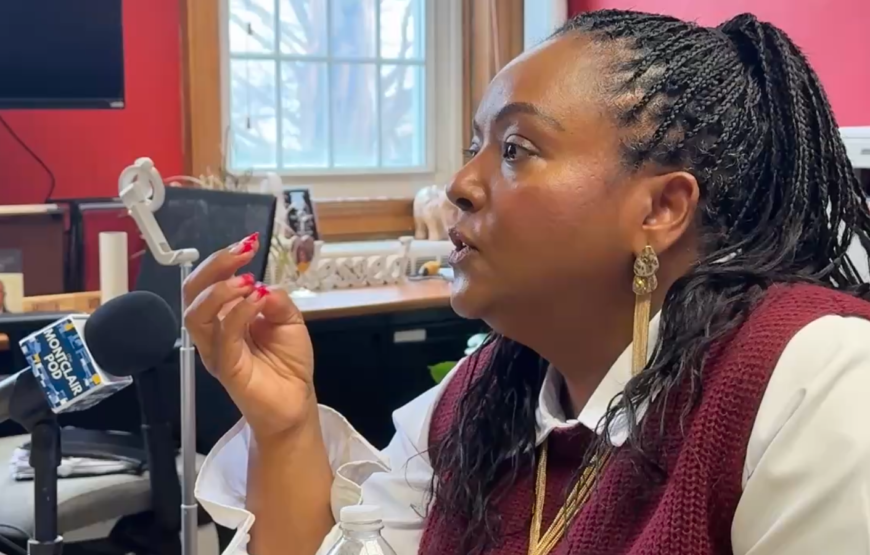
Superintendent Ruth B. Turner welcomed the Montclair Pod to her office on Valley Road for a candid conversation about the current state of Montclair’s school district.
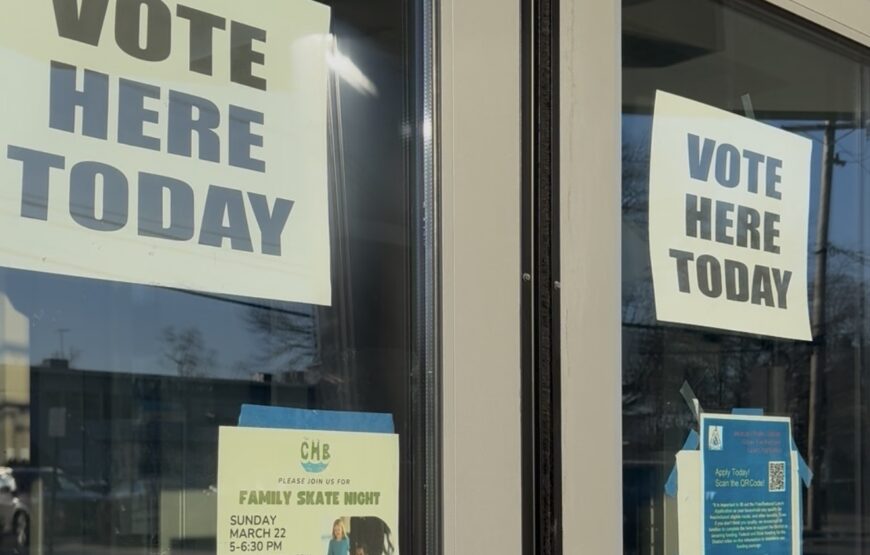
The town finds itself at a pivotal moment as the residents debate the March 10 referendum, which would implement a tax increase to support essential district needs. With tough financial decisions on the horizon, Turner spoke openly about preserving Montclair’s unique magnet school system, navigating transportation and staffing costs, and enhancing services for students with specialized needs—all while keeping equity, inclusion, and academic excellence at the forefront.
This interview was done days before a lawsuit arrived, challenging the March 10 referendum.
Turner Stresses What Is at Stake in March 10 Vote
As the town approaches the March 10 vote, Turner is urging residents to stay informed and engaged, noting that confusion around issues such as a potential state monitor highlights the need for clarity. She encouraged families to “be engaged and plug in,” stressing the importance of understanding what’s at stake. “I really want us to think about when we cast a vote, just be clearly aware of how we’re voting and what the consequences of our votes are,” she said, emphasizing that informed choices matter for the community’s future.
The superintendent emphasized that the district has made every effort to share “every financial information that we have, new developments,” even in the face of criticism. “Some folks say you’ve gone public too soon. But again, I promised transparency. So everything is out there,” she said. She acknowledged that confusion has sometimes stemmed from “external forces,” whether well-intentioned or not, and described how the district has prioritized clear written communications, board presentations, and town halls to ensure accurate information is available.
For residents seeking clarity, Turner pointed to multiple resources, including town hall recordings, frequently asked questions, and the district website. “I think anybody who really wants accurate information, as we say from the horse’s mouth, has an opportunity to do that in multiple means,” she said.
IF Yes/YES FAILS
Looking ahead to March 11, Turner outlined what would follow a yes/yes vote and what could happen if the measure fails.
If voters approve the proposal, Turner said there would be a gap between the vote and when the town can assess and collect taxes and send revenue to the district. “Immediately with a yes/yes, we would look into a tax anticipation note that will help us bridge that time period and allow us to continue our operations as a school district,” she said. Even with approval, the district would still face “roughly a $3.5 million dollar deficit that we will have to close,” she said, adding that balancing the budget and rebuilding reserves is essential. “God forbid we have an emergency, we need to be able to take care of that and that’s what our reserves would allow us to do.”
“Folks really want absolutes,” she said, noting “so many moving targets” including unknown state aid figures. Her intention, she said, is to present “a picture of this is how we’re going to eliminate the three and a half million dollar deficit.”
If the district instead faces a $10.5 million shortfall, Turner said the impact would be severe. “None of it is good,” she said, referencing a recent $2.8 million reduction. “We feel it everywhere. And I believe parents feel it everywhere.” A cut of that size would “really have a significant impact on us,” she said.
“Who’s going to feel the most pain of that is our children, right? And that’s just a fact,” Turner said. Under that scenario, the district would also be assigned a state monitor. “The decision making is not necessarily lies with us,” she said, adding that while the board could make recommendations, it would have to consider the monitor’s directives and philosophy if the March 10 vote does not result in a yes, yes outcome.
No kids in the district?
Addressing a major issues in our community, Turner spoke to what is at stake for residents without children in the district or direct ties to the schools.
“That’s really good question that I don’t think I’ve been asked,” Turner said. Her answer, she said, is to “center the children.”
“I firmly believe that our children are the future of any community. And I do believe they’re also the strength of that community,” Turner said. Even for residents without children or grandchildren in the schools, she said, “I think that’s not true” that they have no connection. “I do believe that a robust, healthy school district attracts and retains families. It’s better for our economy, right? It’s better for our communities.”
Turner urged voters to consider the broader impact. “What if I did have children in the school district? What would I want for them, right?” she said. “The children of our community belong to all of us,” whether or not residents have children themselves.
She acknowledged that going to a special election to exceed the 2% tax cap was difficult. “It was not an easy decision whatsoever. And no superintendent wants to do certainly not in their first couple of months,” she said, calling it “complicated” and at times political and divisive. “It was absolutely the last resort in which I felt as a superintendent was what I can do to ensure that our students, when they come to any of our schools, are getting the level of education they need and deserve.”
necessary reductions
Asked what potential cuts could look like under a $3.5 million versus a $10.5 million deficit, Turner said “everything would be on the table.” “We’re looking at $3.5 million, which is significant, but worse would be a $10.5 million,” she said. While she would “rather struggle” with the smaller gap, she emphasized that closing either deficit would require broad reductions and possibly significant changes.
Her priority, she said, is protecting classrooms. “What I want to avoid at all costs” are personnel cuts, noting that 75% to 80% of district expenses are staffing. “We want to avoid personnel cuts because I sincerely believe even with the cuts that we instituted in January, our schools are struggling with that,” she said, adding she is “doing everything I can to avoid reduction in my teaching staff.” Still, under a $10.5 million shortfall, she acknowledged deeper cuts and larger class sizes may be unavoidable. “$10 million dollars is a lot,” she said. “If you can’t find those efficiencies and cuts elsewhere, generally that’s what tends to happen,” particularly “under a state monitor as we study other places that have had state monitors or currently have a state monitor.”
Turner also noted that some staffing adjustments would occur regardless of the vote due to declining enrollment, citing classes with “five, six, eight students,” often electives. Consolidation and right sizing, she said, are fiscally responsible steps the district would take even without a deficit.
Survey Results, Audits, and Bond Updates
“Every school district has to do an audit,” she said, explaining that it reviews financial records and typically includes recommendations for a corrective action plan. While the report was not final, Turner said she expects it to reflect concerns already discussed publicly, including record keeping and overspending. “Nothing of that I don’t believe would surprise us.”
Once the corrective action plan is finalized, Turner said it will be shared with both the board and the public. Preliminary results from the family survey indicate that parents’ priorities strongly align with the district’s focus on protecting core instruction and ensuring all students receive a well-rounded education. “It wasn’t really surprising,” Turner said, noting that the survey results will be released in greater detail, including response numbers and specific priorities. She also clarified the distinction between the current annual audit and the upcoming forensic audit, which will be a deeper review of financial processes, vendor contracts, and past practices. “We did not find any money missing,” she said, but the forensic audit will explore areas such as unauthorized contract amendments and other red-flag items from prior administrations, ensuring the proper process was followed.
In regards to the bond referendum, Turner noted that while she was not involved in its initial planning, she understands the need for the funding. The referendum supports modernizing aging infrastructure, including roofing, heating, and cooling, which would otherwise become increasingly costly to maintain. She emphasized the district’s commitment to transparency, citing two town halls, regular online updates, and upcoming committee presentations detailing project status, delays, and next steps. “We’re grateful to the community that they approved it,” she said, highlighting that these investments create safe, modern learning environments that meet students’ needs.
Partnerships Between Schools and the Town
Turner emphasized that the school district deserves a portion of funds from development deals, including PILOT agreements, and highlighted the importance of fostering a stronger relationship with the town. She explained that her focus on the district’s financial challenges had limited her ability to engage fully with township officials, though she noted that some council members had reached out and expressed support. A new task force is being formed with members of the Township Council, the Board of Education, and her administration to explore shared services, pilot programs, and other opportunities for collaboration.
Reflecting on past interactions, Turner noted that while the town initially lacked the resources to assist the district during budget planning, they later contributed $6 million to help prevent layoffs. She expressed respect for the town’s limitations but stressed her goal of strengthening the relationship. Turner underscored the district’s interdependence with the community, stating that strong schools are essential for a strong town, and shared her optimism about creating lasting partnerships that improve communication and planning, ultimately benefiting students, families, and the broader community.
Balancing Transportation Costs and Equity
The district’s transportation budget remains a major consideration, partly due to a longstanding Supreme Court mandate requiring school integration and the establishment of magnet programs. Turner noted that she is still reviewing the specific requirements of the court order but emphasized that staffing constraints prevent reducing personnel as a solution. “We’re going to have to look at other places to reduce, and transportation is not off the table,” she said, highlighting the ongoing challenge of balancing legal obligations with rising costs.
The current BOE’s approach to transportation and integration reflects a broader, lifelong commitment to equity and inclusion. Turner shared that Montclair’s magnet system initially drew her to the district because it offered a deliberate strategy for fostering diverse, high-quality educational opportunities. She added, “I wanted families to stay in public schools and have choice and opportunities, and hopefully by doing that, create a level of diversity in all areas,” underlining her dedication to ensuring fairness and access throughout the district.
Preserving and Strengthening the Magnet System
Turner emphasized her strong support for Montclair’s magnet system, calling it “the essence of the general value of Montclair” and a key part of what makes the district unique. She said she will do everything possible to preserve it but acknowledged that resource constraints make the March 10 budget vote critical. Turner was clear that, despite concerns from some community members about cuts, the magnet programs themselves have not been eroded, and she sees no evidence that their quality or purpose has been compromised.
She noted that while the magnet system was originally supported by significant federal funding, financial resources have naturally declined over time, which limits some program offerings. Turner explained that this reality has kept the district focused on immediate financial and operational challenges, such as cash flow and staffing, making long-term discussions about program enhancements difficult. Nevertheless, she affirmed that the district is now moving toward broader discussions about revitalizing the magnet programs and ensuring robust support for specialized student populations, including those with IEPs and multilingual learners.
Turner stressed that any updates or expansions to the magnet system require both time and resources to properly train and support teachers and school leaders. She encouraged the community to watch for updates in the coming weeks and months, noting that she regularly shares her instructional vision with staff and the public. “All those ideas require resources,” she said, emphasizing that investments in training and support are essential to sustain and strengthen the district’s unique programs.
#Slushigate & Walking Tacos
Turner knows the chatter about Montclair’s new food service vendor, Sodexo, has sparked plenty of questions—especially about menu options like walking tacos and slushies. She spoke to the district hosting a town hall where families could ask questions and get the full scoop on the updated food offerings for the children. The takeaway? Everything is healthier than before with no artificial coloring in the drinks, more nutritious ingredients overall, and yes, the slushies are on the menu as a treat for the upper level students.
Feedback from families has been overwhelmingly positive. Turner shared a story about a grandfather who sent her a video of his student enjoying the new lunches, saying it really captured the excitement students feel about the changes. Moments like that, she explained, show that the program isn’t just about nutrition, it’s about creating meals students actually look forward to.
The district is leaning on Montclair’s wellness committee and parent volunteers to keep standards high and ensure transparency. Ingredient lists are shared openly, and ongoing improvements are part of the plan. Turner emphasized that the goal is simple: help students build healthy eating habits while still making lunch something they enjoy, striking the balance between nutrition and fun.
Commitment and Community Support
The district’s financial recovery and long-term planning are framed as a five-year commitment. While acknowledging that tough decisions will be required along the way, the goal is to stabilize the budget, address systemic challenges, and ensure sustainability. There’s a strong belief that, with careful management and community engagement, this timeline is realistic and achievable.
Equally important is the role of the community in this process. Challenges like the upcoming special election are seen as opportunities to demonstrate character and collaboration. How disagreements are handled, especially in difficult moments, reflects the strength and integrity of the district and its stakeholders. Accountability paired with grace is emphasized as a guiding principle.
The district benefits from a deeply engaged and supportive community, even if that presence isn’t always visible in public meetings or social media. Handwritten notes, emails, and other personal outreach demonstrate the quiet but meaningful support that sustains leadership through challenging times. These gestures provide encouragement and reinforce the commitment to navigate difficult decisions on behalf of students and families.
Collaboration with community groups, like MPACT, plays a key role in shaping district decisions. Their respectful, evidence-based feedback provides objective insights, creating opportunities to consider different perspectives and strengthen policies. Similar contributions from volunteer committees, such as the transportation and finance committees, add hours of research and oversight, bringing both accountability and practical support to district planning.
The engagement of students and families also reinforces a culture of participation and shared responsibility. From student interviews to parent feedback on programs and services, this ongoing dialogue allows leadership to better understand the community’s priorities and respond thoughtfully. Such involvement fosters a sense of connection, ensuring that initiatives are informed by those they impact most.