Editors’ Note: The following essay was submitted by Montclair Public Schools Superintendent Ruth B. Turner in advance of the March 10 special election. In it, Superintendent Turner outlines the origins of the district’s $19.6 million deficit, the cuts already made, the two ballot questions before voters, and the potential consequences if they fail — including state intervention and deeper reductions to school programs.
As a local news platform, The Montclair Pod is committed to providing residents with direct access to the perspectives of those leading our public institutions. We encourage readers to review the district’s published materials, independent reporting, and community discussions as they inform their vote. (Further Reading: Montclair’s Magnet Schools at a Crossroads).
A District in Crisis: Uncovering the Deficit
When I arrived in Montclair last July, I carried with me the belief I have held my entire career: every student, regardless of their background, identity, or zip code, deserves access to a world-class education. That belief has not changed. What I discovered after starting as Superintendent, however, changed the trajectory of everything else.
On her first day, my interim Business Administrator, Dana Sullivan, found roughly 70 pages of outstanding invoices. These were bills that had gone unpaid, unrecorded, and unaddressed for years. What began as an $11 million problem in July grew to a $19.6 million deficit by September: $12.6 million in accumulated debt from the prior fiscal year, and $7 million in projected shortfalls for the current one. The scope was staggering. This money is not missing: it has been accounted for and was spent on transportation, health benefits for staff, staff salaries, and other legitimate expenses. The cause was poor accounting and the prior administration’s failure to say no to spending that exceeded what the budget allowed. Bills were left unpaid and not entered into the district’s accounting system. Budgets were built on artificially low numbers. And year after year, the problem was kicked down the road.
These deficits arose before I started, but they are now my responsibility as Superintendent. I take that responsibility seriously.
(Further Reading: Inside the January School Budget Town Hall)
The Human Impact: Cuts Already Made
This crisis has already cost our community. We have laid off 103 staff members, including many educators, paraprofessionals, counselors, and support staff who gave their time and hearts to Montclair’s children. We have cut 28 student clubs. We have eliminated programs that families counted on. There are no words that make these decisions easier. Every one of them weighed heavily on me, and every one was made with a single guiding question: is this in the best interest of our students?
That same question brings me to the March 10 special election.
The March 10 Vote: What Voters Are Being Asked to Decide
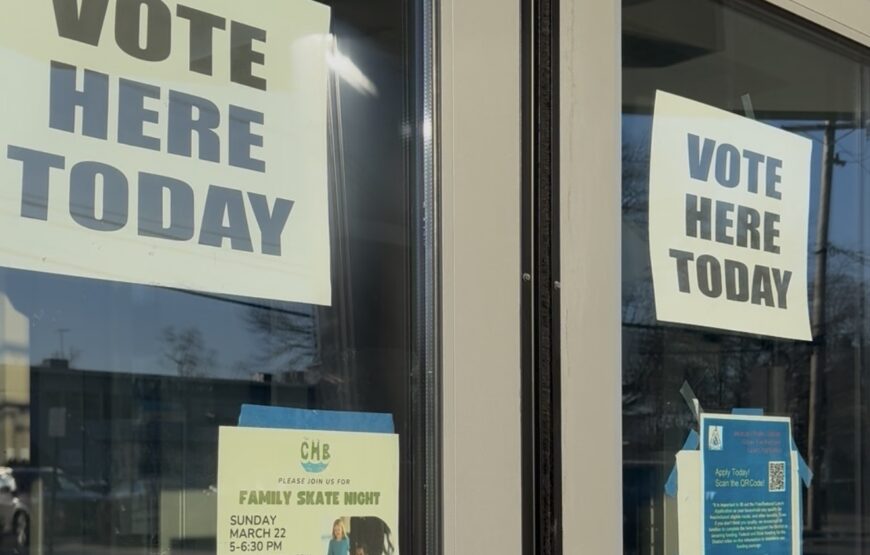
On March 10, Montclair voters will decide two ballot questions. The first asks whether to authorize a one-time tax levy of $12.6 million to retire the accumulated debt from the 2024–25 school year. The second asks whether to authorize a permanent $5 million increase to the annual tax levy to address the current-year deficit — an amount reduced from $7.6 million after we made $2.8 million in cuts this year.
I understand the weight of what is being asked. For the owner of an average Montclair home, these questions mean a $1,117 one-time payment and a $443 permanent increase to property taxes. These are significant sums in a town with already high property taxes. I do not take that lightly. I understand that for many families this is real money with real consequences, particularly for seniors on fixed incomes and residents already stretching to stay in the town they love.
What Happens If the Questions Fail?
But I also need you to understand what is at stake if Montclair does not act. If both questions fail, the district must accept a state aid advance to repay its debts and seek additional advances to finish this school year. This would result in a state-appointed fiscal monitor with ultimate authority over all of this district’s financial decisions, including personnel and programs, for the next ten years. Our annual state aid would be reduced by approximately $1.7 million each year to repay these advances. And, critically, we would face an estimated $10.6 million in additional cuts to next year’s budget, several times the cuts we have already made. The programs, positions, and opportunities our community’s children depend on would be severely diminish
Steps Toward Accountability
I want to be equally clear about what this moment demands of us as a district: accountability. Trust is not rebuilt with words. It is rebuilt with action. Since the deficit was uncovered in July, we have fired the auditing firm that missed years of unpaid bills and engaged a respected multinational firm to conduct our annual audit. We have restructured the business office and implemented segregation of duties so that no single administrator controls financial reporting and payments unchecked. We have developed a corrective action plan in coordination with the New Jersey Department of Education, which was approved by the Board of Education in November. We have filed a bond claim against the former Business Administrator. We are committed to including a forensic audit in our 2026-2027 budget. And we have opened our doors, holding multiple town halls, participating in community meetings and information sessions, and launching a community budget survey so your voice shapes what comes next.
These are not promises. They are actions already taken.
The Structural Deficit Challenge
But I will not pretend that accountability alone solves a structural problem. Our district, like all others in New Jersey, faces a structural deficit with costs rising faster than revenues, a result of inflation (particularly for health benefits) exceeding the state’s 2% limit on school tax levy growth. We cannot tax our way out of this structural deficit and we cannot cut our way out of it either. We must make sustainable changes in how this district operates: examining enrollment patterns, our physical footprint, transportation costs, staffing ratios, and program alignment with clear eyes and honest data. That work is underway, and it will continue regardless of how the vote goes on March 10.
What the vote determines is who leads that work, Montclair or Trenton, and how deeply the district needs to cut.
A Turning Point for Montclair
I came to this district because I believe in what Montclair represents. It is a community that holds its schools to high standards and that believes in equity, in inclusion, in innovation. Montclair has always understood that public schools are central to civic life, helping to pass our knowledge and values on to the next generation. I am proud to be the Superintendent and I believe that this moment, as painful as it is, is not the end of our story but rather a turning point.
On March 10, the future of Montclair’s schools will be in the hands of the people it belongs to: you. I ask that you inform yourselves, that you consider what is best for our children, and that you vote.
With respect and resolve,
Superintendent Ruth B. Turner
- The Essentials of Estate Planning for Montclair Families
- Aging in Montclair: Community, Connection, and What It Means to Grow Older Today
- Sen. Andy Kim on Aging, Caregiving Costs, and How Families Are Feeling the Toll
- Montclair Council Approves 30-Year PILOT for Lackawanna Plaza
- What Is Lymphatic Drainage? Inside a Growing Wellness Trend in Montclair