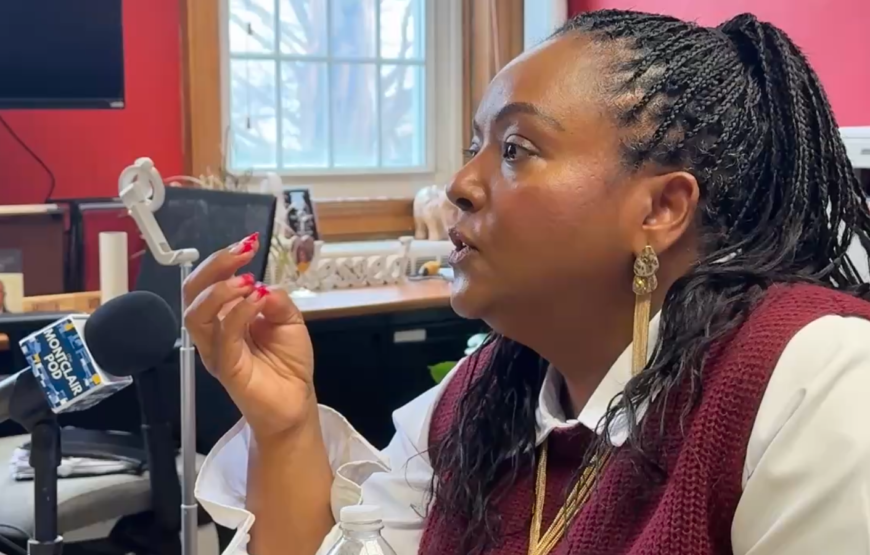
When the Montclair Pod asked writer Andrew Rice why he would voluntarily immerse himself in Montclair’s school crisis, the answer started with his day job. About a year ago, Rice was reporting a story for New York Magazine, where he is a Features Writer, about the nationwide decline in student achievement, spending months speaking with experts about falling standardized test scores and the troubling reality that large numbers of students, including roughly a third of eighth graders nationally, are struggling to read at a basic level.
At the same time, Rice was following developments much closer to home as a Montclair parent. He attended a district meeting last July expecting a routine budget update, only to hear the startling news that the school district was essentially out of money. The moment forced him to rethink his reporting. What he had been treating as a personal concern suddenly felt like part of the bigger national story – and eventually led him to launch his Substack, My Montclair Education, where he shares the research and analysis he’s continued compiling about the district.
Below is a summary of our conversation. Our full discussion is available wherever you listen to podcasts or on Youtube.
The classic Brooklyn-to-Montclair Story
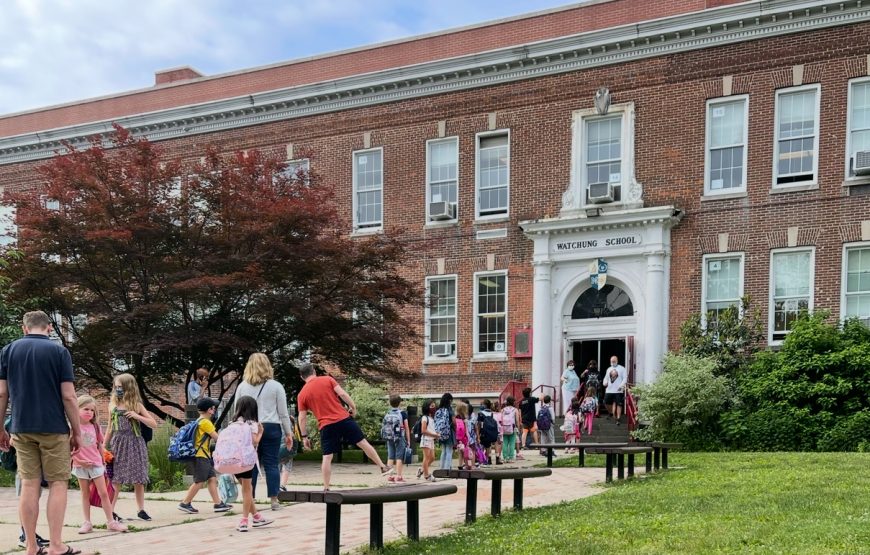
Rice’s path to Montclair followed a familiar script. Like many families, he moved from Brooklyn in search of strong public schools in New Jersey. His family began looking for a home in 2014 and closed on a house in early 2015, just as his son was reaching preschool age. His son attended Montclair Community Pre-K and later enrolled at Bradford Elementary School, which happened to be directly across the street from their home. For several years, Rice said, life felt almost idyllic. His son walked to school each morning, and from the outside the system seemed to be working just fine.
However, neighbors offered a different perspective early on. Some told him the school system was not quite what it appeared to be. At the time, Rice admitted he was skeptical. The school building looked good, his son had three teachers in his kindergarten class, and it was easy to assume the district was thriving.
Over time, however, Rice said the challenges within the system became harder to ignore. Even so, he is quick to point out that many parts of the district still work well. That belief is part of why he has said he supports the district’s upcoming referendum. Preserving what is working, he argues, should go hand in hand with acknowledging where the schools fall short and need improvement.
Is Montclair a Warning Sign?
As Rice began writing about Montclair’s school system for a national audience, he wondered whether readers elsewhere would see the town’s struggles as uniquely local. Instead, he heard from people across the country who recognized the same patterns in their own communities. Rice said he received unusually long emails from readers describing similar frustrations in suburban districts where families traditionally had high expectations for public education. Many felt their systems were no longer delivering what they once promised. The response suggested that what is happening in Montclair may not be an isolated problem, but part of a broader national moment in which institutions, including public schools, are under strain.
At the same time, Rice cautions against portraying the current situation as entirely unprecedented. Public education in the United States has never been flawless, he noted, recalling that the school system where he grew up in Columbia, South Carolina, struggled in many ways even when he was a student. But the data today does point to real challenges, including measurable declines in student achievement that educators and policymakers cannot ignore.
Montclair reflects several of those trends. The district continues to grapple with persistent racial and economic achievement gaps, which are partly driven by declines among lower-performing students. At the same time, Rice said, many of the town’s highest-performing students benefit from outside support such as private tutoring, creating a widening divide between the majority of students and a smaller group at the top. The dynamic raises another question that has become central to Rice’s reporting: as district spending continues to rise, why are the results stagnating or, in some cases, declining?
Where did the money go?
One of Rice’s recent Substack posts, titled “Where Did the Money Go?”, focuses on a growing divide in Montclair’s school funding debate. On one side are residents focused on solving the district’s immediate budget crisis. On the other are those who want a clearer accounting before supporting any additional taxes.
Rice said that tension is understandable. District leadership is primarily focused on addressing the immediate shortfall, which currently stands at about $17.6 million. From that perspective, spending time reconstructing past decisions does little to solve the urgent problem of closing the gap. Rice said it is reasonable for residents to want answers. When people begin looking closely at the district’s spending patterns, they often wonder why they should commit additional funding without a clearer explanation of how previous money was used. For Rice, that question became the starting point for his reporting.
Through his Substack, My Montclair Education, Rice has tried to approach the issue in a more journalistic way. He has spoken with local experts, accountants and public finance professionals while working through the district’s financial documents. In one instance, he sat down with a friend who works in public finance ratings to review the district’s audit report, a document that runs hundreds of pages.
Even with that expertise in the room, the answers were not always clear. The reports, Rice said, can be dense and difficult to interpret, filled with technical language that makes it challenging for residents to fully understand what happened. That lack of clarity, he believes, contributes to the frustration many people in town are feeling.
For Rice, the debate should not be reduced to a simple claim that district leaders are incompetent. School systems are complex organizations with competing priorities and structural pressures. But the difficulty of tracing the financial story underscores why so many residents continue to ask the same question: before moving forward, they want to better understand how the district arrived at this moment.
What Rice Found in the Numbers
After reviewing the district’s finances, Rice said the problem appears less about missing money and more about how the district managed and accounted for its spending. In his reporting, he points to what he describes as clear breakdowns in financial oversight under the previous administration, including a practice around 2023 of pushing certain bills from one fiscal year into the next to temporarily balance the budget.
When residents ask what happened to the money, Rice said the answer is relatively straightforward. After reviewing audit reports with a public finance professional, the conclusion was that the money was not missing. The district spent it, primarily on staff. Teacher salaries and employee benefits make up the largest share of the budget.
Many of those hiring decisions were driven by real pressures, including special education mandates and increased student mental health needs after the pandemic. But the spending ultimately exceeded what the district could sustain. Now, Rice said, the debate is less about whether cuts will happen and more about how severe they will be. That reality is part of why he said he supports the yes/yes referendum, arguing it could prevent more drastic losses in the system.
The Structural Math Behind the Deficit
The explanation behind Montclair’s budget crisis is ultimately less dramatic than many residents might expect. The structural math, he said, is “super boring,” even if the public conversation sometimes drifts toward corruption theories. That does not mean he ignored those questions. Rice said he looked into several issues residents have raised, including the district’s former business administrator, hiring patterns tied to East Orange and the companies handling school transportation. In fact, he said the school bus industry in New Jersey has a surprisingly murky reputation. While there may be political patronage and questionable vendors, Rice said those dynamics are not unique to Montclair and do not explain the size of the district’s deficit.
Larger drivers are more straightforward. Transportation costs have risen sharply, accounting for several million dollars in additional spending in recent years. Because those contracts are handled through the county, the district has limited control over how they are bid or awarded. At the same time, health insurance costs for employees have climbed significantly.
The biggest factor, however, remains staffing. Rice said the district has hired more employees over time, in part to meet special education mandates and other student needs. When combined with rising salaries and benefits, those personnel costs make up the overwhelming share of the district’s spending.
In the end, Rice said the structural math comes down to a handful of large expenses: people, benefits and buses. Those costs continued to grow until the district reached a point where the budget could no longer keep up.
Why the District Struggled to Cut Costs
Rice suggests that Montclair’s inability to trim spending stems from a mix of historical surpluses, community priorities, and unforeseen crises. Around 2014, the district had a surplus from conservative projections and higher-than-expected tax revenue. That extra money was partly returned to taxpayers, but it also funded new initiatives, including expanding world languages, hiring curriculum support teachers, and adding staff for special learning communities and electives.
In the following years, additional factors made it harder to rein in costs. Front office turnover, unexpected facilities issues like a collapsing staircase at the high school, and COVID-related ventilation upgrades all required spending. Then in 2022, federal COVID relief funds and increased state aid created another inflection point. Although some of the money was earmarked for one-time expenses, its presence freed up resources for hiring, including positions to address social-emotional learning, restorative justice, and special education needs.
By 2023, Rice said, the district had significantly increased staffing to meet both mandates and community expectations. When the new business manager identified a $7.5 million deficit, tensions boiled over, leading to student protests and widespread concern about the sustainability of district spending.
Beyond the Shiny Objects
Rice said much of the public focus on potential corruption or questionable contracts, like the district’s food services deal, distracts from the larger financial picture. He acknowledged that government contracting in New Jersey can involve patronage and inefficiencies, and some contracts may raise red flags. But in the grand scheme of the district’s budget, those issues are relatively small.
“The cost of these things is modest,” Rice said. “It’s easy to fixate on the baseball field or the food services contract, but what you don’t see are the health benefits and contractually scheduled salary increases that rise faster than our tax cap.” Those ongoing obligations, he said, are the structural pressures driving the district’s deficit, not individual contracts or visible projects.
He urged residents to hold two ideas in mind at once. There are real shortcomings in the system and some areas of questionable contracting, but the bigger risk is cutting funding in a way that could trigger enrollment declines, reduce services, and ultimately harm the community. For that reason, he said, he supports the upcoming referendum with a yes/yes vote and is hoping voters will do the same to prevent what he called a “doom loop” for the district.
Subscribe to Andrew’s Substack, My Montclair Education, to learn more about the Montclair public school system.