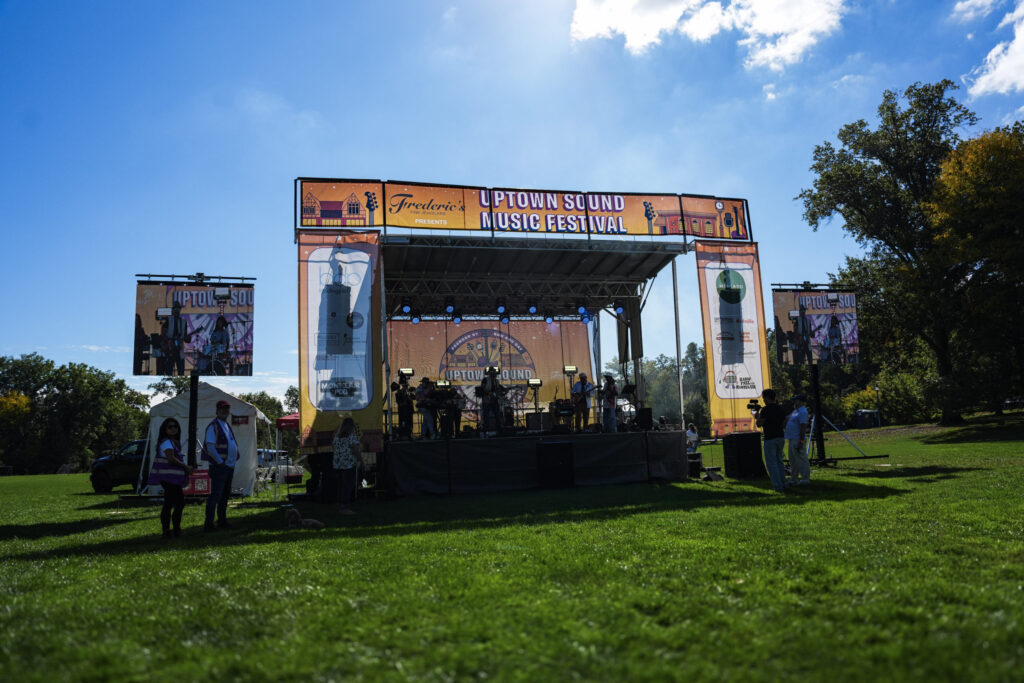
At 2:05 p.m. on Oct. 3, the first band at the Uptown Sound Music Festival began to play, and Anderson Park wasn’t exactly packed. There were some kids playing soccer, but music fans weren’t pouring in.
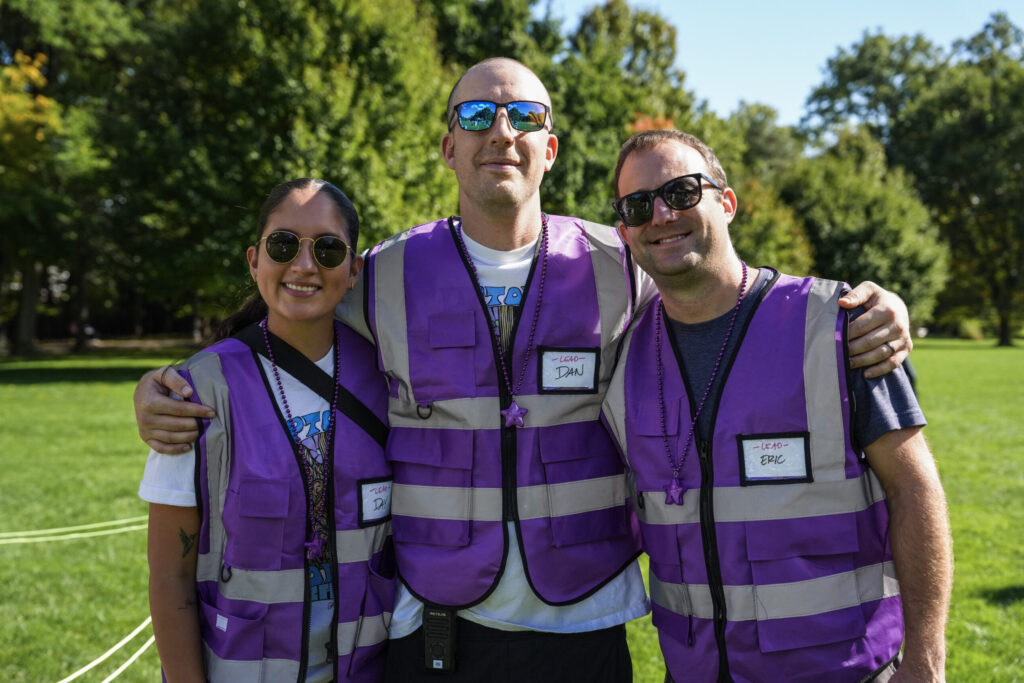
For Dayana Ordonez and Dan Campeas, who own Dan and Day’s and Farmhouse Fried Chicken, it was an unnerving sight. They had spent the summer assembling roughly $76,000 in sponsorships and support to stage a free music festival in Upper Montclair, corralling musicians, vendors, volunteers and municipal approvals around an idea that had steadily outgrown its original dimensions.
Now the stage was live. The weather had held. And for a moment, almost nobody was there.
“Where are the people? I hope people show up, ’cause I was freaking out,” Ordonez recalled. “I was really worried.”
Campeas, meanwhile, was circulating among sponsors and projecting a confidence he did not entirely feel. The crowd would come, he told them. Give it until 3:30. Then he walked away hoping he had not just made a promise he could not keep.
About 15 minutes after his imagined deadline, he noticed something.
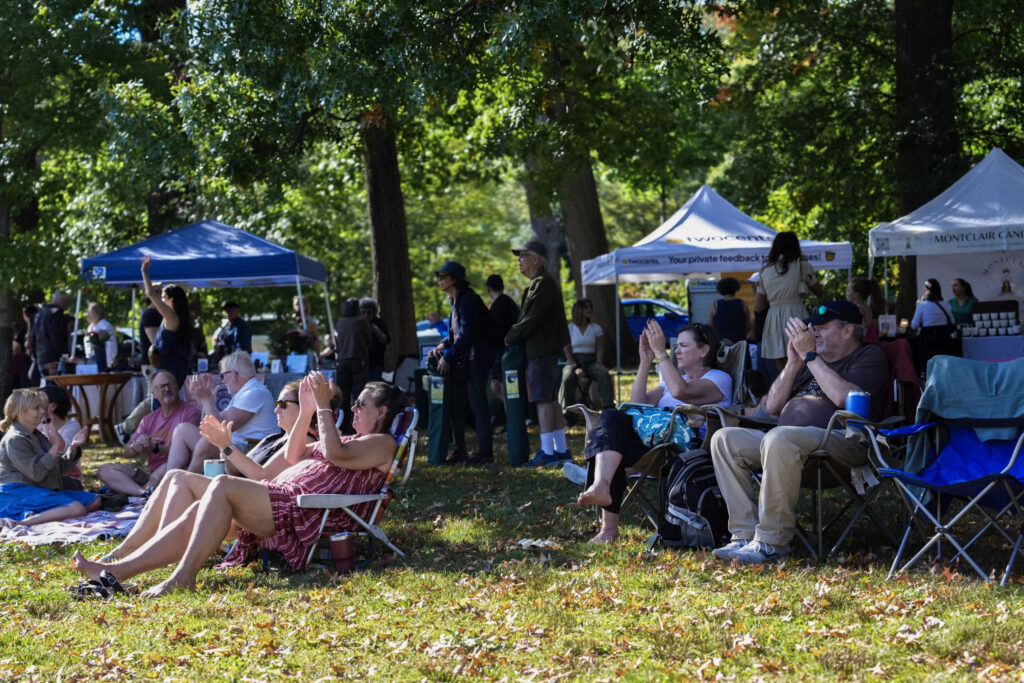
“Somewhere around 3:45 I had my head in my phone, and I just looked up, and the whole thing was full,” Campeas said. “I was like, ‘This is insane.’ I just kind of took a lot of moments of just watching people.”
By nightfall, organizers estimate roughly 5,000 people had moved through Anderson Park for an afternoon and evening of live music, local vendors and free admission — a turnout that transformed what had begun as a neighborhood experiment into something that felt, almost immediately, much larger.
Full disclosure: The Montclair Pod was the festival’s official media partner, which gave us an unusually close view of the day. Farnoosh was in the crowd, and Mike closed the night onstage with The Bard Band. We were participants as well as observers.
When the Crowd Finally Came
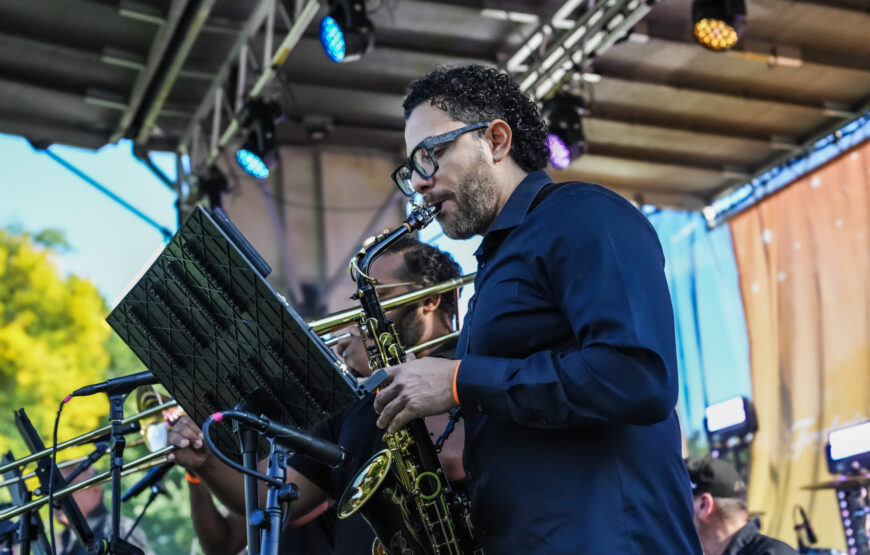
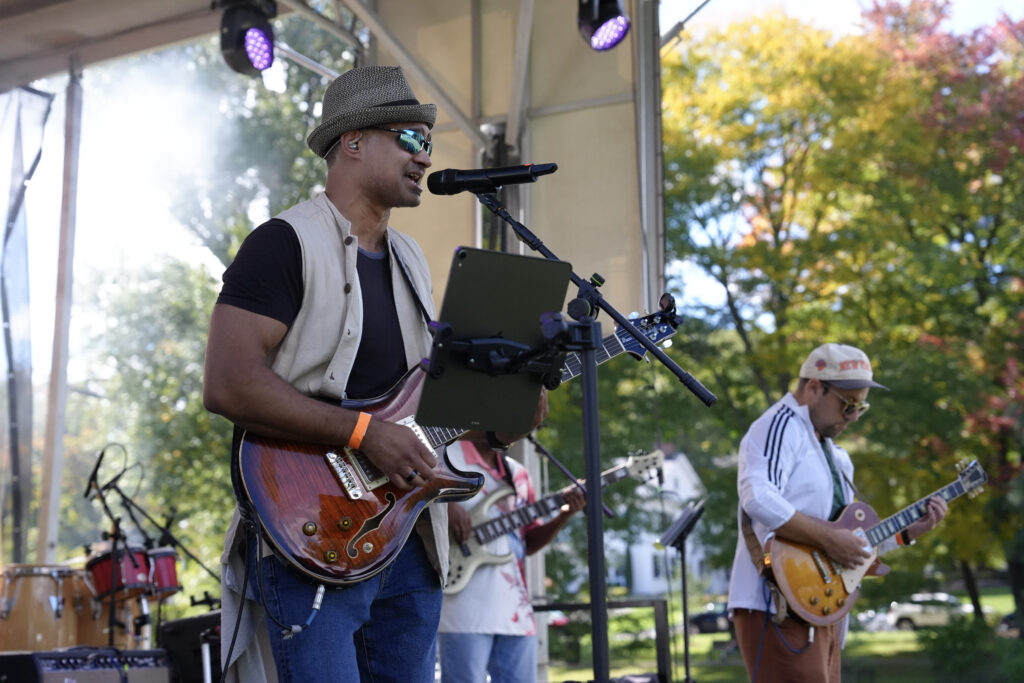
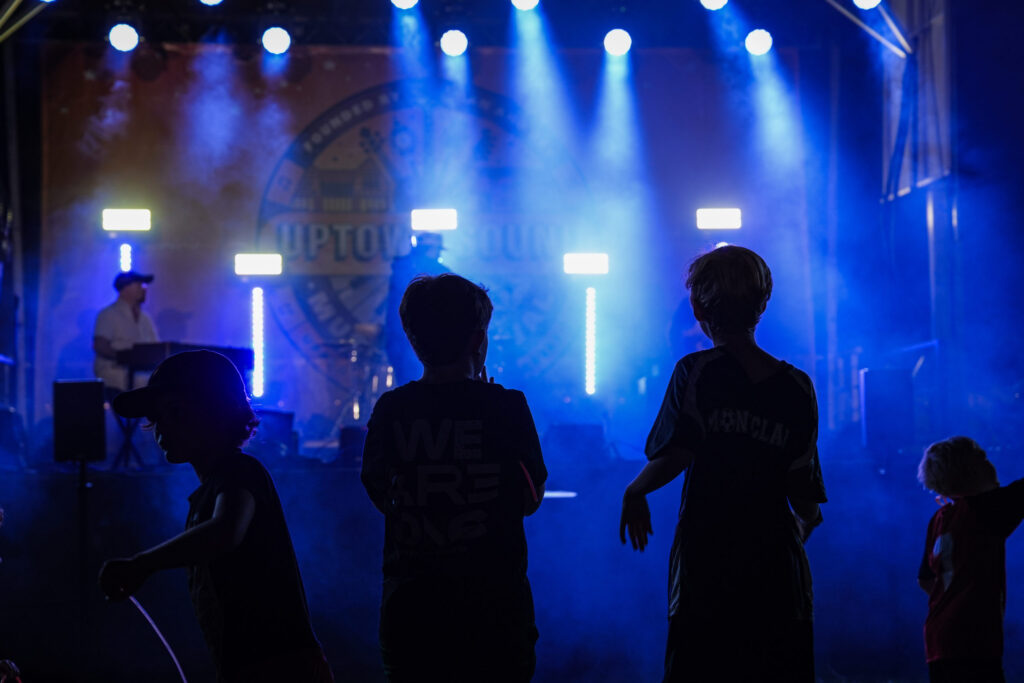
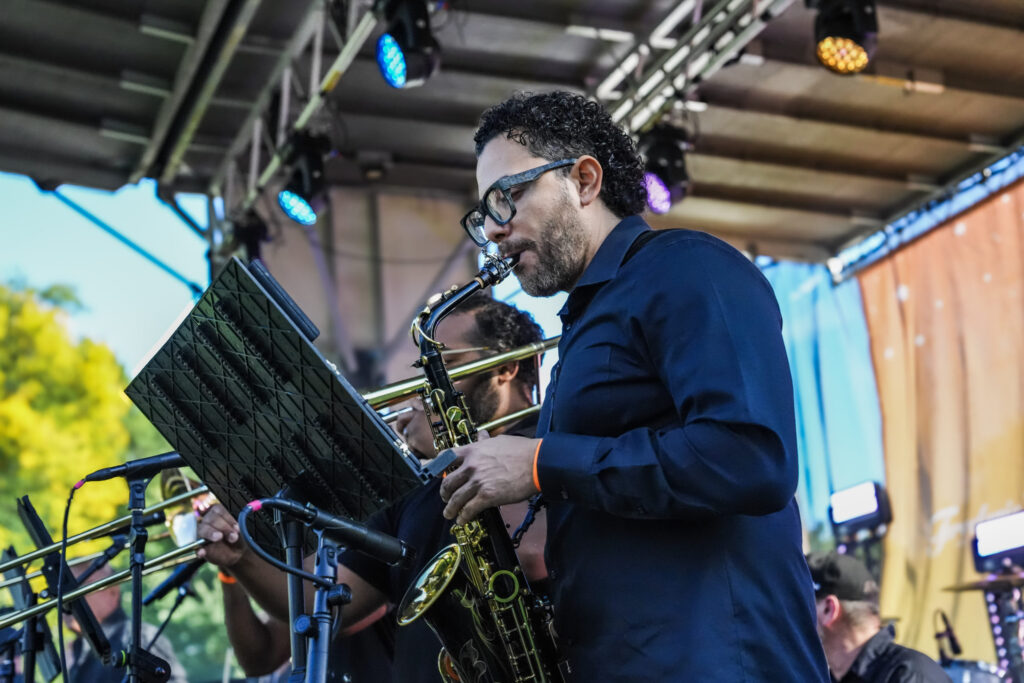
Sierra Joy served as M.C., introducing Rho & The Nomads, El Ritmo and Waterbury Road before The Bard Band took the final set. By Mike’s estimate, a couple thousand people were still in the park by then, the largest audience the band has played for.
Two days later, the people who put the event together were still absorbing the scale of it.
“I’ve cried two thousand times at least,” Ordonez said. “It was just crazy to see how many people were there.”
Campeas was still searching for a vocabulary for the aftermath. “I haven’t found the words to describe how I’m feeling, honestly,” he said. “Been a lot of happy tears. I’m pretty emotional, dude.”
The blue skies that afternoon had hardly been guaranteed. Uptown Sound was originally scheduled for Sept. 26, but the forecast forced organizers onto their rain date a week later. The change cost them volunteers and required them to reshuffle musicians and logistics on short notice. Campeas, a devoted planner, spent the intervening days in an increasingly intimate relationship with weather apps.
“The weather was the only thing that was driving me crazy,” he said. “Honestly, I know more about the weather now than I’ve ever known in my entire life.”
From a Church Lawn to a Full-Scale Festival
But weather was only one of the uncertainties embedded in the project. In its earliest form, Uptown Sound was not supposed to resemble a large public festival at all. The initial idea was modest: some music on the lawn at St. James Church.
Then Campeas and Ordonez sat down with David Genova, a local developer who runs The Wellmont Theater and knows the machinery required to stage a sizable live event in Montclair. Genova gave them an estimate: done properly, a festival like the one they were envisioning could cost about $65,000.
“I couldn’t believe it at the time, and I was kinda sweating, because we had already basically announced that this is what we’re gonna do,” Campeas said. “And we had no money raised.”
So the work changed. What had started as a creative idea became an exercise in fundraising, permitting, staffing and infrastructure.
The economics also clarified something else: a free festival of this scale could not function like a conventional commercial event.
“You need labor, and if you pay the labor, there’s no chance you can make profit, ’cause there’s too much labor that you need,” Campeas said. “That’s why all these free music festivals are nonprofits with volunteers, which is what we found out.”
A critical piece fell into place in May, when Ritesh Patel of Radio Free Montclair saw an Instagram post from Campeas about the festival. Radio Free Montclair, an independent nonprofit broadcaster focused on local news, culture and music, had its own interest in community programming (they also stream episodes of The Montclair Pod).
“I sent him an email saying, ‘So do we. How can we work together?’” Patel said. “And that’s how it all started.”
The partnership turned out to be more than a meeting of minds. Radio Free Montclair’s nonprofit status gave Uptown Sound an organizational partner and helped move the project through the permitting and approval process required for a large public gathering.
“It all came together just because of that,” Patel said. “Serendipity more than anything else.”
The Machinery Behind the Music
From there, the work became increasingly granular.
Montclair resident Eric McMillan took responsibility for the vendor operation, which meant coordinating 45 businesses while also navigating requirements involving the county health department, town health department and fire safety officials.
“Liaising with 45 different vendors and the county health department and the town health department and the town fire safety department was a lot of moving pieces,” McMillan said. “But everybody we dealt with was great, professional.”
One of the clearest measures of how the crowd behaved came only after the crowd was gone. By the end of the night, organizers had watched a roughly 10-foot mound of trash accumulate. When they returned to Anderson Park at 9:30 the next morning, the county had already hauled most of it away. A walk of the field yielded only about half a garbage bag’s worth of debris.
“Great job, Upper Montclair residents and businesses,” McMillan said.
That emphasis on the surrounding business district was not incidental. It was one of the festival’s animating ideas.
Keeping the Dollars Local
One of the most common pieces of feedback after the event was that there should be more food. Campeas and Ordonez say that does not mean bringing in restaurants from elsewhere.
“We’re never gonna bring in food from outside,” Campeas said. “It’s just not gonna happen. Even if all the food vendors are like, ‘We don’t wanna do it again,’ then people are gonna have to walk into town. ’Cause the whole point of this is to benefit these businesses here, and that’s never gonna change.”
There is at least some early evidence that the strategy worked. Dan and Day’s recorded one of its strongest days ever, organizers said, while sales at Farmhouse Fried Chicken were up about 20 percent from the previous week.
And despite the scale of the undertaking, the first year appears likely to finish with a small cushion. After tens of thousands of dollars in expenses, organizers expect to have roughly $5,000 to $10,000 left over — enough to give a second edition something the first did not have: a starting balance.
For Patel, the event also offered a useful counterpoint to one of Montclair’s recurring habits — framing downtown and uptown as if one neighborhood’s success must come at the expense of another’s.
“Our attitude is this is a town where we can raise all boats, and we should,” he said. “If we collaborate, imagine what we could achieve.”
What struck Ordonez was how little of the backstage complexity made itself visible to the audience.
“It’s honestly crazy ’cause it’s our first year, but we weren’t unprepared,” she said. “It was crazy how flawlessly it just went.”
What Year Two Could Look Like
Flawless, of course, does not mean finished.
Ordonez is already imagining a more expansive children’s area next year, along with a stronger fall-festival feel. “Maybe some pumpkins involved,” she said. “I keep seeing a petting zoo and fall fest.”
Campeas wants to push in the same direction: more children’s programming, more music and a longer day. Other ideas under discussion include a beer garden and a touring headliner, though none has been confirmed and organizers have not announced a 2027 date.
Whatever comes next, it will require the same kind of community effort that made the first year possible. McMillan is already encouraging prospective volunteers not to overthink the commitment.
“Sign up no matter how much time you have,” he said. “We’ll take you whether you have two hours or you can stay for the whole day. It’s a really cool experience. You get to see backstage and see what goes into this.”
For a festival that began as a much smaller idea, Uptown Sound ended its first year with something its organizers could not manufacture in advance: a crowd, a sense of momentum and, perhaps most importantly, a reason to do it again.
Image credit: Jordan Mirrione | Uptown Sound Fest