The Montclair Pod is kicking off a new series, Supper with the Super, giving the community a chance to see a different side of Superintendent Ruth B. Turner while also diving into the important topics shaping the district.
In this first installment, we enjoyed a delicious meal at Italiana by Zod, sampling dishes such as the kale Caesar salad with a spicy kick, the smoked salmon with jalapeño, and our favorite, the Gigli pasta (aka the giggly pasta). This black truffle, mushroom, and scallion dish was perfectly cooked and beautifully balanced, earning high praise from everyone at the table.
Between bites, Turner shared her thoughts on everything from district leadership to her favorite ’90s rap artists, giving a candid glimpse into both her professional perspective and personal interests.
Close Vote Leaves Budget Uncertainty
The narrow margin of the recent school referendum came as a surprise to both district leadership and locals, highlighting how divided the community remains on key budget questions. Turner said she had anticipated a split result, but not one this close. “I was surprised by how close it is,” she said, adding that she expected “a yes on question one and a no on question two.”
Mike and Farnoosh raised questions about how that split outcome would translate into real financial impact, asking whether a mixed result would significantly change the scale of potential cuts. Turner indicated that it would not. “A yes in question one and a no in question two, it provides very little relief for our current budget,” she said.
With uncertainty still surrounding final figures, the district is preparing its next budget presentation based on conservative assumptions. Turner said that unless new information emerges, officials will move forward as if neither question ultimately delivers meaningful financial relief. “The budget we will present on Wednesday, assuming we don’t have anything official before then, would be with our current state and also the assumption of a no-no,” she said.
Turner also expressed frustration with how the public has responded as the budget situation has become more immediate. She said the district has consistently communicated the potential consequences of a funding shortfall, even as some dismissed those warnings earlier. “One of the things that still tends to perplex me is that I have been as open and transparent as I possibly can be,” she said. “I told folks what would happen if we don’t get the resources that we need.”
At the time, she said, those statements were met with skepticism. “Some people accused me of being fear-mongering and that I was exaggerating,” Turner said. Now, as those projected impacts begin to materialize, she sees a shift in public reaction. “Now that we’re living it out, people are acting like they’re shocked,” she said, emphasizing that the current situation was not unforeseen. “All along, we’ve said these are the things that will happen because the budget gap is so large.”
Timing of Closure Draws Questions
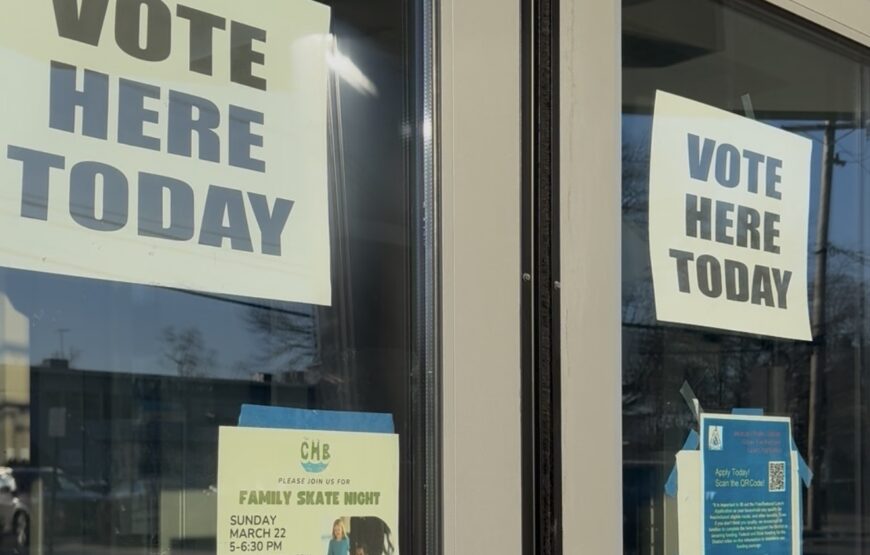
Questions arose about the timing of the Renaissance school closure announcement, which came the night of the vote and quickly drew scrutiny from some in the community. Mike and Farnoosh asked whether the decision was intentionally timed, noting that some residents wondered why such a significant update coincided with voting.
According to Turner, the timing was dictated by logistics and a desire to communicate directly with families and staff rather than by strategy. “Let me clarify that because I know that in the world of social media, people make their own assumptions,” she said. “One of the things about me is that I try as much as possible to allow folks to hear from me.”
Scheduling constraints left few options. With a board retreat on Monday and a board meeting on Wednesday, Tuesday was the only viable day. “I didn’t think it would be fair to call a meeting on Thursday or Friday the week before without much notice,” Turner explained. The initial plan had been to hold an in-person meeting at 6 p.m., after school dismissal, so families could attend.
Community feedback soon prompted a change. “I got very quickly feedback from folks that said, how can you have a meeting during the vote,” Turner recalled. The district shifted to a virtual meeting at 8:30 p.m., after polls closed, allowing families to participate from home. The goal, she said, was to ensure stakeholders heard the news directly from district leadership before it became public. “I felt it was important to hear it from me before going public,” Turner said. The rollout followed a staged approach, with information first shared internally. The plan was presented to the board on Monday, then to families and staff on Tuesday, and finally released publicly on Wednesday. The decision itself came together only after reviewing enrollment and financial projections. While consolidation had been anticipated, the specifics required further analysis.
Questions remain about whether earlier communication could have influenced voter behavior. Farnoosh referenced a parent who said she might have voted differently had she known Renaissance was under consideration for closure. Turner expressed no regrets about the timing. “Absolutely not,” she said. “I’m not going to communicate anything that’s not definitive. I’m not going to communicate anything without making sure the plan is viable.”
District leadership had already signaled the likelihood of consolidation before the vote, even if specific schools were not named. “What I did present before people voted was that there would be a school consolidation and that would also be likelihood of another school being impacted,” Turner said. “So no, I don’t have any regrets about that.”
Decisions like these are often easier to critique from the outside. “It’s easy to give feedback when you’re not in it,” Turner noted. “It’s completely a different viewpoint from where I’m sitting.”
Budget Cuts, Consolidation, and Long-Term Planning
The district’s recent restructuring efforts are expected to bring some financial relief, though much of the savings will be one-time rather than ongoing. Closing the preschool center, for example, is projected to save $2.3 million, Turner explained, while also creating an opportunity to lease the building behind central office, generating additional monthly revenue.
Officials are also exploring efficiencies in transportation. “By the time we present our findings, I expect we’ll have found savings that may not be equal, but close to that magnitude,” Turner said. She emphasized that while cuts are inevitable, the district is working to minimize the impact on staffing. “Everything impacts students, everything impacts staff. But as much as possible, we’re not allowing the majority of the cuts, or 100 percent of them, to come from staffing,” she said.
Turner framed these measures as part of larger structural changes necessary to address a persistent budget deficit. This includes reducing the district’s physical footprint and aligning resources with declining enrollment. While difficult and sometimes unpopular, she stressed that the steps are essential for long-term stability.
The conversation also touched on potential future consolidations. Turner clarified that the district’s approach is not simply about closing schools. It’s about reinvestment. “Usually when you close a school, you close it and let go of the property, sell it, or do something else,” she said. “What we’re trying to do is innovate and reinvest instead of just leaving buildings empty or selling them off.” She acknowledged uncertainty about how enrollment trends might affect future decisions but emphasized that any consolidation would be handled thoughtfully.
Looking ahead, Turner expressed cautious optimism. Acknowledging the difficulty of the current transition period, she said, “It’s hard to see a positive outlook in the middle of this struggle. But it will get better if we make the tough decisions and think about the long-term needs of the whole system, not just pockets.” She added, “I think in the next two years or so, we’ll be having a different conversation. I’m positive of that and I do believe down the road, we’ll have periods of growth.”
protecting our magnet district
Turner said reviewing and refining the district’s magnet schools will be a key focus in the coming months. She acknowledged that the world is changing rapidly, pointing to the rise of artificial intelligence and shifts in the job market as factors that should influence the district’s approach. She emphasized that the magnet system remains an important part of Montclair, offering schools the chance to maintain individual focus while giving families meaningful choices. “I think the magnet system is a good way where schools can still have their individual focus and then students and families have an option within that,” Turner said.
At the same time, Turner stressed the importance of clarifying and preserving each school’s unique theme. “Sometimes some schools have their magnet theme and then they have other stuff that’s not part of their magnet theme,” she said. “I’m committed to preserving the magnet theme, but if let’s say one school is, let’s say the STEM school, that’s not to say that there’s not STEM opportunities in other schools, but their opportunities shouldn’t look like what the STEM school looks like.”
Turner said the next step is engaging the community in discussions about the future of magnet schools. She emphasized that the goal is not to eliminate the system but to evolve and strengthen it. “I do believe that our next undertaking is having a community conversation around the magnet schools and what it would look like for us moving forward,” she said. “A lot of things have changed. That doesn’t mean that having those discussions means that we’re trying to eliminate the magnet system. I think we have to evolve and change and strengthen it. I do believe that’s the next critical step.”
State funding boost
Turner addressed the recent announcement by Governor Sherrill regarding New Jersey’s education funding, noting that the state’s approach to the structural deficit will provide some relief for the district. She said Montclair saw an increase in state aid, which came as a relief after initial concerns about a potential decrease. “I was really nervous because a week and a half prior to it, and I shared it with the board publicly and definitely my staff, we were told … to anticipate possibly a small decrease,” Turner said. She added that while some districts experienced cuts, Montclair received a modest increase. “I was glad that not only did we not get a decrease, but we’ve also got a little bit of an increase,” she said.
Turner framed the funding change as a helpful step in the context of the district’s broader financial planning, which includes addressing structural challenges and making long-term decisions about resources and staffing.
A message to district teachers
Turner acknowledged that some teachers are weighing whether to remain in Montclair during a period of transition, but she encouraged staff to stay engaged and committed. She said the district has worked to minimize layoffs compared with other districts and has supported educators in finding opportunities when reductions were necessary. “It’s not just Montclair; it’s a tough time in education,” Turner said. “We have so many committed individuals … there’s people that are committed not just to public education, but to Montclair. They really would rather work here and stay here. I just tell those folks, hang in there with us.”
She added that the district’s focus is on stabilizing staffing and providing a sense of security for teachers. “Once we’re stable, they won’t be just like, ‘I don’t know what’s going on month by month, year by year,’” Turner said. “That’s what I’m trying to work to the point where we can be stable and move on from there. We’re not quite there yet, but we’re getting there.”
Fundraising & the pta
The district has explored the possibility of creating a nonprofit foundation to allow community members to support schools financially while maintaining equity among students. Examples from other districts show similar foundations successfully funded programs such as social-emotional learning. “That could happen here, and it will most likely happen here, folks that are willing to create something similar to a not-for-profit foundation that would be able to donate those resources to the district,” Turner said.
At the same time, fundraising for individual programs or specific schools could create inequities. Contributions must benefit all students rather than privileging certain schools or activities. “I will not contribute to and I will not support [fundraising for one program] if it creates inequities,” Turner said. “Everything has to be for all students.” Differences in PTA fundraising across schools can inadvertently produce disparities, even without ill intent, and the district has a responsibility to address them. “Once we know the unintended consequences, we have a responsibility to say, how do we address that moving forward?” Turner said. Plans are underway to work with the PTA to identify equitable solutions that support programs for all students.
District and Town Explore Shared Services Collaboration
Montclair’s school district has begun discussions with the town to explore shared services and improve communication between municipal and educational leadership. A resolution was passed to form a work group or task force to co-plan initiatives and facilitate regular dialogue. Meetings are expected to begin in the coming weeks, with both sides emphasizing collaboration.
The effort has been described as a tentative olive branch. In the past, the relationship between the town and the district appeared distant, but recent engagement shows a growing understanding that both entities are working toward shared goals. Turner noted that the Mayor Dr. Renee Baskerville and Town Manager Eileen Berman have both been and communicative during this process.
Leadership in Montclair comes with intense scrutiny. Turner shared a quote she finds particularly resonant: “The cost of leadership is criticism from people who would collapse under your pressure. That price is high in Montclair.”
Day in the life of a Superintendent
Turner said she typically wakes up around 4:35 a.m., sometimes earlier, acknowledging that her sleep habits are not ideal. She said she usually goes to bed around 11 p.m. or midnight and recognizes the pace is difficult to sustain. “No, it’s not sustainable. I recognize that,” Turner said, noting that despite the limited rest, she has never needed a full eight hours of sleep.
Her mornings are structured around reflection and preparation. Turner said the first thing she does after waking is read the Bible and spend about 30 minutes in prayer. From there, she transitions into staying informed and connected, watching the news and beginning to communicate with colleagues. “Then I watch the news, and then I’m usually texting, emailing a little bit,” Turner said. She also noted she has become more mindful about how her early-morning productivity affects others. Turner said she has started scheduling emails to be sent later in the day to avoid surprising recipients with messages sent before dawn. “I’m learning to schedule it so people don’t get the emails when I send them,” she said, so her colleagues don’t feel obligated to respond during her early morning or late night working sessions.
Turner’s workday varies depending on her schedule. On days when she goes straight to the office, she said she typically arrives around 8 a.m. If she has meetings or school visits, her arrival time shifts accordingly. Ending the workday, however, presents a greater challenge. Turner described difficulty stepping away from ongoing tasks, saying there is always something more to complete. “It’s the leaving part that’s hard, because it’s always one thing, I’m going to do this next,” she said. As a result, she often remains at the office until about 7 p.m. and continues working after returning home.
Even outside the office, Turner said her mind rarely slows down. Whether responding to emails or drafting documents, she remains engaged with her work late into the evening. “My mind is racing,” she said. Despite the intensity of her schedule, Turner suggested she is working toward small changes, including adopting healthier habits like incorporating exercise into her routine. For now, her days reflect a deep commitment to her professional responsibilities but she’s aware this may lead to buthat long-term sustainability will require adjustment.
TURNER outside the office
Taking a brief break from school-related topics, we had a chance to get to know Turner on a more personal level, touching on a few things you might not know about her.
What does Turner do in her spare time?
When she’s not focused on district work, Turner is continuing her education, currently pursuing an EdD in Educational Leadership. Her research explores whether professional development translates into effective classroom pedagogy and instructional strategies. The program has spanned nearly seven years, beginning at the University at Buffalo and continuing at Capella University. If all goes according to plan, she’ll finish her program in May 2026.
What are you listening to?
While we think her theme songs should be I Will Survive or 9 to 5, she shared she has a soft spot for 1990s hip-hop. Her go-to artists include LL Cool J, Biggie, and Tupac, though her children jokingly push back on her music choices.
Any vacation plans on the horizon?
A beach vacation is her ideal escape. Having grown up along the Red Sea, Turner is drawn to sun and ocean destinations around the world. While vacation time is built into her contract, she admits she rarely takes full advantage of it, with most of her travel centered on trips home.