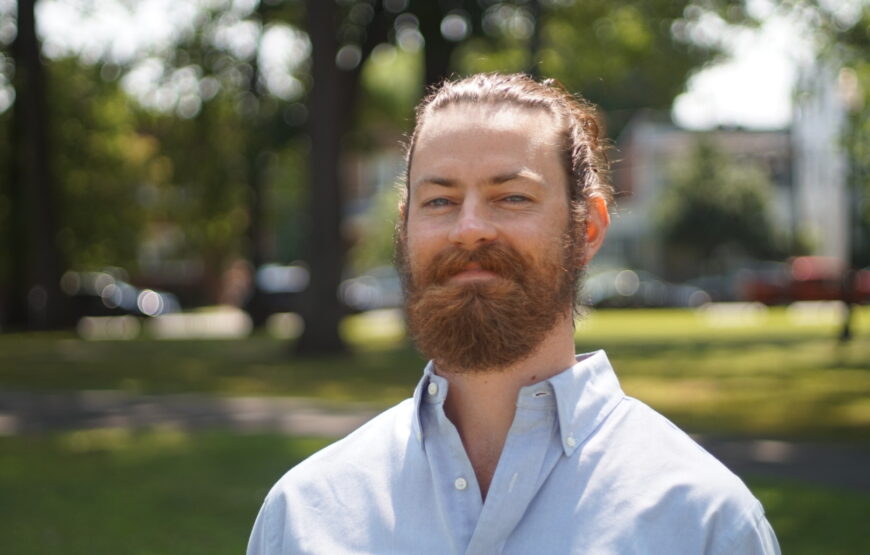

After a lawsuit brought renewed scrutiny to her alma mater, Allison Fishman Task shared memories from three decades ago — and a question for the community where she is raising her children.
Content note: This article discusses sexual assault.
Before Allison Fishman Task asked Montclair parents to talk to their children about consent, she had to decide what to tell her own.
Two of her three children, both in middle school, watched the video in which she described disturbing experiences from her years at Cornell University. They told her they were proud. Her third child did not want to watch.
“I don’t want to hear about people hurting you, mom,” she recalled the child saying. “I just can’t.”
For Task, a change coach with an office in Montclair, the responses brought a national story into the intimate space of her family. A lawsuit alleging sexual violence at her alma mater had prompted her to speak publicly about what she remembered from the early 1990s. Her account drew millions of views and messages from strangers describing experiences of their own.
But the conversation she wants to have now begins well before college: How do children learn to recognize a boundary, respect it and intervene when someone else crosses it?
“I know consent is part of the curriculum,” she said in an interview with The Montclair Pod. “But this is a wonderful opportunity for our schools to tell us what they’re doing so we can support it at home because everyone’s awkwardly having to have these conversations.”
A Reason to Speak
The case that prompted Task to post involves a former Cornell student identified in court documents as Jane Doe. In a civil lawsuit filed September 16, Doe alleges that she was drugged and gang-raped by seven fraternity members at the Chi Phi house in October 2024, when she was 20. The defendants include Cornell and several organizations and individuals. The accused men have denied wrongdoing. The allegations remain the subject of civil litigation and a renewed criminal investigation.
Task had left Instagram in March 2020. She returned this fall to promote her coaching practice. Then she read about Cornell, and the business posts no longer felt sufficient.
“I can’t not say something,” she recalled thinking. “I went to Cornell, I’ve had experiences there, and I’m just gonna say it.”
Encouragement came from a friend, a former Montclair resident who now works on sexual assault awareness at George Washington University. Task was also struck by the response of a current college student.
“I was inspired by a woman who’s in college today who’s saying, ‘I can’t believe it’s still happening,’” she said.
In her video, Task described two episodes from her undergraduate years. The first involved a fraternity across the road from her freshman dormitory.
At a holiday party, she said, fraternity members took her boyfriend aside and described intimate activity they had observed between the couple. They then showed him a room used to watch women in her dormitory, according to her account.
Task said she reported the incident to campus police in December 1990. An officer told her, she recalled, “It’s really just not enough information.”
She asked whether officers could enter the fraternity house, question its members or inspect the room. According to Task, they declined.
“I told everybody, and nothing happened.”
Her second recollection involved Chi Phi, the fraternity named in the current lawsuit. Task said she saw a visibly intoxicated woman being led into a room.
“I was told at the time that the brothers were taking care of her and getting her sobered up,” she said. “But something didn’t feel right in my gut about it, even though that’s what I was told.”
Task said she later heard accounts of recordings of fraternity members with women being shown to pledges, and of sexual activity involving women who may have been incapacitated. Those accounts describe what she said she was told, rather than events she personally witnessed. She does not know what happened to the woman she saw being led away.
Task said she also approached The Cornell Daily Sun. A reporter expressed interest, she recalled, but an editor declined to pursue the story.
At the time, she said, she understood the difficulty of reporting allegations without corroborating evidence or someone willing to come forward. What stayed with her was the experience of raising a concern and seeing no apparent response.
What the Video Brought Back
The response to Task’s posts extended far beyond her own college circle. People wrote publicly and privately about experiences at Cornell and elsewhere, including in Italy and France.
Many called her brave. She was uncomfortable with the description.
“I didn’t experience a sexual assault,” she said. “I’m not nearly as brave as Jane Doe or what women were sharing with me, but just the openness to even say it, it’s what we’ve been programmed to not do.”
Her memories are separate from Doe’s allegations. For Task, however, the current case raises familiar questions about what happens after someone reports troubling conduct — and which institutions take responsibility for responding.
The scrutiny of Cornell has intensified. Gov. Kathy Hochul appointed Attorney General Letitia James as special prosecutor after the local district attorney’s initial decision not to bring charges. Cornell has commissioned an independent review. On October 13, the university announced that fraternity parties and social events would be suspended through the remainder of the 2026–27 academic year, along with changes to its handling of sexual assault reports.
Task hopes the university will use the moment to examine the wider culture surrounding fraternity life, including the treatment of pledges.
“It’s not okay to abuse men or women,” she said.
“I hope, I truly hope, that Cornell makes a choice to be a leader.”
Bringing the Conversation Home
In Montclair, Task wants schools, parents and coaches to explain more clearly how they teach consent — and how adults can reinforce those lessons.
During the week she connected with The Montclair Pod, Superintendent Ruth B. Turner emailed families about New Jersey’s annual Week of Respect. The message said students would participate in age-appropriate lessons and activities to prevent harassment, intimidation and bullying. It did not specifically address consent.
The absence of the word does not establish what schools are or are not teaching. Task acknowledged that the message may have been prepared before the Cornell story drew widespread attention. She also noted that Montclair Kimberley Academy had sent families a letter addressing the subject.
Her request is for a more explicit conversation: What language are students learning? What situations are they being asked to consider? And what should parents be discussing at home?
In her own family, she said, those lessons begin with ordinary interactions. A child should be allowed to decline a hug from a relative. Adults can ask before initiating physical contact.
“I don’t hug anyone now without saying, ‘Hey, can I give you a hug?’” Task said. “I just think it’s kind to respect someone’s boundaries.”
As children grow older, the conversation becomes more difficult. Respecting someone’s wishes may require challenging a friend, interrupting a situation or objecting to something in a group chat.
Task has told her sons that she expects them to act.
“I know you’re not gonna be the person to do this, but you’re gonna be in a room when things like this happen,” she recalled telling them. “You’re gonna be on a text thread when things like this happen. I expect you to shut it down.”
Her video looked back more than three decades. That instruction looks ahead, to moments when her children may have to decide whether to speak.
“This isn’t men versus women,” she said. “This is everybody coming together. These systems hurt everyone.”
If you or someone you know needs support, contact the RAINN National Sexual Assault Hotline at 800-656-4673.
Has your child’s school or team discussed consent? Tell The Montclair Pod at hello@montclairpod.com.