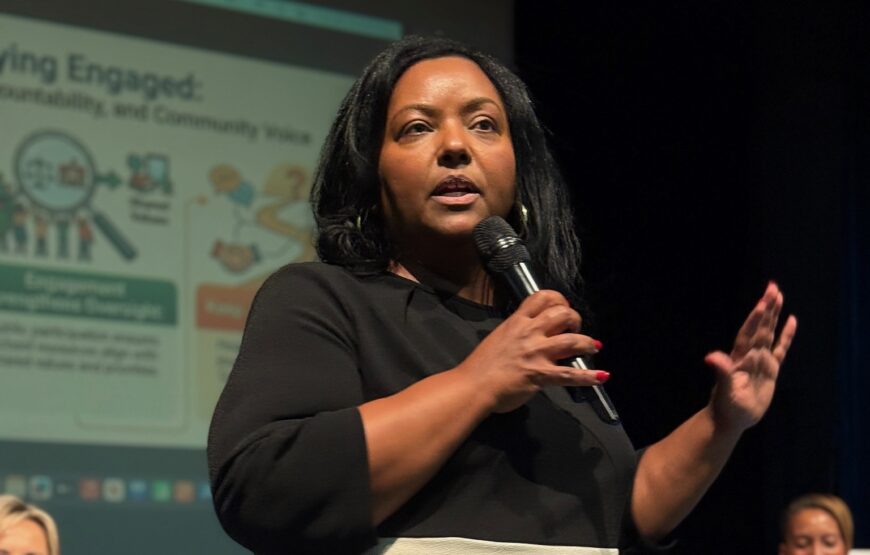
On Tuesday evening, Montclair Public Schools convened a budget town hall at Glenfield Middle School, inviting the community to engage in what district leaders framed as a long-term conversation about fiscal stability, transparency, and hard choices ahead.
The meeting, hosted by Superintendent Ruth B. Turner, focused on the planning process for the 2026–2027 school budget and included a detailed slide presentation to help residents better understand how school finances work. Dinner was provided by the Montclair Education Association, a gesture that underscored the evening’s emphasis on collaboration and goodwill, even amid difficult discussions.
For community members who were unable to join, a recording of the town hall is available HERE, and the presentation shared during the meeting can be found HERE .
A Different Tone Than September
Compared to the district’s first budget town hall in September, this meeting felt noticeably more unified. Instead of a presentation led solely by district administrators, multiple stakeholder groups were visibly represented at the front of the room, including Board of Education members, MEA representatives, and school leadership.
District officials repeatedly referenced the “District Leadership Team,” a cross-section of administrators, labor representatives, principals, and board members tasked with addressing district-wide challenges collaboratively. The symbolism mattered. Throughout the evening, speakers emphasized shared responsibility, transparency, and the importance of helping the public understand not just what decisions are being made, but why.
Even Mayor Renee Baskerville, seated in the front row, reinforced that message in a side conversation, expressing confidence that the district could emerge stronger from this moment, albeit not quickly or easily.
The Elephant in the Room: A Structural Deficit
Much of the presentation centered on what Turner and Business Administrator Dana Sullivan plainly called “the elephant in the room”: the district’s structural deficit.
Using plain-language visuals, district leaders explained that a structural deficit occurs when recurring expenses consistently outpace recurring revenues, even if a budget appears balanced on paper. One-time fixes, such as tapping reserves or temporary funding sources, may close short-term gaps but do not resolve the underlying imbalance.
Key constraints highlighted included New Jersey’s 2 percent tax levy cap, rising fixed costs such as health insurance and transportation, and the mismatch between ongoing expenses and flat or uncertain revenue streams. The district’s message was clear: these problems did not emerge overnight, and they will not be solved in a single budget cycle.
Instead, Turner emphasized the need for multi-year planning, honest accounting, and decisions that stabilize the district beyond just the next fiscal year.
The State Monitor Question
Another major focus of the night was the possibility of state intervention.
Turner addressed concerns head-on, acknowledging that some residents have accused her of fear-mongering when discussing a potential state monitor. She shared that she has previously worked under two state monitors, lending weight to her warnings.
Her message was direct: a state monitor is not a ceremonial role. A monitor would have absolute authority over district operations and finances, including the power to reduce services to the legal minimum, merge schools, or close them entirely. Local control, she stressed, would be significantly diminished.
During the Q&A, one resident posed a thoughtful question: could a state monitor actually make things more efficient? With the Board of Education facing overwhelming financial decisions, might outside oversight simplify the process, even at a cost of roughly $125 per hour to the district?
Turner’s response drew a sharp distinction between efficiency and community values. A monitor’s mandate, she said, is financial stabilization, not preserving Montclair’s educational model, traditions, or priorities. That difference, she argued, is crucial.
Clarifying the Ballot Questions
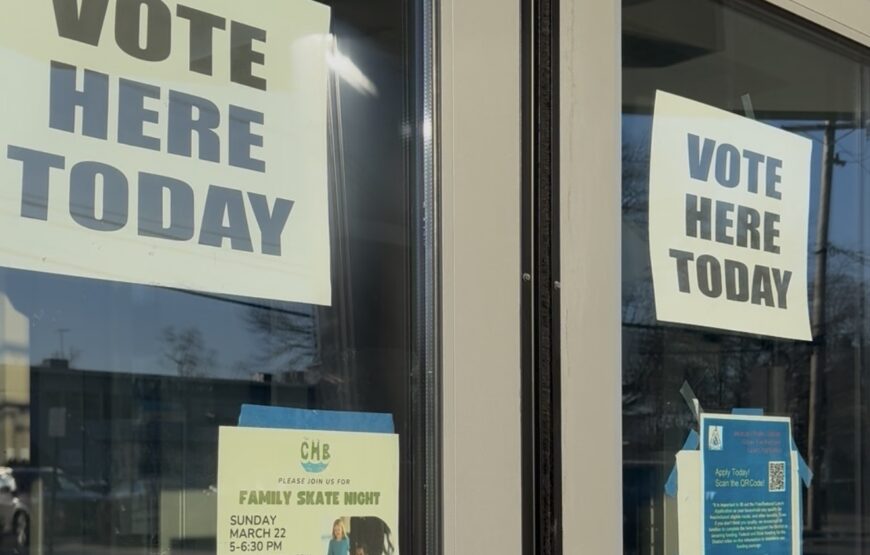
District leaders also reviewed the newly revised ballot questions ahead of the March special election.
One key clarification: while the forensic audit is no longer explicitly included in the ballot language, the district committed to funding it in next year’s budget. An RFP has already been issued for an independent firm, with the goal of beginning the audit process by July.
Another point district officials emphasized was the impact of Question 2. A “no” vote on the proposed $5 million annual tax increase does not guarantee a state aid advance. In fact, officials warned it could result in deeper short-term cuts and increased financial strain.
That nuance appeared to resonate with many in the room.
Bonds, Buses, and the Human Impact
Public comment brought the discussion from abstract projections back to lived experience.
One parent raised questions about the district’s $188 million bond referendum, asking whether its scope could be reduced. His argument was not to abandon capital improvements entirely, but to reconsider whether certain projects could be delayed or scaled back to reduce the long-term tax burden.
While Turner noted that many bond-funded projects, such as HVAC and roof replacements, are preventative and could save money over time, she also took notes as the parent spoke, signaling openness to further discussion.
Another parent’s comments underscored the human stakes of budget decisions. Speaking as a parent of three children, including one with special needs, she described how essential school transportation is to her family’s daily functioning. Busing, she argued, is not a luxury but a cornerstone of access, inclusion, and stability for many families in Montclair.
A Long Road Ahead
If there was one theme that echoed throughout the night, it was this: there is no quick fix.
District leaders repeatedly described the path forward as a long road, one requiring sustained community engagement, difficult trade-offs, and a clearer shared understanding of the district’s financial reality. The presentation materials themselves reflected that goal, offering residents a crash course in how to read budget documents, track trends, and ask more informed questions.
Whether that transparency will translate into consensus remains to be seen. But Tuesday’s town hall marked a step toward a more collective approach, one that acknowledges the depth of the challenge while inviting the community into the process.