The day before Montclair parent and rink volunteer Allison Fishman Task sat down with The Montclair Pod, heavy rain exposed another problem at Clary Anderson Arena. She headed over to help contain a roof leak.
“I moved the bucket and made sure that leak was going into the bucket,” she said. “We’re all working on it now. This is our house. This is our rink, and we all have to work to make it stay.”
Across Montclair, that willingness to pitch in helps keep youth sports running. Parents raise money, coach teams, organize registrations and sometimes build entire programs from scratch. Their work can make participation more affordable. When there are too few volunteers, families can face higher fees.
From Clary’s emergency fundraising campaign to the soccer fields and a growing Ultimate Frisbee program, the question extends beyond who pays. Who has the time to help—and how can children participate when their families have neither to spare?
Those questions come as private equity expands its role in youth sports. Black Bear Sports Group, the private equity-backed owner of SportsCare Arena in Randolph, also operates a paid streaming service. The Lever reported monthly charges of $25 to $50 in 2025, depending on the package and additional fees. Outside investment can fund facility improvements, but added charges raise concerns about how much families must pay to participate—or even watch.
How Montclair Saved Clary Anderson Arena
Clary faced urgent safety repairs in 2025, forcing the township to decide how to divide the expense between rink users and the broader public.
“I didn’t think it was fair to put the entire bill and the entire, you know, the cost of improvements on all of the taxpayers when not all of the taxpayers use Clary Anderson,” Township Manager Stephen D. Marks told The Montclair Pod.
The town established a municipal utility designed to cover the rink’s expenses through skating fees and ice rentals. Community fundraising helped make the arrangement possible.
Monica Kurpiewski, whose son plays hockey for Montclair Kimberley Academy and whose daughter is a figure skater, helped organize the campaign. With a background in fundraising and stakeholder management, she found plenty of people willing to contribute—but no one coordinating the effort.
“Everyone remembers skating there. So there is an emotional connection to this very quirky little space,” Kurpiewski said. “And so we had a group of potential funders just waiting for direction on how to organize and have an impact.”
She brought together 17 groups. In six days, donors raised $410,000, unlocking a $1 million investment from the township for health and safety improvements. The town’s contribution took the form of a loan to the utility.
Support came from beyond Montclair, including the Nutley-Clifton hockey community and teams in Cranford. With available ice time already scarce, losing Clary would have affected skaters across the region.
The broader fundraising effort has since grown to about $1.2 million, supporting improvements including a new chiller—the refrigeration system that makes the ice—boilers, flooring and a repainted ceiling.
This summer, the township took over day-to-day operations from an outside company, working with a consultant and community volunteers.
For Kurpiewski, preserving access mattered as much as repairing the building. Families worried that a private operator might change the programming or raise prices beyond their reach.
“It wasn’t just about who the private owner would be,” she said. “It would be do they understand the personality that is this community of skaters and players and families that have utilized the space for years.”
Today, high school hockey players volunteer with the Devils-run learn-to-play program. Kurpiewski’s daughter helps teach younger children to skate. Kurpiewski remains involved nearly every day, helping with operations, volunteers and future renovations.
The Cost of Fewer Volunteer Coaches
At Montclair United Soccer Club, the connection between volunteer labor and registration fees is direct.
Peter Daddabbo has spent 18 years serving the club as a coach, registrar, president and board member, among other roles. Recruiting enough people to do that work has become harder.
“We can’t run the rec league at the cost we run the rec league if we don’t get people to be volunteer coaches,” Daddabbo said. “And over the last few years we’ve had a little difficulty getting enough volunteer coaches and we’ve had to hire some people to fill in the gaps in the rec league, which has driven the price up.”
Daddabbo puts the cost of nine weeks of recreational soccer at about $175, including a uniform. Financial assistance can reduce that to $25.
Travel soccer requires a larger commitment. He cited fees of $1,500 to $2,800 at Montclair United, compared with $4,000 to $5,000 at some outside clubs. Those programs differ in scheduling and competition, but the price can determine which options a family can consider at all.
The pressure extends to school sports. This spring, parents formed the Blue and White Athletic Club and raced to raise $176,000 after the district’s budget crisis eliminated freshman athletics. Their campaign restored the programs, while leaving questions about future funding.
“It kind of feels unfair to keep asking people to volunteer for some of these basics,” co-host Farnoosh Torabi said.
Fishman Task supports voluntary contributions that allow families to give according to their means. For parents accustomed to private club fees, she said, helping fund a school team can cost substantially less.
But repeated appeals have limits, even after a successful campaign. Kurpiewski is still fundraising for Clary.
“People are getting tapped out,” she said.
A Team That Started With Seven Kids
Sometimes, a parent’s contribution begins with creating an opportunity that does not yet exist.
When Michael-John van Ryhn’s son wanted to play Ultimate Frisbee, they could not find a middle school team.
“So I said to him, if you’d like to start one, we can start one,” van Ryhn said. “And he wanted to, and so we did.”
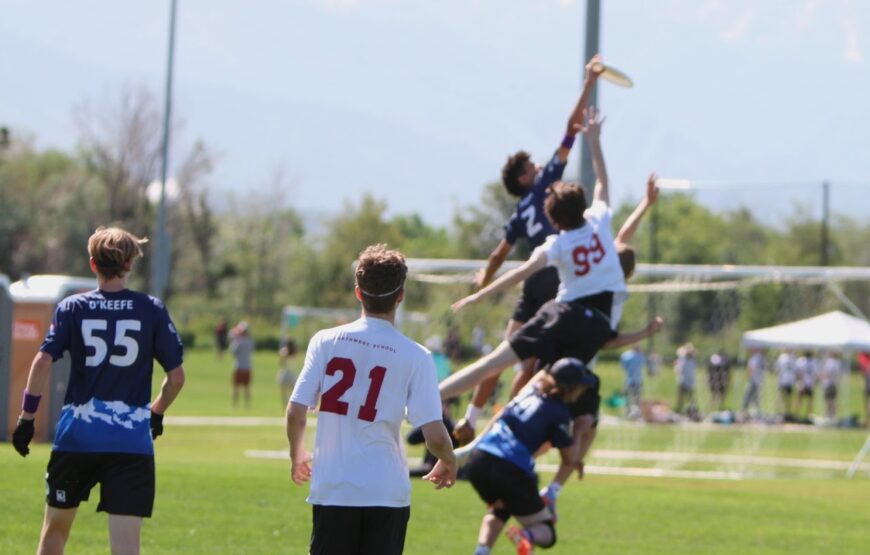
The program began in 2018 with about seven children. High school players helped coach, participants brought friends and parents pitched in. Today, Montclair Ultimate offers programs from elementary through high school, including a girls team.
Community donations help widen access. The program’s fall registration page noted that a donor covered registration fees for the high school girls team.
“The kids themselves just love it,” van Ryhn said. “Their passion drives the coaches, drives the parent volunteers, drives everything that we do.”
Building the program also required flexibility. Working for himself allowed van Ryhn to step away in the afternoons. Many parents do not have that option.
That is a challenge for any volunteer-supported program: a child’s opportunity to play cannot depend on whether a parent has a flexible job, money to contribute or hours to coach.
Giving People a Way to Help
At Clary, Kurpiewski regularly hears from people offering practical skills—a plumber interested in helping renovate a bathroom, a former coach willing to teach beginners. Turning those offers into useful work requires clear assignments and someone who responds.
“When I ask or put the word out that we need help, people answer because we’re very, very specific with what we need,” she said.
Even when there is no immediate role, she keeps prospective volunteers connected.
“If there isn’t a fit and they get blown off, they’re not gonna do it again,” Kurpiewski said.
The challenge is sustaining that participation after an emergency passes. Facilities need maintenance. Teams need coaches. New families need an affordable way in.
Back at Clary, Fishman Task hopes the commitment that saved the rink becomes a lasting habit.
“This is our house. This is our rink, and we all have to work to make it stay.”
How to Support Clary Anderson Arena
The Clary Anderson Arena Association accepts donations and lists remaining renovation projects, including the roof and locker rooms. Prospective volunteers can also reach out with the skills and time they can offer.
Buying time on the ice helps, too. Under the municipal utility model, revenue from public skating and ice rentals at 41 Chestnut St. goes back into the rink.
Image credit: Clary Anderson Arena