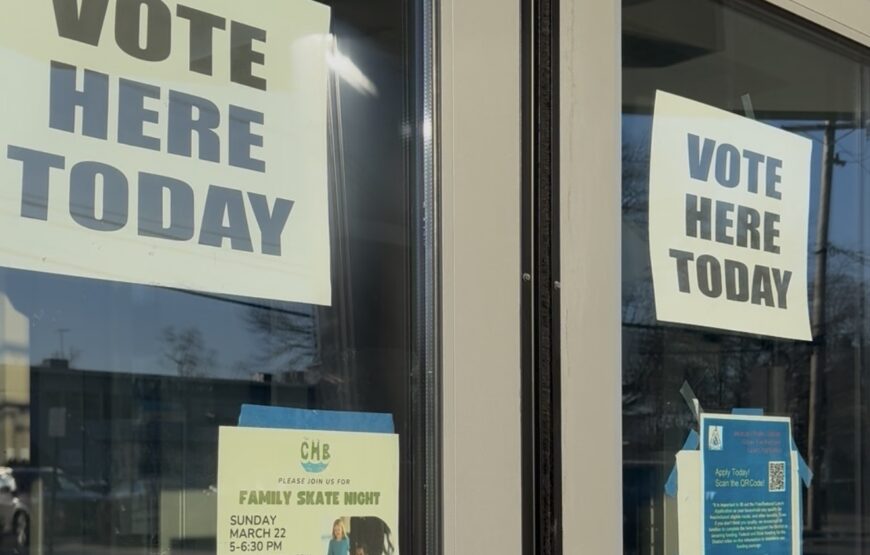
When the polls closed at 8 p.m. Tuesday, Montclair residents stepped out of school gymnasiums and community centers knowing one thing: the result of the town’s special school election would likely be close.
Early returns confirmed that intuition.
Preliminary results released by Essex County election officials show razor thin margins on both ballot questions related to the Montclair Public Schools budget deficit. But the outcome remains uncertain because mail in and provisional ballots have not yet been fully counted.
Two Questions Before Voters
The election asked voters to decide how the district should address a significant budget shortfall that emerged from the previous school year. The ballot included two separate questions.
The first question asks voters to approve a one time tax increase intended to cover the district’s existing deficit. Early results show that measure slightly ahead.
The second question would permanently increase the school tax levy to provide additional funding for future school operations. That measure is currently trailing in the preliminary count.
With margins so narrow, even a modest number of additional ballots could change the final outcome.
A Rarely Consequential Local Vote
The stakes of the election were clear throughout the day Tuesday as residents arrived to cast their votes. Many described feeling that this was one of the rare moments when local participation could directly shape the future of their schools.
Josh Weiner, a Montclair resident who spoke with The Montclair Pod after voting, said the election felt unusually consequential.
“After twenty years of being involved in politics and having done presidential campaigns and local campaigns, this is the first time that I can say that I’ve actually had a vote myself that mattered,” he said. “I’ve never been a swing voter before. It’s fun to have a vote that actually has a chance of making a difference.”
Concerns About Oversight and Accountability
Others said the vote represented both concern about financial management and a desire to protect the quality of education in the township.
Carlos, another resident interviewed outside a polling location, said he hopes the controversy surrounding the deficit leads to deeper scrutiny of how the district manages its finances.
“I think it’s a correction of some very slimy behavior,” he said, adding that he believes a forensic audit of the district’s finances is necessary.
At the same time, he said the debate should not lose sight of the needs of students.
“I care about the kids and they need to have their funding,” he said. “It’s been shown that when the state comes and takes over the management of the schools, all the metrics go down.”
A Last Minute Decision for Some Voters
Another longtime Montclair resident described feeling torn as he walked into the polling place.
He said he has lived in the township for more than three decades and watched multiple generations of students move through the school system, including his own children. Over the years, he said, the same challenge seems to resurface.
“It seems like we’re always struggling here with operating these schools within our means, within a budget,” he said.
For him, the debate was not simply about whether the schools deserve funding but about whether the system itself needs structural change.
“I have my doubts about continually asking taxpayers for more without there being a substantial change in the way the system operates,” he said. “One where we can have confidence that we’re staying within our means.”
Like many voters on Tuesday, he said he was still weighing his decision until the final moments before voting.
“It was a last minute decision,” he said.
A Community Divided
The special election followed months of tension in Montclair as residents debated the causes of the deficit and how best to address it. Supporters of the tax increases argued that the additional funding would help avoid cuts to teachers, programs, and student services. Critics questioned the district’s financial oversight and warned that additional taxes would add to the burden faced by homeowners in one of New Jersey’s highest property tax communities.
What Happens Next
For now, the town remains in a holding pattern.
Election officials still need to process outstanding mail-in and provisional ballots before results can be finalized. With the margins currently so close, even a relatively small number of additional ballots could shift the outcome.
At the same time, the future of the referendum may not be determined by the vote count alone.
Montclair resident David Herron has filed a lawsuit challenging the legality of the special election, arguing that the ballot questions and process surrounding the district’s deficit raise legal concerns. The case could ultimately determine whether the results of the vote stand or whether further action is required.
That legal challenge adds another layer of uncertainty to an already contentious debate over school finances in Montclair.
For now, the town waits for both the remaining ballots to be counted and for the courts to weigh in. Whatever the final outcome, Tuesday’s vote revealed a community deeply engaged in the future of its schools and sharply divided about how to pay for them..