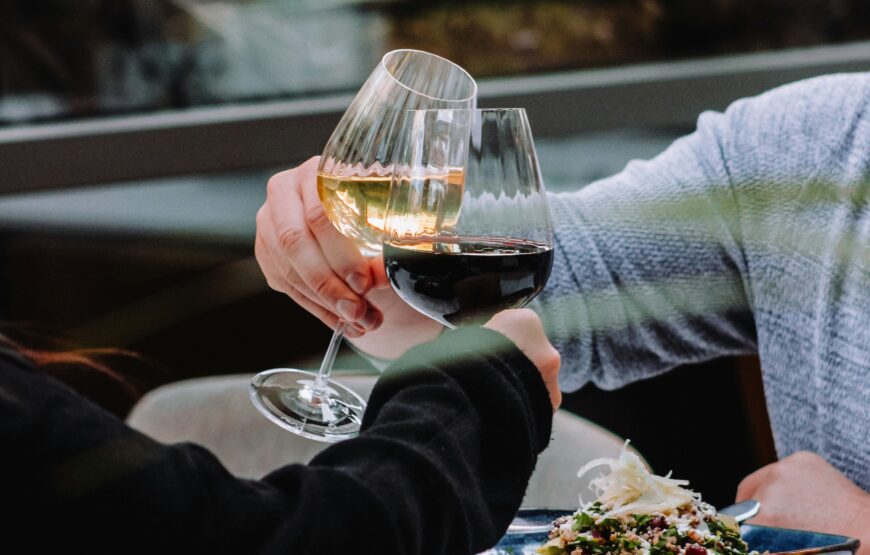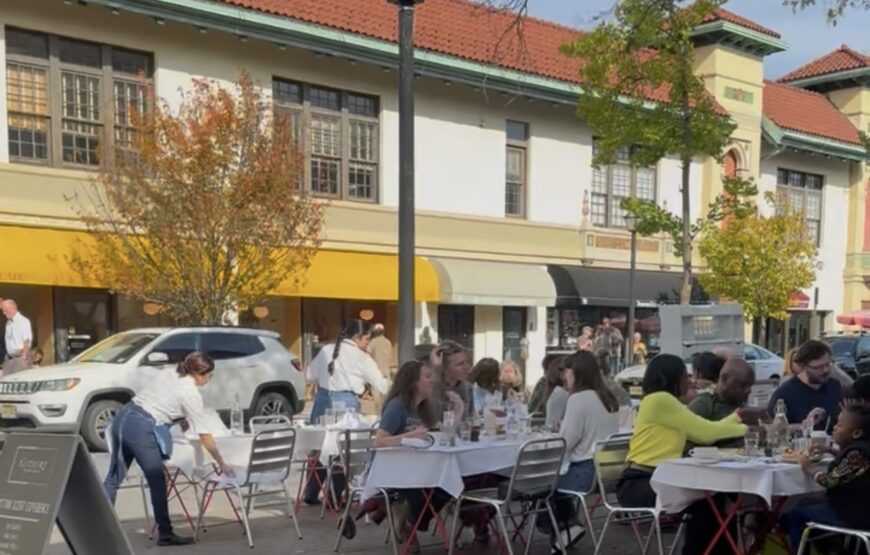
Ask for a glass of wine at some of Montclair’s most popular restaurants and the answer is often no. Not because they ran out. Because the restaurant legally cannot sell it. Montclair has roughly 13 liquor licenses for a town of 41,000 people, and for years that meant restaurants without one had exactly one option: bring your own bottle, no exceptions. A few of them have since found another way in, and it has nothing to do with the town’s 13 licenses at all.
Why Montclair Only Has 13 Liquor Licenses
Montclair has roughly 300 restaurants. Only about 13 hold a plenary retail consumption license, the state permit that allows a bar or restaurant to sell alcohol by the glass for customers to drink on site. That ratio traces back to a 1947 New Jersey law capping licenses at one per 3,000 residents, a formula that has not moved in nearly 80 years.
Scarcity set the price. A license that changes hands in Montclair can sell for well over a million dollars, a cost few independent restaurant owners can absorb. You can read our full story in Montclair Liquor Licenses Explained.
BYOB: The Workaround Most Diners Already Know
Most Montclair diners have already lived the default fix. BYOB, or bring your own bottle, is the common term for the practice of unlicensed restaurants to allow patrons to bring their own wine or beer to drink on site. Hard liquor isn’t allowed under this rule, and the restaurant cannot charge a corkage fee, meaning a fee for opening and serving a bottle a customer brought in themselves. Enforcement falls to the town rather than the state, since New Jersey’s Division of Alcoholic Beverage Control has no jurisdiction over restaurants that hold no license at all.
How Restaurants Without a Liquor License Offer Wine Anyway
A few Montclair restaurants have closed the gap.
Sam’s Table on Bloomfield Avenue is BYOB, but it also operates as one of five official tasting rooms for Beneduce Vineyards, a fourth-generation, family-owned New Jersey winery. A winery tasting room can sell that winery’s own bottles under its own state license, so the sale at Sam’s Table happens legally under Beneduce’s license, not the restaurant’s. For wine outside that list, Sam’s Table partners with Amanti Vino, the Church Street wine shop, which delivers additional bottles straight to the table.
Clementina, the Italian restaurant in Upper Montclair, runs a similar arrangement with Alba Vineyard, offering a curated list of wines through that partnership while staying BYOB for everything else.
Luigino’s Parmigiana on Glenridge Avenue takes a similar version of the idea. It stays BYOB, and Wine Guys, a retail wine and liquor store around the corner on Bloomfield Avenue, delivers bottles to the table on request. Diners still pay Wine Guys full retail price for the bottle itself plus the tip for whoever delivers it to the table.
While this is not a full list, the underlying idea is similar. A winery outlet arrangement or a retail delivery partnership, is an option available to any BYOB restaurant willing to set it up. There’s a real dollar benefit for diners who find one. At Clementina, an Alba Vineyard Old Mill Red runs $28 a bottle, about a third more than the roughly $15 to $22 it sells for at retail. That’s a real markup, restaurants still need to make money on the arrangement, but it’s a fraction of the markup commonly found on traditional restaurant wine lists, where bottles are often priced at two to three times their wholesale cost and can easily sell for $45 or more.
Not All Alcohol Licenses Are Created Equal
The winery and retail workarounds are a common solution for restaurants, but they are not the only alcohol licensing arrangements in New Jersey. State law carves out several categories of licenses and permits that sit entirely outside a town’s population-based quota, covering breweries, wineries, nonprofit theaters, hotels and businesses on government-owned property. Montclair has an example of nearly all of them.
Montclair Brewery is one example. It operates under a limited brewery license, a category the state created through the 2012 Craft Brewery Act specifically so breweries could sell directly from a taproom without buying into the same quota-capped pool restaurants compete for.
Amanti Vino is another. As a retail wine shop, it holds a plenary retail distribution license, the license type that covers off-premise sales, meaning bottles sold to go rather than drinks served at a table.
The Clairidge, Montclair Film’s nonprofit cinema on Bloomfield Avenue, shows a third version. It began serving alcohol in March 2025 under a nonprofit theater license, a category state law expanded in 2023 to include art-house movie theaters and lowered to as few as 50 seats for smaller venues. The Montclair Township Council approved the license that year after a competing applicant withdrew its own bid.
The MC Hotel is a fourth. State law exempts hotels with 100 or more guest rooms from the population cap outright, and the Township Council approved that category in 2018 ahead of the 159-room hotel’s opening the following year.
DeNovo, in Upper Montclair’s historic train station, rounds out the list. It operates under a State Annual Permit, sometimes called a concessionaire permit, a category issued for businesses located on state or government-owned property. Because the land belongs to NJ Transit rather than a private owner, the state licenses the site directly instead of counting it toward the township’s cap.
Five categories, five sets of rules, and none of them move the number that started this whole conversation.
The 1947 formula hasn’t budged in almost 80 years, and there’s no serious legislative push in Trenton to change the population cap itself. So the workarounds keep multiplying instead. A winery outlet here, a theater exception there, a train station carved out from under the cap entirely.
Next time a restaurant tells you it’s BYOB, ask if they have a wine partner anyway. In Montclair, more places have one than you’d think.
Image credit: Pexels