
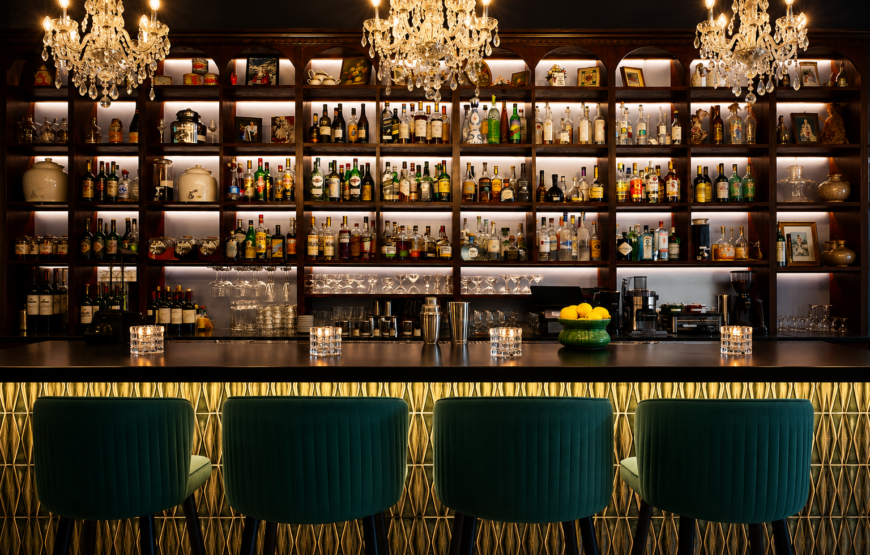
Photo credit: Fresco Da Franco
Montclair has roughly 300 restaurants. Only around 13 hold a plenary retail consumption license, the state-issued permit that allows a bar or restaurant to sell alcohol by the glass. That number does not mean only 13 places in town serve alcohol. Hotels, breweries and certain nonprofits operate under separate license categories that sit outside the cap. So do bars or restaurants on state or NJ transit property (like DeNovo in Upper Montclair… or Uptown as some prefer to call it). But if you want to have a cocktail before dinner in Montclair, alfresco, on a beautiful spring evening, it’s another story.
The limit is set by a New Jersey law written in 1947, at one license per 3,000 residents. For a town of about 41,000 people, the math puts a hard ceiling on how many neighborhood restaurants can legally pour you a cocktail. That formula has not changed in nearly 80 years.
Why Does a Montclair Liquor License Cost More Than Most Cars – and Some Houses?
Because the state controls how many licenses exist, a restaurant owner who wants one cannot simply apply. They have to find an existing holder in town who is willing to sell. Licenses are privately owned and transferable, which means they trade on an open market with prices set entirely by scarcity.
In 2012, the Pig & Prince paid $755,000 for a license. By 2017, South Park’s sold to Fin Raw Bar for $1.2 million. In 2018, Dai Kichi fetched a town record of $1.25 million and converted to BYO, allowing guests to bring their own wine or beer, which any unlicensed N.J. restaurant can choose to permit. When the township put its 13th license up for public auction in 2019, it closed at just over $1 million with no competing bids.
The same dynamic played out statewide. Roughly 1,400 licenses sat dormant in the hands of owners with no active use for them, known as “pocket licenses,” while restaurants that wanted to serve alcohol had nowhere to turn.
What New Jersey Finally Did About It
For decades, that stalemate held. Then in January 2024, Gov. Phil Murphy signed the first overhaul of New Jersey’s liquor laws in nearly a century. The legislation freed craft breweries and distilleries from longstanding restrictions on events and food vendors. More relevant to Montclair’s restaurant scene, the law began forcing inactive licenses back into circulation by limiting how long they can remain unused and creating mechanisms for municipalities to reclaim long-abandoned licenses.
That provision already had a visible local effect. In May 2025, the Montclair Town Council unanimously approved the transfer of a previously inactive license to MM by Morimoto, the incoming Japanese restaurant from Iron Chef Masaharu Morimoto at 193 Glenridge Ave. One dormant license, back in circulation.
The one change most restaurant owners wanted, a limited beer-and-wine license for establishments that currently go without, did not make it into the 2024 law.
Will Montclair Ever Get More Liquor Licenses?
Possibly. Lawmakers have periodically proposed broader reforms that would increase the number of available liquor licenses by lowering or eliminating New Jersey’s population-based cap. One proposal introduced in 2023 would have gradually reduced the one-license-per-3,000-resident formula before eliminating it entirely in 2029, but that plan was never enacted.
The economic case for moving faster is not small. The N.J. Economic Development Authority projected that broader license reform could generate up to $10 billion in revenue and 10,000 jobs statewide over the next decade.
For now, BYO remains part of the ritual. Not because Montclair chose it, but because a formula from 1947 left most of its restaurants with no other option. (Speaking of culinary history, check out our list of the oldest restaurants in Montclair.) Some patrons actually prefer it. It is, after all, more economical and these days, every penny counts.