If you are considering a move to Montclair or just moved here, easy access to NYC is probably a big part of why. Between six NJ Transit train stations, a patchwork of express buses, and a private motorcoach company that showed up when the cavalry didn’t, Montclair offers a genuinely strong commute — when it’s working. When it’s not, you’ll have plenty of company. This guide covers the trains, the buses, the parking, the dollars and cents, and a few honest words from neighbors who’ve spent more time than anyone should fighting with NJ Transit on your behalf.
Worth knowing up front: this town exists because of transit. Montclair seceded from Bloomfield in the 19th century specifically to cut its own deal with the Erie Railroad, after Bloomfield passed on the idea and local residents put up the money themselves. “We exist as a town in the way we do because of transit access,” as Nick Giglia, founder of the local advocacy group ROUTE (Restore Our Transit in Essex), put it on a recent episode of The Montclair Pod. The irony, a century and a half later, is that the town built around the train is now the one driving to make up for it.
Editor’s Note: Things change, so if you see anything here that needs updating or correcting, email us at hello@montclairpod.com.
How Long Does Commuting From Montclair to NYC Actually Take?
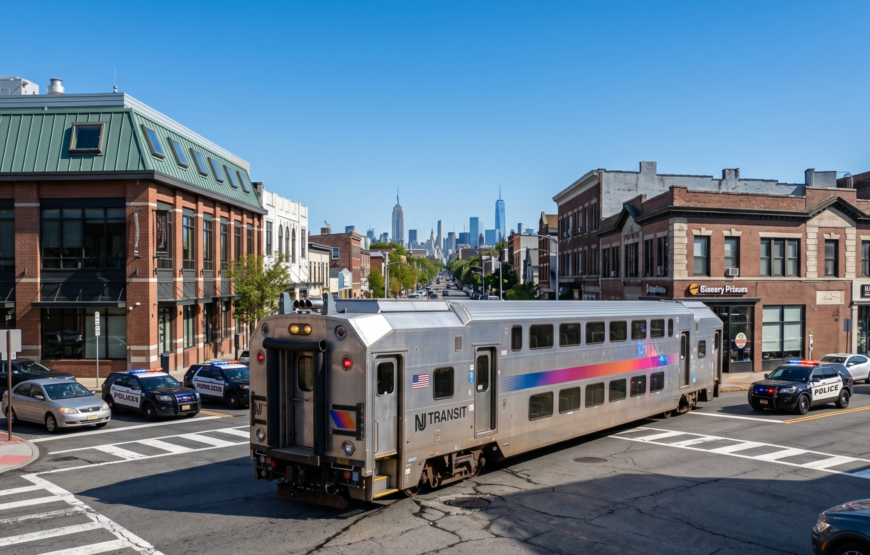
The honest answer is a range. From Bay Street, the southernmost Montclair station, the fastest trains to Penn Station run about 38 to 40 minutes. From Walnut Street, plan on 43 to 46 minutes. From Upper Montclair or Mountain Avenue, you are looking at 45 to 55 minutes depending on whether your train goes direct or makes additional stops.
Those are the on-schedule times. NJ Transit made schedule adjustments effective May 31, 2026, so verify current departure times before locking anything in. On-time performance is decent but inconsistent: self-reported Transit App data has put the line in the roughly 70% on-time range in recent months, though the sample sizes behind that number are small and it moves around — treat it as a general signal, not a guarantee, and build some buffer into your mornings. Infrastructure problems at chokepoints like the Newark Drawbridge, a movable rail bridge over the Passaic River, can occasionally present mechanical failures that stall service across multiple lines.
It’s not just a vibe — it’s data. When the Montclair Township NJ Transit Committee surveyed residents across Montclair, Bloomfield and Glen Ridge this spring, infrequent weekend and off-peak schedules came back as the number one barrier keeping people off the bus or train entirely. The system, Giglia told the Pod, “is optimized for how things might have been maybe 20, 30 years ago” — built for a narrow slice of peak-hour, Monday-through-Friday commuting, while actual demand now comes from hybrid workers, students, seniors, and anyone who just wants to get into the city on a Saturday.
Which Montclair Train Station Should You Use?
Montclair has six stations on the Montclair-Boonton Line, spread across the length of town from south to north. They are not equal.
Bay Street, at 43 Glenridge Ave., is the town’s main transit hub, its busiest station, and the only one that operates on weekends. It sits steps from Java Love, a block from Bloomfield Avenue restaurants and is fully accessible with high-level platforms and elevators. Average weekday ridership: 1,089, well ahead of every other station in town. The 240-space parking garage fills fast. If you live anywhere in southern Montclair or want flexibility on weekends, this is your station.
Walnut Street, at 25 Depot Square, is the second-busiest station, averaging 732 weekday riders. It sits in the heart of the Walnut Street district near the Saturday farmers market and has 198 parking spots across four lots. Accessibility is limited, no elevator, but if you are walking in from the surrounding neighborhood, it is often the most convenient stop.
Watchung Avenue, at 396 Park St., is a quieter neighborhood station with 560 average weekday riders and 95 parking spots. The 1901 station building is on the National Register of Historic Places. If you live near Watchung Plaza, this is your stop.
The three northern stations, Upper Montclair, Mountain Avenue and Montclair Heights, serve the residential neighborhoods north of Watchung Plaza. Upper Montclair, at 275 Bellevue Ave., averages 452 weekday riders and has 111 parking spots across two lots. Mountain Avenue, at 14 Laurel Place, is the quietest station in Montclair with just 89 average weekday riders and 23 parking spots. Montclair Heights averages 318 weekday riders and has 67 parking spots. All three northern stations lose rail service entirely on weekends. If you live in Upper Montclair and commute daily, they are genuinely convenient. If you need weekend access by train, you will be driving to Bay Street — though as the bus section below covers, train isn’t your only option up here.
Once you know which station fits your neighborhood, the next question is where the train is actually taking you.
Penn Station or Hoboken? How to Choose Your Route
This is the part most commuter guides skip. The Montclair-Boonton Line runs trains in two directions: some go to New York Penn Station via Secaucus Junction, NJ Transit’s main transfer hub for north Jersey lines, and some terminate at Hoboken Terminal. Which one is right for you depends entirely on where in the city you work.
If your office is in Midtown Manhattan, anywhere near 34th Street, Times Square or the west side, the Penn Station trains are your direct shot. One seat, no transfer, you walk out at 34th Street and Seventh Avenue.
If you work in downtown Manhattan, the Financial District, the World Trade Center area, Hudson Yards or anywhere in downtown Jersey City, the Hoboken route is worth serious consideration. You take the train to Hoboken Terminal, then transfer to PATH. The one-way PATH fare is $3.25 as of May 4, 2026. PATH runs to the World Trade Center, Exchange Place, Grove Street and Journal Square on one branch, and to 33rd Street, 23rd Street, 14th Street, 9th Street and Christopher Street on the other. Transfers are generally fast, trains are frequent during rush hour and for many office locations, the total door-to-desk time is comparable to Penn Station.
One genuine 2026 improvement: PATH now runs all four lines seven days a week for the first time in 25 years, with weekend trains every 10 minutes on major lines between 10 a.m. and 9 p.m. That doesn’t fix NJ Transit’s own weekend rail gap (more on that below), but it does mean that once you’re at Hoboken — or once you’ve driven to Bay Street on a weekend — the PATH connection into Manhattan is now genuinely reliable any day of the week, which wasn’t true a few years ago.
Monthly pass holders also get free travel on connecting NJ Transit bus and light rail lines up to their zone limit. Zone 5, which covers Bay Street and Walnut Street, is the fare zone most Montclair commuters work with. Check the NJ Transit fare calculator for exact current prices, as fares increased 3% in July 2025 and another 3% increase is scheduled for July 2026. NJ Transit relaunched its FlexPass in February 2026, a bundle of 20 one-way trips at a 15% discount, valid for 30 days from the date of purchase. For hybrid workers commuting two or three days a week, it is often cheaper than a monthly pass.
What About the Bus?
The train isn’t the only way out of Montclair, and for a lot of residents, it isn’t even the main one anymore.
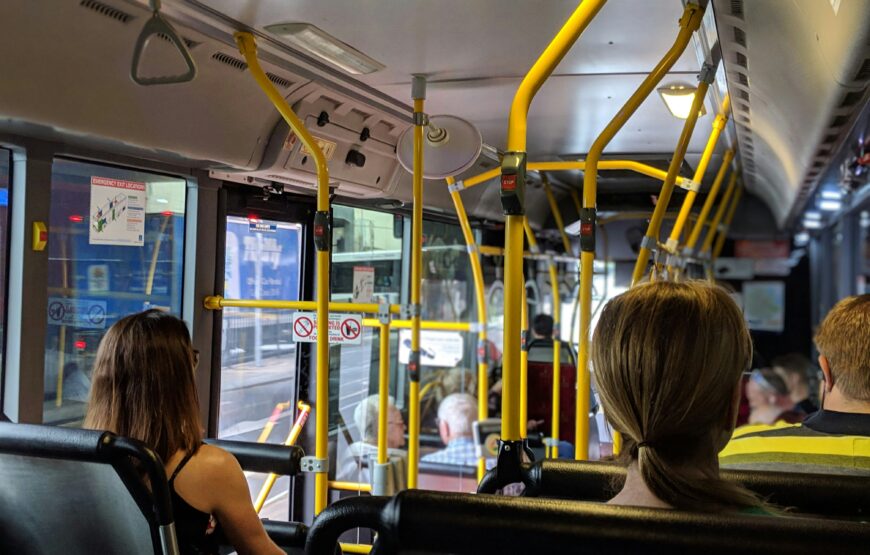
Boxcar, the private door-to-door service that stepped in after DeCamp folded, now carries an estimated 75% of weekday peak commuters between Montclair and New York, according to the township’s recent transit survey. Giglia, who’s tracked the shift closely, called Boxcar’s rise a sign it’s “serving a need”: it often picks up near the old DeCamp stops, and in many cases drops riders directly somewhere in Manhattan rather than funneling everyone through a single terminal, which means a one-seat ride for people working on the East Side who didn’t have one before. It’s also a paid premium for that convenience, with one Montclair Pod host noting on-air that Boxcar’s per-ride pricing runs a bit higher these days due to fuel surcharges. Worth knowing: Boxcar doesn’t support travel within New Jersey, doesn’t offer discounted fares for students or seniors, and runs mainly during peak hours, which still leaves a real gap on weekends and off-peak.
NJ Transit Bus 191 runs a direct, one-seat express route between Willowbrook, Montclair Heights and the Port Authority Bus Terminal in Midtown, with a stop right at Montclair Heights station and another at MSU’s Red Hawk Deck. No transfer to PATH, no drive required if you’re near that stop. Total trip time runs roughly 47 to 58 minutes depending on the specific run — slower than the train at its best, but a real option if you’re north of Watchung Plaza and don’t want to drive to Bay Street, particularly on weekends when the northern train stations go dark but bus service patterns are less restricted.
Allwood Park & Ride, just over the Montclair line in Clifton near Route 3 and the Garden State Parkway, is a dedicated commuter lot served by multiple express routes into Port Authority, including 191, 192, 195, 199, 705, 72 and 101. It’s a few minutes’ drive from Montclair Heights and Upper Montclair and worth knowing about as a backup, especially given the weekend service gap covered below.
NJ Transit’s own local connectors — 11, 28, and 29, mentioned below — run through Montclair but don’t go directly into Manhattan; they’re useful for getting to a station, not as a replacement for one.
Here’s the surprising part: fixing the weekend gap may not even cost much. Giglia’s own estimate, presented to NJ Transit and local officials, is that hourly weekend rail service between Hoboken and Montclair State University would run under half a percent of the agency’s total operating budget — no new track, no major infrastructure. Giglia has also pointed to video he’s seen of new multilevel rail cars being tested on nearby lines through Summit and Maplewood, which he takes as a sign the equipment isn’t the real holdup, though that’s his own secondhand read and not something NJ Transit has confirmed in an official release. The bus side is a longer lift regardless: NJ Transit is still ordering a new coach-style fleet and hiring drivers to run it, on top of figuring out which garage can house the buses.
Parking at Montclair Train Stations: What It Will Cost You
A heads-up before the numbers: Montclair’s Township Council approved a parking rate overhaul on May 19, 2026, but the new rates don’t take effect until July 6, 2026, for meters, and the July billing cycle for permits. If you’re reading this before then, you may still be quoted the older rates locally — the figures below are what you’ll be paying starting this summer.
Single-use daily permits at Bay Street are available at $5 through the Montclair Parking Utility system; a new “early bird” rate for the garage (entering between 4 and 10 a.m., leaving by 10 p.m.) will run $8. Monthly permits for the Bay Street garage run $125 for 24-hour access, up from $100, as of the July 2026 rate increases. A new overnight-only permit ($65/month, weekday evenings plus all weekend) is also being introduced for residents who don’t need daytime weekday access. Township surface commuter lots, including those serving Watchung Avenue and Walnut Street, will charge $70 per month, up from $60. The commuter lots are waitlisted. Getting a monthly permit is not a given when you move here; plan on paying daily rates for a while.
One notable exception is Montclair Heights, where parking costs $5 per day or $300 per month — an NJ Transit-owned lot priced outside the township system.
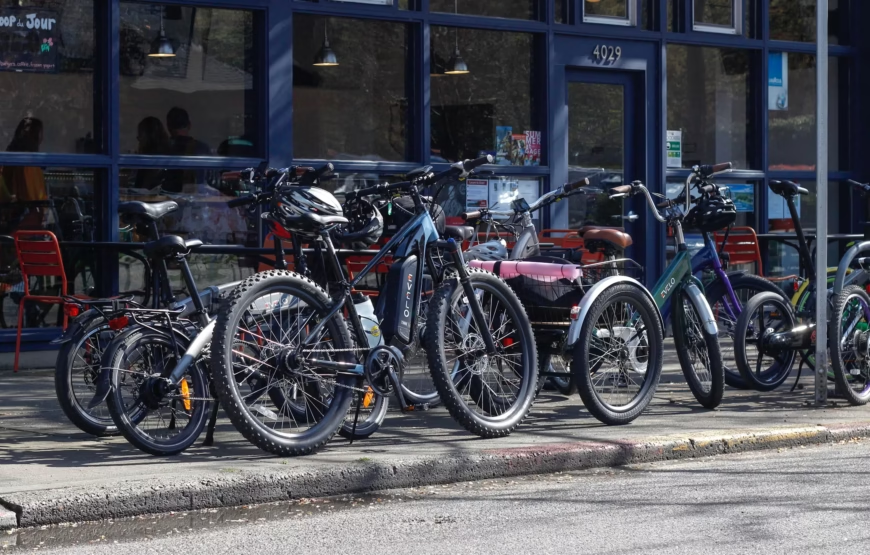
The practical reality: many Montclair commuters walk, bike, take the bus, or get dropped off rather than park. Proximity to a station is worth prioritizing when you buy or rent here if you expect commuting to be a near-daily reality.
Getting to the Station Without a Car
Bay Street connects to NJ Transit bus routes 11, 28 and 29, which run through Montclair and into Newark. The 28 bus also serves the MSU campus, making it a useful connector for residents near the northern end of town who need to get to Bay Street on a weekend. (For direct express service into Manhattan rather than just to a station, see the bus section above.)
Montclair once operated a jitney service connecting neighborhoods to Bay Street Station, but the service ended years ago. Township officials have recently explored whether a local shuttle or jitney could be revived, though no permanent service has been announced. DeCamp Bus Lines ended all commuter routes to New York City in April 2023 after 153 years of providing that service — and the company itself shut down entirely in February 2025, ending its charter and casino lines as well, after 155 years in business. It is not coming back in any form.
For a door-to-door private option, Boxcar runs its Essex Express service along Bloomfield Avenue into Midtown Manhattan. Reserved seats are listed at $15.33 per ride for members and $22.99 for non-members on Boxcar’s site, though actual pricing has been running somewhat higher recently due to fuel surcharges — worth checking current rates directly before budgeting around them. See the bus section above for more on why Boxcar has become the dominant way Montclair actually gets to work.
The Weekend Service Gap Nobody Warns You About
Walnut Street, Watchung Avenue, Upper Montclair, Mountain Avenue and Montclair Heights all go dark for rail service on weekends. If you live near any of them, you need a car or a ride to Bay Street to catch a train — or, as noted above, a bus route that doesn’t depend on the train at all. On weekends, trains only run every two hours instead of the weekday frequency of roughly once per hour. Bay Street is the only active Montclair rail station on Saturdays and Sundays.
It adds up to a lot of driving for a town that prides itself on walkability. When there’s no good weekend option, Giglia says, “residents are improvising workarounds” — driving to Secaucus Junction, catching the light rail in Bloomfield, taking PATH from Newark, or just driving the whole way into the city, all to dodge gaps in local service that shouldn’t exist for a town this transit-dependent. Per the same township survey, a strong majority of respondents travel to New York on weekends or off-peak weekdays despite the thin schedule, and many of them are doing it by car simply because the train isn’t there.
There’s a wrinkle here worth knowing if you’re skeptical that NJ Transit will ever fix this: unlike Metro-North or the Long Island Rail Road, NJ Transit doesn’t charge differently for peak versus off-peak travel — which means, by Giglia’s math, a half-full weekend train pulling in 60% capacity in each direction can out-earn a packed weekday train that runs back empty. Running more weekend service isn’t just a nice-to-have for residents; on paper, it could be the better business decision too.
Montclair Township’s NJ Transit Committee has been pushing for expanded weekend service, including hourly trains and service extended to at least Montclair State University station. The push is backed by local residents: a 2,300-respondent survey found that 84% wanted more frequent weekend trains, and roughly two-thirds wanted weekend service extended to MSU. As of June 2026, no changes have been announced. Giglia, for his part, says he’s cautiously hopeful — NJ Transit reportedly helped shape the survey questions themselves, which suggests they’re collecting the data they’d need to actually justify new service, not just gathering feedback for its own sake.
One thing that will hit Montclair commuters directly this summer: the FIFA World Cup is bringing eight matches to MetLife Stadium between June 13 and July 19, and NJ Transit has confirmed that for four hours before kickoff and roughly three hours after each match, regular Penn Station-bound trains on the Montclair-Boonton Line will be diverted to terminate at Newark Broad Street instead, with riders rerouted through Hoboken and PATH to finish the trip into Manhattan. This isn’t hypothetical — it already caused real delays and stranded commuters after the June 16 match, with complaints piling up online about regular riders getting squeezed out to make room for match traffic. If you’re commuting on a match day, check njtworldcup.com or the NJ Transit app before you leave the house, and build in real cushion on both ends of your trip.
Is the Montclair Commute Worth It for Hybrid Workers?
For hybrid workers, the first decision is monthly pass vs. FlexPass. If you commute two or three days a week, the FlexPass — 20 one-way trips at a 15% discount, valid over 30 days — might save you money compared to a monthly pass. Run the numbers before defaulting to the monthly.
Add parking at the Bay Street garage and three days a week of commuting adds up fast over a year, which is why walkability to a station (or proximity to a bus route) is not just a lifestyle preference here, it is a financial one.
The people who make peace with the Montclair commute are generally the ones who use train time well. A direct Penn Station train with a quiet car, where conversation and phone calls are prohibited, gives you 35 to 45 minutes of uninterrupted working or reading time. Enough to finish a chapter, clear your inbox or get a head start on the day.
The people who most regret the commute moved here expecting the fastest Bay Street time as their everyday experience and encountered the actual reality of delays, the Newark Drawbridge and service disruptions. Go in with realistic expectations and the commute is a reasonable trade for everything Montclair offers.
The commute is manageable. It rewards preparation more than optimism. Now you know what you are signing up for.
Before you commit to a neighborhood, check which station — or bus route — it puts you closest to and run your commute on the NJ Transit trip planner. For parking permits and daily passes, contact the Montclair Parking Utility at (973) 509-4997.
Image Credit: Gemeni