Photo: NJ Governor-Elect Mikie Sherrill (left) and Montclair NAACP’s Diane Tyree Anglin (center)
Source: NAACP Montclair
Montclair is known for its diversity and has long been a town focused on equity, inclusion, and community engagement. At the center of this work is the Montclair NAACP, which was founded in 1916 and has a history deeply intertwined with the town’s civil rights movement. During the era of school desegregation, members of the branch organized and marched to support integration, helping to shape the district’s magnet school system as a tool for equitable education. Today, under the leadership of Diane Tyree Anglin, the chapter continues to fight for the civil rights of Black and Brown residents while advocating for lasting equity in the community.
Excerpts from our conversation with Tyree Anglin are featured in the latest Pod episode, offering insights into the Montclair NAACP’s impact on Montclair’s magnet school district. Listen below.
a town divided
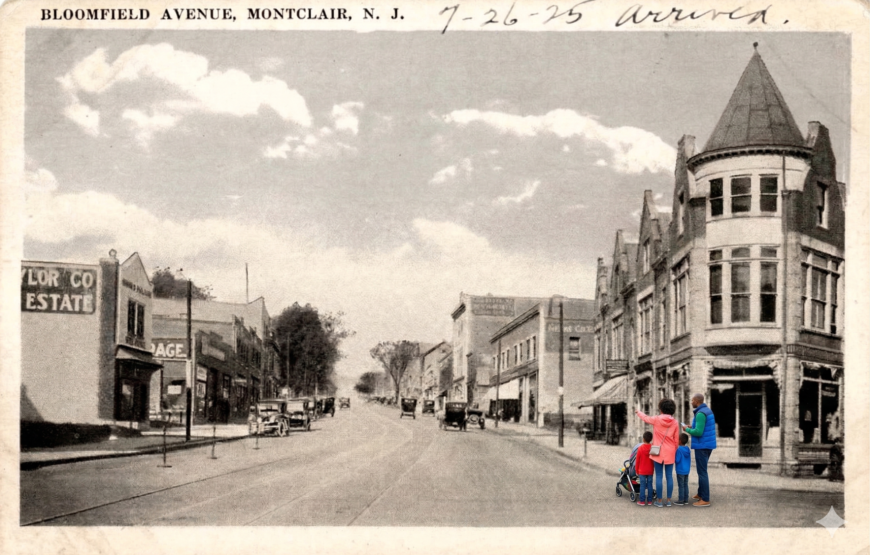
Tyree Anglin, from generations of Montclair families with her grandmother and grandfather moving to town in their early teens, recalls growing up in a divided school system. “I didn’t know where Mount Hebron was. We went to Applegate Farm, but I really didn’t know what was happening on that side of town,” she says. “Montclair was a divided town where most Black people lived on the south side of Bloomfield Avenue.” The town joined broader school integration efforts tied to Brown versus Board of Education, including lawsuits that led to busing students across Montclair and the eventual creation of the magnet school system.
Reflecting on her own experience, Tyree Anglin remembers busing beginning in 1976, during her fourth-grade year. “The first time busing really started, my sister was bused to Nishuane. It was confusing at first.” She describes how students were carefully distributed across schools. “It was clearly done by racial demographics. Some of my neighbors went uptown and we went to Glenfield.” Even as efforts aimed for balance, the system left a lasting impression of the town’s approach to integration and equity.
Magent Schools
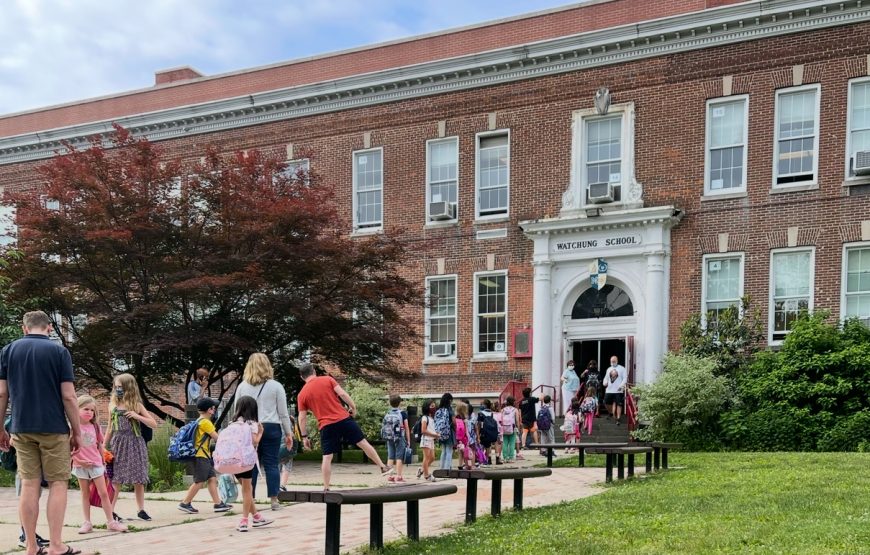
Montclair’s magnet schools were created to attract families to specific schools, offering specialized programs that encouraged enrollment even for those traveling across town. “Glenfield was a gifted and talented school, and Mount Hebron was science and technology,” Tyree Anglin says. “Edgemont was Montessori. Bradford was called the “University school”. Northeast seemed like an international school. The biggest schools—Nishuane, Hillside, and Glenfield—really attracted students from around town.” Students would rank their choices, and an algorithm helped distribute them while supporting district wide integration.
Looking back, she questions how much the original branding for each school still matters. “I don’t think so. I think it held up for quite a while. Technology changed that because now you can go anywhere and access it. Every school has performing arts at some level, every kid has a Chromebook. Even Edgemont—I’m not sure how many teachers are still trained in Montessori.” While the magnet system shaped student choice and school identity for decades, she says its distinctions have blurred over time.
the past and present busing situation
As Montclair faces ongoing budget pressures, especially around transportation, questions have resurfaced about whether the current system is still achieving its goals. Tyree Anglin reflects on how busing reshaped social connections, noting that when students were sent across town, “you almost didn’t know the people in your neighborhood,” and friend groups began to look very different. Over time, she says, Montclair itself has changed, with neighborhoods becoming more integrated than they once were.
Looking ahead, Tyree Anglin raises difficult but necessary questions. “Do we have to have busing at the level that we have it in 2025 and moving forward to have our neighborhood schools represent the diversity of the town? Maybe in some schools.” She points to concerns that schools like Bradford and Northeast risk being seen as “apartheid schools,” based on the concentration of Black and Brown students. With changing demographics, school choice, and algorithms influencing enrollment, she acknowledges the uncertainty ahead, concluding, “what does that look like? I don’t know.”
is private school the answer?
The achievement gap remains a central concern for the Montclair NAACP. Tyree Anglin calls it a crisis, noting while the issue is national, she says it is impossible to ignore locally. She questions how the gap might look if more high-performing African American students had remained in the district.
Tyree Anglin shares personal and community experiences that reveal why many families make that choice. She recalls instances where grades and placement recommendations did not align with student performance and adds, “if I didn’t question it, would he have gotten into CI math? I’m not sure.” She also describes parents encountering barriers when advocating for their children, noting disparities in how concerns are received. For her own family, the decision to leave the district “had to do with culture… and what are the opportunities that are there for my family?” As she reflects, many Black families are sometimes paying “way over $40,000 a year” for private school, a reality that continues to reshape both enrollment and perceptions of equity in Montclair’s public schools.
representation in the classroom
Tyree Anglin is unequivocal about the importance of representation in the classroom. Asked about research showing Black students perform better with Black teachers, she responds, “100%.” Yet she argues the system in Montclair is not set up to support that reality, pointing to tenure rules and seniority that often result in newer teachers being cut first. She also recalls missed opportunities in recruitment, explaining that while there were efforts to hire from HBCUs, “Montclair wasn’t even set up to hire people on the spot and we couldn’t offer them a job until like July,” leading to the loss of strong Black candidates.
Beyond staffing, Tyree Anglin highlights how culture and curriculum shape student experience. She adds, “institutional racism is real,” and notes how classroom materials often fail to reflect students’ lives. “If all the books in a classroom are by white authors and feature white characters,” she explains, students are less likely to see themselves reflected and often look elsewhere when given a choice. Pointing to outdated reading lists, she adds, “I’m not saying there’s anything wrong with The Outsiders. But after a while, let’s just start changing the books,” emphasizing the need for more representative and inclusive learning experiences.
Join the Montclair NAACP community. Subscribe to the monthly newsletter to stay up to date on advocacy efforts, events, and issues impacting Montclair residents.