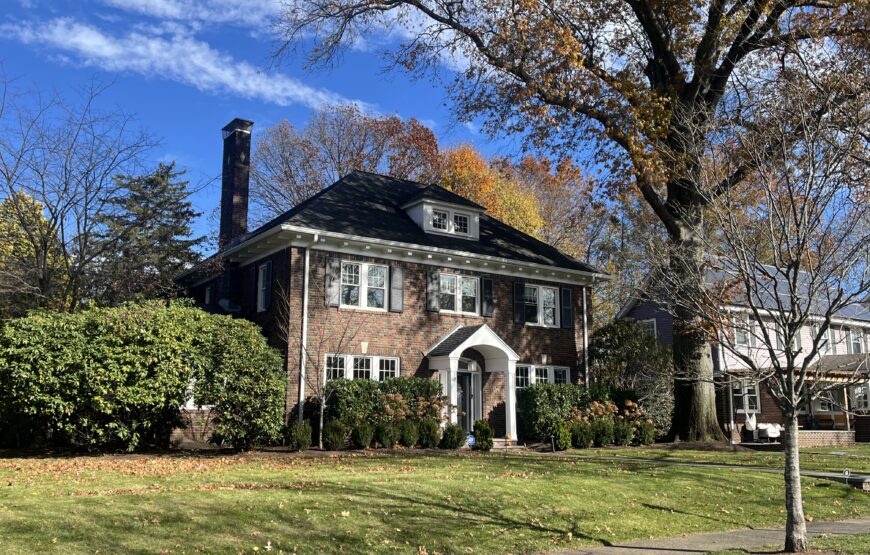
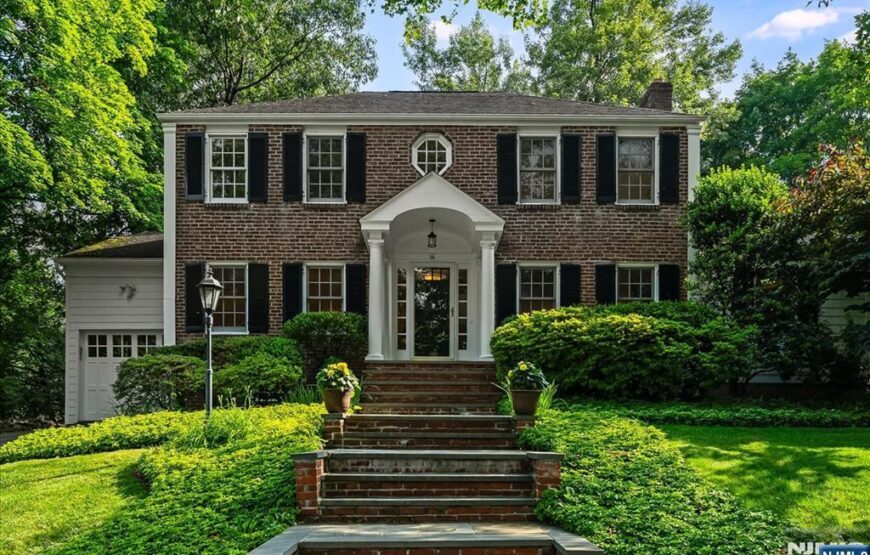
Forget the asking price. In Montclair, it was never the real number.
Ask anyone who has lost a bidding war here and they will tell you the listing price felt like a rumor by the time the deal closed. That is not an accident. It has a name now, thanks to a viral reel from local creator Ollie McAteer, and once you hear it, you cannot unsee it in (almost) every Montclair listing you scroll past.
What Is Montclair Math and Why Do Homes Here Sell Over Asking
McAteer, who posts as British Guy Living in New Jersey, laid out the mechanics plainly. “I’ve been told by multiple real estate agents in this area that sell homes in Montclair and surrounding areas that the homes are engineered to be priced forty percent under what they actually go for,” he said. “That’s to incentivize a bidding war so we can drive up the price.”
A bidding war is what happens when several buyers compete for the same house at the same time, each one raising their offer to beat the others. Montclair sellers and their agents, according to McAteer, are engineering that outcome on purpose. They do not price a house at what it is worth. They price it low enough to draw a crowd, then let the crowd do the work of driving the number back up, usually well past where it should have landed in the first place. It works because buyers see a number they can almost afford and convince themselves they have a shot.
The listing price was never the target. It was the bait. And the five examples McAteer pulled up next show exactly how far that bait can stretch.
The Numbers Behind Montclair’s Bidding Wars
Take the first home in his reel: listed at $1.399 million, it sold for $1.822 million, $423,000 over ask. Another, listed at $1.15 million, closed at $1.55 million, a $400,000 gap. A renovated five bedroom, two bath home listed at $869,000 sold for $1.32 million, $451,000 over. A fifth bedroom home listed at $949,000 sold for just over $1.2 million, which McAteer put at two hundred fifty to three hundred thousand over ask. And a three bedroom, two bath home listed at $699,000 sold for $1.214 million, a jump of $515,000.
Run those five side by side and the pattern is impossible to miss: these houses always sell over asking, sometimes by forty percent or more — which lines up with the gap McAteer says agents are engineering into the listing from the start.
“So the Montclair math, the rough math that you should be doing is this,” McAteer said. “Add a flat $200,000 to the asking price. The asking price is not real. You need to put $200,000 on top of the asking price.” His advice does not stop there. Once you have mentally reset the number, he says, you still need to be ready to bid higher still. Buyers who budget to the listing price are not budgeting for Montclair. They are budgeting for a different town.
That formula works for most of Montclair’s market. But it just met its first real exception.
The $8.1 Million House That Broke the Pattern
Not every Montclair sale follows this script. 159 Gates Avenue sold for $8.1 million this month with no bidding war at all, the opposite of everything McAteer describes. The forty percent underpricing strategy works when there’s a crowd of buyers competing for the same house, the $700,000 to $1.5 million range McAteer is describing. At the very top of the market, where there may be only one or two buyers who can write an eight figure check, there’s no crowd left to engineer a bidding war out of.
For everyone shopping in the range that made McAteer’s reel go viral, the lesson holds regardless. Do not budget to the listing. Budget to the number nobody printed, and build in enough room to go past it. Read the Pod’s full breakdown of how to come out ahead in a Montclair bidding war before you make an offer, and if you have run into your own version of the Montclair math on a recent house hunt, tell us about it.
Image credit: Redfin