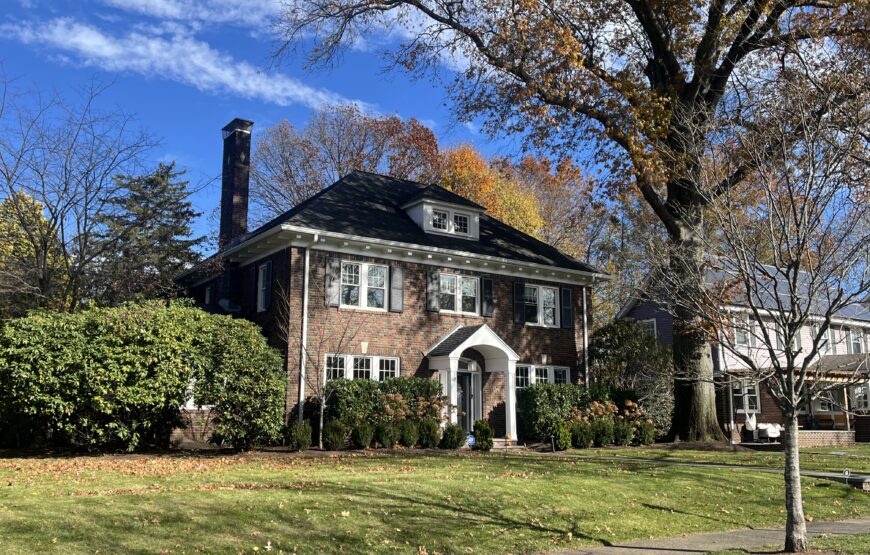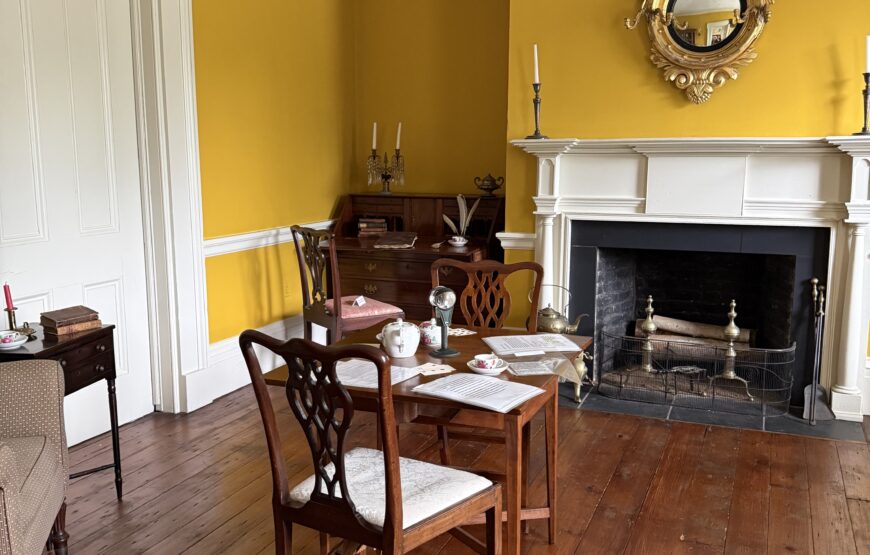
Every house in Montclair has a paper trail. Pull the right city directory off the shelf at the Montclair History Center’s Clark House research library on Orange Road and you can find the name of whoever lived at your address in years past, what they did for work, whether they owned or rented. During a recent Montclair Pod visit, director Angelica Diggs did exactly that, finding a resident’s name at a local address in under two minutes.
If you have ever stood in your kitchen and wondered who built the shelves before you, this is where you begin researching your Montclair home’s history.
What Are City Directories and Why Do They Matter?
City directories are the pre-digital version of an address-by-address census. Published annually by private companies, they logged every resident by name and street, noted occupations and indicated whether someone owned or rented. Think of them as a snapshot of who lived where, taken every year, for over a century.
The Montclair History Center holds physical copies dating to 1864. Street address lookup becomes available starting in 1920. Before that, you search by family name. From 1920 forward, go straight to the address index, find your street and run your finger down the column.
What you find depends on when your house was built. A house from the 1880s will have decades of entries. A house built in the late 1930s might not yet be logged the year it was built. That blank entry is its own kind of data. It could mean the street and its lots were still being subdivided – still becoming the block you live on now.
The city directories run from 1822 to 1995 and are also available on microfilm at the Montclair Public Library. The History Center holds its own physical collection, and both institutions have digitized portions searchable free online through the MPL digital collections. Neighboring towns are in there too, Glen Ridge and Bloomfield, useful if you are tracing a family that moved around the area.
Once you have a name, Diggs puts the next step plainly: “You could follow that up with things like census record data on Ancestry or FamilySearch and then do a little poking. That’s how you go from there.”
Maps, Surveys and Records That Go Even Deeper
A name from a directory is a starting point. Several other tools on the Montclair History Center’s resources page take the research further, and there are a few in particular that are worth knowing before you visit.
The first is the Junior League interactive map of Montclair. Built from surveys conducted in the 1980s, it covers houses and businesses across town. Search your address, and if your property was included in the survey, a dot appears on the structure. Click it, select “View Survey Form” and you get the building date, architectural style and a summary of why the structure is historically significant. It is the fastest way to get a documented date on a house whose age you have always guessed at.
The second tool is the historic map collection. The center holds digitized maps spanning 1865 through 1934, including Sanborn fire insurance maps, produced by the Sanborn Map Company for insurance underwriters to document what structures sat on a lot and how they changed over time. The center’s own researchers have used these maps to surface details that no directory captures. An 1906 atlas of Montclair shows the area around the Walnut Street station as fully industrial, with mills, coal yards and a label factory on a street literally called Label Street. The block you know as a quiet residential stretch was once something else entirely.
For ownership records going back further than any directory, the Newark Hall of Records holds property deeds and title documents. The NJ State Archives carry land records, census records and military records dating to the colonial period. For neighborhood-level context, redlining maps from the 1930s and ’40s, available through the University of Richmond’s Mapping Inequality project, show the color-coded mortgage grades, from A to D, that determined who could buy where in Montclair. If your block has a complicated demographic history, these maps often explain it in a single glance.
What Your House Might Already Be Telling You
The records will show you who lived in your house, but your house itself often hints at how they lived, and that context shapes what you look for when you search.
Many older Montclair homes have a third floor with a small bathroom, a clawfoot tub, a narrow sink. In houses built in the late 1800s and early 1900s, that floor was likely servant quarters. Homes with carriage houses out back tell a related story: those separate structures were built to house live-in domestic staff for households that could afford a fully independent outbuilding. “That definitely would’ve been common,” Diggs said.
The architecture is evidence. Walk through your house before you open the directories and you will already have questions worth answering.
How to Start Your Montclair Home History Research
Start online. The MPL digital collections are free, searchable by address and available any time. The Junior League interactive map and the redlining maps are also online. You can get surprisingly far without leaving your kitchen.
When you are ready to go deeper, the Clark House research library welcomes drop-in visits and scheduled research appointments. Staff can help you navigate the physical directory collection, pull from the deed archive, which holds original deeds and title documents for Montclair properties dating from 1922 to 1996, and point you toward the vertical files, folders organized by person, organization and neighborhood that hold material not captured anywhere online.
The center also maintains an African American history collection with materials on community organizations, churches and oral histories. If your house sits in a neighborhood with a long African American residential history, and many Montclair neighborhoods do, this collection adds context that directories alone cannot provide.
Start online. Then come in and see what the algorithm missed.
Montclair History Center Clark House Research Library 108 Orange Road, Montclair, N.J. Drop-in visits welcome. Research appointments available. Phone: 973-744-1796 Email: mail@montclairhistory.org Digital resources: montclairhistory.org/resources-for-genealogy-and-house-researchers