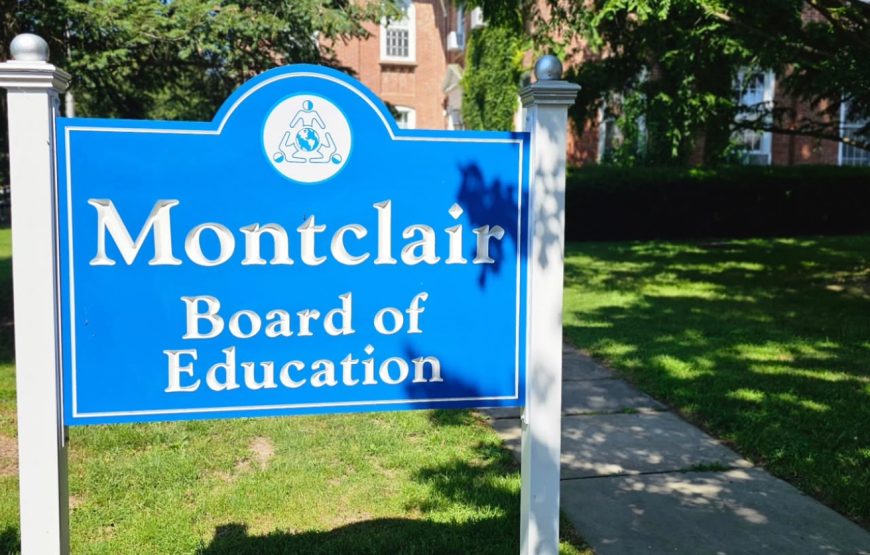
In the middle of Montclair’s ongoing school budget turmoil, one role continues to sit at the center of both the confusion and the blame: the Business Administrator, or BA. To help the community understand what this job actually entails, what power it does and does not have, and how a district like ours could fall more than $20 million into the red, we spoke with someone who knows the role intimately. Stephen Frost is the Business Administrator for the Tenafly Public Schools, a Montclair resident, and a former BA in Randolph, where he navigated years of deep budget reductions. In this wide-ranging conversation on The Montclair Pod, he helps demystify the position, clarify widespread misconceptions, and offer a candid take on how Montclair got here and what the path forward might look like.
What a Business Administrator Actually Does
Frost explains that the BA functions as both the Chief Financial Officer and Chief Operating Officer of a school district. The job encompasses nearly everything except curriculum, instruction, and personnel decisions. That includes finance, facilities, security, transportation, food services, and anything operational that keeps schools running day to day. It is also a role that requires advanced credentials. Most BAs hold an MBA or master’s degree and must complete roughly 160 hours of professional training. Despite the requirements, there is a statewide shortage. Fewer people are entering the pipeline just as veteran administrators retire, creating a talent gap that is hitting districts across New Jersey.
How Much Power Does a BA Really Have?
Despite assumptions around Montclair’s crisis, Frost says the BA’s authority is often overstated. A BA signs off on every purchase order and prepares contracts for Board approval. But the BA cannot cut positions, select curriculum tools, or independently shift the direction of the district. They can present the numbers, sound the alarms, and recommend cuts, but the superintendent and Board must ultimately make the decisions. This nuance is critical, Frost emphasizes, when evaluating the record of Montclair’s former BA, Christina Hunt. “I think some of the criticisms of Christina Hunt are a little unfair,” he says. “She could not cut positions. She can only tell the superintendent, we have a deficit and you need to cut positions.”
Was the Deficit Hidden? Frost Says It’s Hard to Believe
Asked whether it was possible for leadership to be unaware of a growing structural deficit, Frost is direct. “It is hard to believe,” he says. “For years, Montclair has openly talked about reduction-in-force notices, uncertainty about staffing levels, and budget gaps. That was the alarm bell.” In his view, the root cause was not secrecy but the unwillingness to make painful staffing cuts. Montclair’s enrollment has declined roughly five to six percent over the past several years without any parallel reduction in staff. “If no one was willing to make that hard decision two years ago or four years ago, it makes sense why deficits ballooned,” he explains.
Would a Forensic Audit Help? Frost Doubts It
Many residents have called for a forensic audit to uncover what happened. Frost says not to expect revelations. “Forensic audits are about missing cash,” he notes. “What seems to have happened in Montclair is not complicated. Every year the district pushed obligations into the next budget cycle and avoided personnel cuts that should have happened years ago.” In other words, the story is not hidden transactions but delayed decisions.
Why Personnel Cuts Are So Difficult
Personnel makes up about 80 percent of a school district’s budget once salaries, benefits, pensions, and taxes are included. Cutting positions means eliminating people, often effective educators and staff members who did nothing wrong. “No administrator wants to look someone in the eye and tell them they’re losing their job for reasons unrelated to performance,” Frost says. “But that is the job. And avoiding those decisions is how deficits like this emerge.” He also points out that Montclair is far from alone. Districts across the state are in similar situations, squeezed by the 2 percent tax levy cap, rising healthcare costs, and flat state aid.
Is Outsourcing the Problem or the Only Viable Option?
One of Montclair’s biggest line items is outsourcing, including transportation, food services, and related services for students with disabilities. Frost says communities often assume bringing services in-house would save money. In reality, the opposite is usually true. The cost of hiring full-time staff under state benefit and pension rules can far exceed the rates charged by outside vendors. Bus fleets are also nearly impossible to launch today due to driver shortages and wait times of up to 52 weeks for new buses. “They have you hostage,” Frost acknowledges of private bus companies. “But even then, outsourcing is still cheaper than bringing everything in-house.”
Why a State Monitor Might Actually Make Things Worse
Some in Montclair believe a state monitor is necessary for transparency and stability. Frost pushes back strongly. “A state monitor is not going to make the budget easier to understand,” he says. Instead, a monitor scrutinizes every purchase, restricts local control, and can impose deeper cuts with little community input. “What a state monitor will do is remove decision-making power from the superintendent and Board, and the cuts will run deeper,” he says. “Transparency does not improve. Fiscal compliance is the priority.” He argues that the most urgent need is an experienced and highly qualified permanent BA, a hire Montclair has not successfully made in many years.
The Christina Hunt Insurance Claim
Montclair is currently attempting to recoup roughly $500,000 through its insurance bond, alleging that former BA Christina Hunt approved unauthorized payments to the district’s food services provider. Frost is skeptical. “These bonds are intended to protect against theft,” he explains. “She did not steal cash. She approved something improperly. That does not align with what the bond is designed to cover.” He adds that a superintendent must sign off on purchase orders, raising questions about whether proper systems were even in place.
How Montclair Could Have Avoided This
Frost believes the district could have reduced or avoided its $12 million accumulated deficit and the current $7.5 million shortfall if staffing cuts had been made years ago. He also would not have put forward two ballot questions. He supports the debt question to avoid a state monitor, but says solving this year’s deficit does not fix the structural problem. “We are going to be back in this boat in three months when it is time to build the next budget,” he warns.
Can Montclair Recover? Frost Says Yes, But…
Despite the chaos, Frost insists Montclair’s situation is not insurmountable. “A 5 percent deficit is not impossible to close,” he says. “But you must have alignment across the superintendent, the BA, principals, supervisors, everyone. And you need a superintendent with the right vision.” He also reminds residents that school budgets everywhere are becoming unsustainable under the current tax cap and rising benefit costs. “This is not a Montclair problem. This is a New Jersey problem.”
Why He Still Has Hope
For all the structural flaws, Frost says New Jersey schools continue to excel academically. Graduation rates are strong, students are well prepared, and outcomes remain among the best in the nation. “We have managed the hard part, which is actually educating students well,” he says. “We just do not know how to afford it.”
A Final Word
As Montclair searches for answers, Frost comes back to the core truth that financial stability depends on leadership. The superintendent must have the right team, including a highly qualified BA, and the community must understand that some decisions will be painful. “This is an underappreciated job,” he says of school administration. “But districts need people who are willing to make hard choices.”