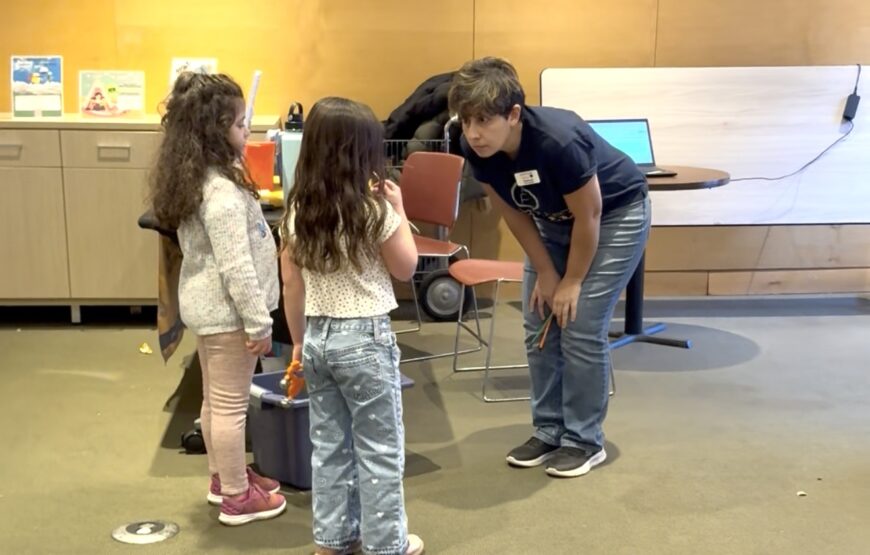
Last Saturday, Montclair parents, with toddlers in tow, filled the Montclair Public Library for the Montclair Preschool Fair, all wrestling with the same big question: where will their children spend their days this fall? The event brought together representatives from more than a dozen local preschool programs serving children ages two through four, offering families a rare chance to compare options side by side.
Parents moved from table to table, flipping through brochures, asking pointed questions, and weighing differences in philosophy, daily schedules, and cost. And as our conversations unfolded, clear themes began to emerge. Across interviews with parents and school directors, three priorities came up again and again: curriculum choices, flexibility of pre-k hours, and affordability. For many families, those preschool decisions are no longer just about the next school year, they’re increasingly tied to bigger questions about the future of Montclair’s public schools.
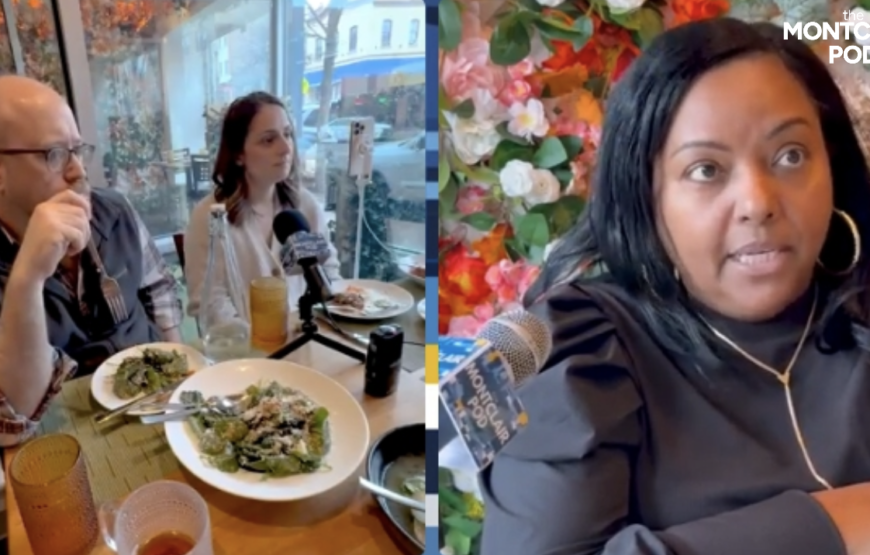
You can hear extended the conversations with parents and school leaders in the full episode on The Montclair Pod.
Diverse Preschool Offerings in Montclair
Preschools across Montclair are offering families an increasingly diverse set of early childhood options, reflecting a broader definition of what learning looks like prior to entering kindergarten. Each school brings its own approach, highlighting everything from structured play and sensory activities to outdoor exploration and the growth of fine motor skills and vocabulary.
At the Cooper School in Upper Montclair, flexibility is being designed directly into the school day. Formerly known as the Union Cong Nursery School, the program is rooted in the Reggio Emilia philosophy which is a child-led approach that follows a child’s interests and curiosity rather than a rigid academic sequence. That philosophy allows for a mix of play-based exploration, sensory learning, and social development, while still giving families options around scheduling.
Flexibility Built Into the School Day
Lynn Kulick, the Cooper School’s director, says that for many families, the preschool decision ultimately comes down to one thing: days and hours.
“Now we know that extended day is important for some families, so we’re gonna do it till 5:00PM” said Kulick. At the same time, she notes that flexibility works in both directions, as not all families are looking for a full-day schedule saying “I have families that want a part-time day for their kids. I talk to many families here that also want only two, three or four days,” Kulick said.
A More Structured, Academic Model
Park Street Academy represents a different model altogether. The independent preschool has been in Montclair for nearly thirty years and is known for a more academically structured approach — still age-appropriate and still play-forward, but with clearer benchmarks and expectations. In addition to hands-on learning, the program places an emphasis on language-specific instruction and early academic foundations.
Sandy Weber, the school’s business director, says the approach is designed to take advantage of how eager young children are to learn, when material is presented in an engaging and developmentally appropriate way.
“We know that a lot of families want purely play-based, which is terrific if that’s what you want. But we have found that children are little sponges and they love learning if information is presented to them in a way that’s age appropriate, developmentally appropriate, and really fun,” Weber said.
She added that the goal is not just academic readiness, but confidence — particularly for children who may be more hesitant in group settings.
“We want them to go into kindergarten confident… We want the little shy kids who kind of are hiding in the back and maybe are afraid to be noticed — we want them to go in so confident and willing to participate and take a chance and be wrong and be part of the mix,” Weber said.
Keeping Costs Down Through Cooperation
Affordability remains a key concern for many families navigating preschool options. At the Watchung Cooperative, a parent-run co-op model offers an alternative to traditional tuition-based programs. Families participate directly in the classroom and take on board and community responsibilities, creating a shared investment in the school.
Director Christi Porter Johnson says that structure not only keeps costs down, but also helps build a strong sense of community, particularly for families new to Montclair.
“By being a co-op, we’re able to keep a slightly lower price point, with parents helping out in the classroom,” she said.
Public Pre-K and Planning Years Ahead…Public or Private?
All of these programs operate alongside Montclair’s free public pre-K, known as the Mini Mounties. The program is lottery-based and not guaranteed. All Montclair residents whose children turn three by October 1st are eligible to apply, though the application for the 2026–2027 school year has already closed.
Parents at the preschool fair said they weren’t just thinking about the coming school year, but planning several years ahead — especially with ongoing uncertainty surrounding the school district’s budget. That has made long-term educational planning feel less predictable, even for families who initially expected to rely on the public school system.
For some parents, those questions extend well beyond preschool. Patricia Henriquez is a working mother with two young children — one currently enrolled in Montclair’s public pre-K program and the other just beginning the preschool search. She says concerns about resources in the public school system are pushing her family to think further ahead, and sooner, than they anticipated.
“It feels…with a private education, they would have more extracurriculars. We have more choices… in potentially smaller class sizes, but I don’t know. We haven’t really done any of the tours yet…our 4-year-old wouldn’t qualify for the kindergarten program yet. But it is something that makes you think twice about, looking elsewhere,” she said.
Another parent at the fair, Dinora Raminez, moved to Montclair specifically for its public schools. She says the district’s current fiscal uncertainty has been difficult to reconcile with the town’s higher than average taxes.