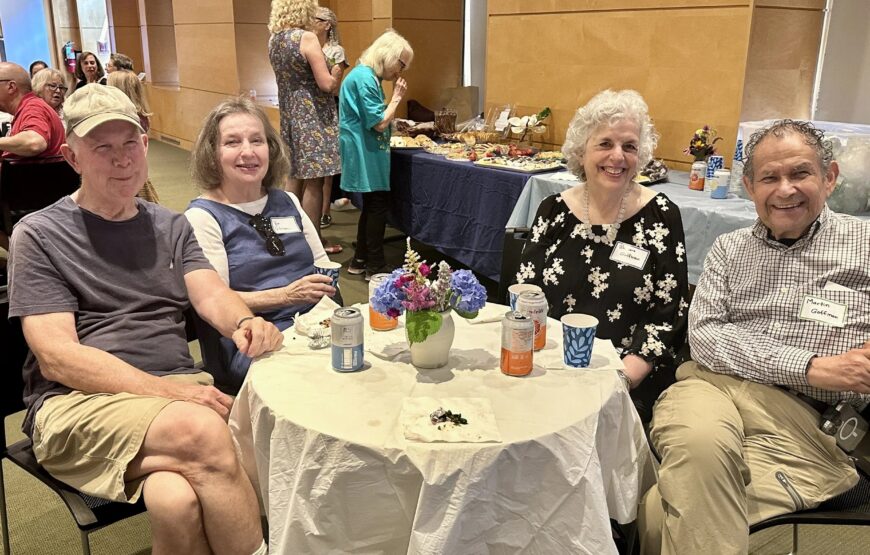
As Montclair residents age, the question of how to stay connected, supported, and engaged later in life is becoming increasingly important for both the residents and their families.
Our senior community is very active and has been shaped by residents who chose to stay in Montclair long after raising their families. In a conversation with Lynda Hollander, President of Aging in Montclair (AIM), we explore how the organization supports adults over 60, many of whom came to Montclair for the schools and never left. From packed Fourth of July parade appearances to advocacy at town council meetings, Hollander describes the group as not only locally engaged, but determined to be heard as the town continues to evolve around them.
At its core, the most common issue is also the most human. “They’re lonely. They’re isolated,” Hollander said, describing what she hears most often from residents who come to Aging in Montclair. For some, the organization becomes their primary source of connection. “I don’t see anybody else except for the people in this group,” one participant told her. That’s where the impact becomes clear. Beyond resources or referrals, Aging in Montclair gives people something to look forward to. “It gives people a purpose,” Hollander said, pointing to the role community plays in helping older adults stay engaged and connected.
🎧 To hear more about the Aging in Montclair, Senator Andy Kim’s perspective, and insights from local leaders on aging in our town, listen to the full conversation below.
The Cost of Aging in Montclair
Aging in town can come with financial trade-offs, particularly for longtime homeowners. Hollander said property taxes are often one of the biggest concerns for older adults who remain in their homes after their children have moved out. For some, that leads to difficult decisions. AIM regularly works with residents who are selling their homes and looking for more manageable living situations. “We deal with a lot of folks who are downsizing and looking for apartments,” Hollander said.
There are some supports in place. Hollander pointed to rent control for adults 65 and older in Montclair, which can help stabilize housing costs for those making the transition from homeownership. “That seems to work well for them,” she said. At the same time, lifestyle changes can offset some expenses. Many older residents eventually give up driving, eliminating costs like gas and car insurance. Walkability becomes a major advantage, particularly for those living near downtown. “They’re able to walk,” Hollander said, highlighting proximity to shops, restaurants, and green spaces.
Transportation programs also play a role in maintaining independence. Services like the EZRide / Ride for Life program offering free rides within Montclair – up to 20 uber or Lyft rides per month – to help seniors and people with disabilities stay connected without the need for a car. “That has helped as well,” Hollander said.
Even with those resources, the cost of living remains a defining factor in how residents experience aging in the community.
Aging in montclair programs
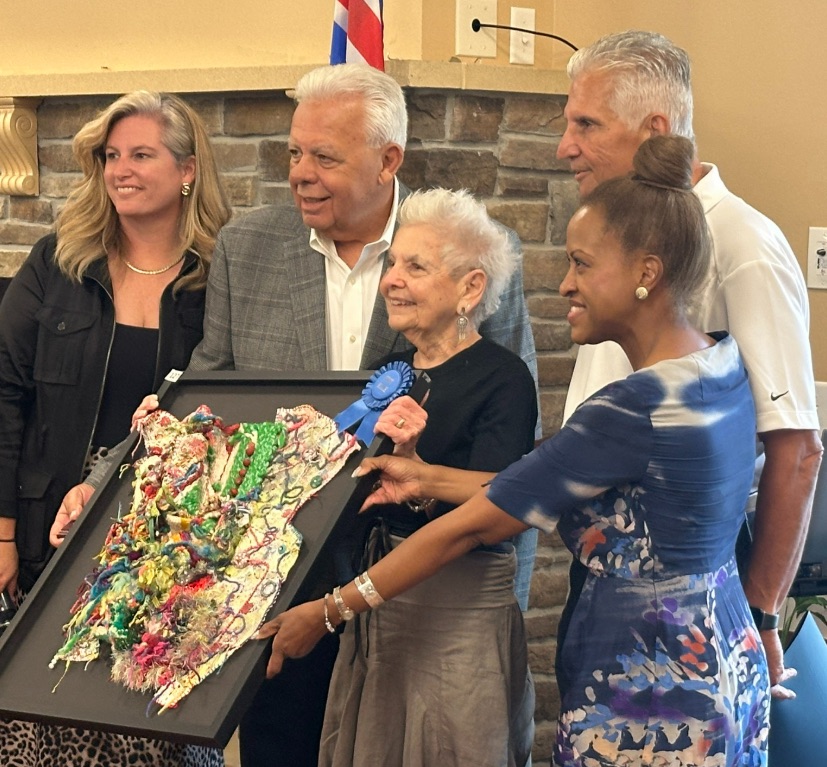
| Aging Together – Conversations on Aging | Widow/Widowers Connections | AIM Events and Saturday Socials |
| Conversations on Aging are confidential small groups using discussion to foster relationship building and consciousness raising. The groups focus on aging in place as well as the issues and concerns older adults face in the community. Facilitated by experienced professionals. | The Widow/Widowers Connections are monthly support groups which provide an open and positive atmosphere to help those who have lost spouses/partners to navigate their “new normal.” The groups also provide an opportunity to meet new friends who understand your loss, and to share experiences and resources for continuing support. | AIM’s events and monthly Saturday Socials are where old and new friends gather. Join us for interesting programs and lively discussions! |
senior Social Isolation
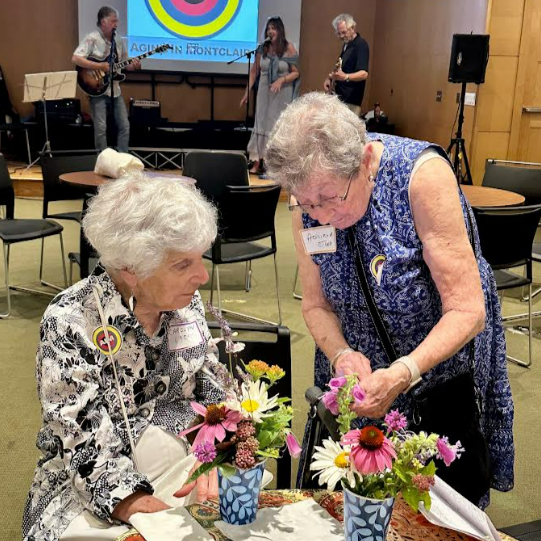
Beyond financial concerns, social isolation is one of the most pressing challenges facing older adults in Montclair. Hollander said many seniors become more isolated over time due to health or cognitive issues, making it harder to stay connected. “One of the big things that we’ve identified is social isolation,” she said, pointing to it as a key focus of AIM’s work.
Building community is central to that effort. The organization offers free, accessible programming, much of it hosted at the Montclair Public Library, designed to bring people together in low-pressure, social settings. “We work on getting people together,” Hollander said. Some programs are intentionally simple. Monthly meetups like Breaking Bread give residents a chance to gather at a local coffee shop and connect. “It’s a place for them to kind of just hang out and socialize,” she said. Hollander noted that making new friends becomes more difficult as people age, particularly after major life changes. “It’s really hard to make new friends when you’re older,” she said.
Transitions like children leaving home or the loss of a spouse can reshape social circles quickly. “You lose a whole component of your friends,” Hollander said, describing how those shifts can leave people feeling disconnected. At the same time, Montclair is seeing an influx of older adults moving to the area to be closer to family. While that proximity can be helpful, it often means starting over socially. Hollander said many of these residents are looking for ways to build new connections within the community. Organizations like Aging in Montclair, along with the township’s Lifelong Montclair program, aim to fill that gap by creating spaces where those connections can take root.
The Push for a Senior Center
While programs exist, Hollander said Montclair still lacks something more fundamental: a dedicated space for older adults to gather.
“One of the things we’ve been battling with is having a senior center,” she said, pointing to it as one of the biggest gaps in local support. While Edgemont Park House offers programming, she described the space as too small and in need of updates. More importantly, she said, there is no consistent, informal place for seniors to spend time day to day. “There’s really not a place… to just hang out,” Hollander said, noting that most existing offerings are structured programs rather than open, drop-in environments.
That absence is being felt across the community. Some seniors, she said, feel overlooked when it comes to having a central space designed for their needs. “The seniors are kind of forgotten,” she said. Efforts are underway to address that. Hollander pointed to plans for a future “senior hub” at 205 Claremont Avenue, though details and timelines remain in development. For now, advocates continue to push for a solution that provides both programming and a sense of place.
Until then, the need remains clear: a space where older adults in Montclair can connect, casually and consistently, as part of daily life.
Building Community, One Conversation at a Time
At the heart of Aging in Montclair’s work is something simple but powerful: connection. Hollander facilitates weekly “Aging Conversations” groups at the Montclair Public Library, where small groups meet regularly to talk through the realities of getting older. Over time, those conversations often turn into something more lasting. “These were people who didn’t know each other and now who are friends,” she said.
That sense of community is intentional. Hollander encourages participants to rethink what support systems can look like later in life. “Community doesn’t have to be your family,” she said, emphasizing that connection can be built in new and unexpected ways. For some, those connections can be transformative. Hollander recalled one woman in the group who recently reconnected with a cousin she had not spoken to in decades. “The group gave her the courage,” she said, describing the emotional process of working through years of distance amongst her new friends.
Stories like that, she added, reflect the deeper impact of the organization’s work. Beyond programs and services, it is about creating a space where people feel supported, seen, and connected as they navigate the later stages of life.
A Growing Network of Support
Beyond social programming, Aging in Montclair serves as a key connector for residents navigating the complexities of aging. Hollander shared that the organization often helps guide people toward the right resources, whether they need financial assistance, legal support, or specialized care. “People needing financial help, we’ll refer them to any number of sources in Montclair,” she said. That network includes local institutions with dedicated support services. Montclair has a full-time social worker, and the Montclair Public Library also offers access to a part-time social worker, both of whom can help connect residents to critical resources. “They have probably a lot more resources than I do,” Hollander said.
What sets the organization apart, Hollander said, is its structure. As a nonprofit, Aging in Montclair operates independently from the township, allowing for flexibility in how it serves the community. “Many towns have senior services,” she said, but those programs often come with different constraints.
Over the past decade, the organization has grown significantly. What began as a local initiative now includes around 700 members, with reach extending beyond Montclair into the broader Essex County area. As it grows, there is also a focus on sustainability. Hollander said the organization is working to engage a younger segment of older adults to ensure its longevity. “We’re trying to attract people in their mid to late 60s,” she said, as a way to continue building and evolving the community for years to come.