If you’re thinking about moving to Montclair, NJ — or you already live here and just want to understand what’s going on — this is the guide for you.
Montclair is often described as the “arts and culture capital” of Northern New Jersey, and that’s not marketing copy. It’s a place where you can walk to a Peruvian restaurant, catch a theater production at a nationally-ranked university, spend Saturday morning at a farmers’ market, and still make it to Penn Station in under an hour. It’s the kind of town that New York City transplants call home and then never leave.
But 2026 is a pivotal year. Montclair is navigating a $19.6 million school budget crisis that’s put its celebrated magnet school system under existential strain. The real estate market remains ferociously competitive — the median home sale price topped $1.6 million in late 2025. And the town is actively reinventing itself around “gentle density” and transit-oriented redevelopment.
So: what do you actually need to know? Let’s get into it.
A Quick History: From “Cranetown” to Clear Mountain
Montclair wasn’t always a destination. Originally known as “Cranetown,” the area was a quiet Dutch and English farming settlement at the foot of the First Watchung Mountain for most of the 18th and early 19th centuries. The transformation came with the railroad.
On April 15, 1868, Montclair was officially carved out of Bloomfield Township — a move driven largely by the desire to build a second rail line to Manhattan. That decision set the town on a path toward becoming a premier suburban enclave for New York professionals. By 1894, Montclair had incorporated as a town in its own right, and the stately Victorian, Colonial Revival, and Tudor homes that define its streetscapes today began to take shape.
The name itself tells you something about the town’s ambitions: mont clair is French for “clear mountain.” The residents who shaped early Montclair weren’t going for modest.
In 1908, Montclair State University was founded as a Normal School, beginning the town’s long run as an intellectual and cultural hub for Northern New Jersey — a reputation it still earns every year.
The Village-by-Village Breakdown
Montclair covers just 6.25 square miles, but it doesn’t feel like one town — it feels like five or six distinct neighborhoods, each anchored by its own NJ Transit station and walkable main street. This is what locals call the “village-centric model,” and it’s one of the things that makes Montclair genuinely different from most New Jersey suburbs.
Upper Montclair (07043): In-Demand & Low Inventory
Upper Montclair is where Tudor storefronts meet high-end boutiques, and where the streets feel most like a movie set version of a perfect American suburb. It’s home to Anderson Park and served by the Upper Montclair NJ Transit station.
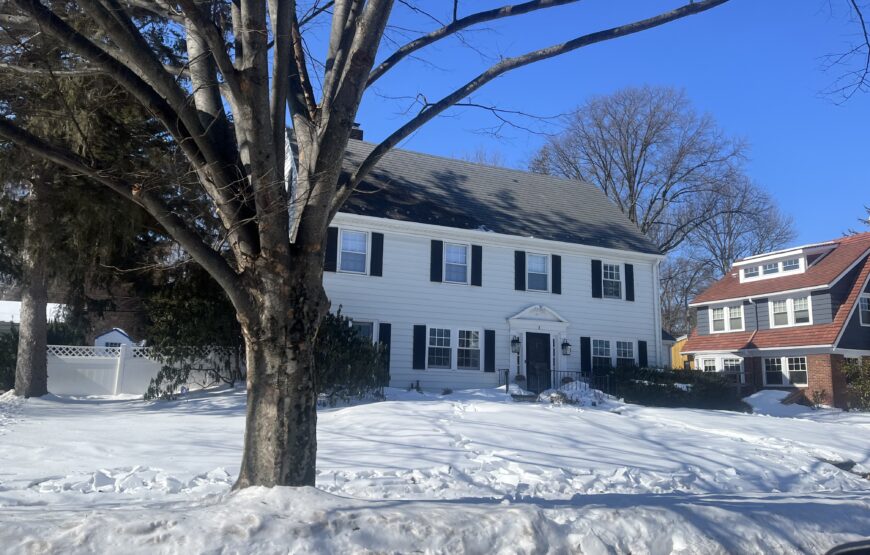
For people relocating from New York City — especially those coming from the Upper West Side or Park Slope — Upper Montclair tends to be the first neighborhood they fall in love with. It checks every box: walkable village center, historic architecture, top-rated schools, and a short commute. Bidding wars here are fierce, inventory is thin, and homes routinely close well above asking price.
Montclair Center and the Walnut Street Corridor: Most Walkable in NJ
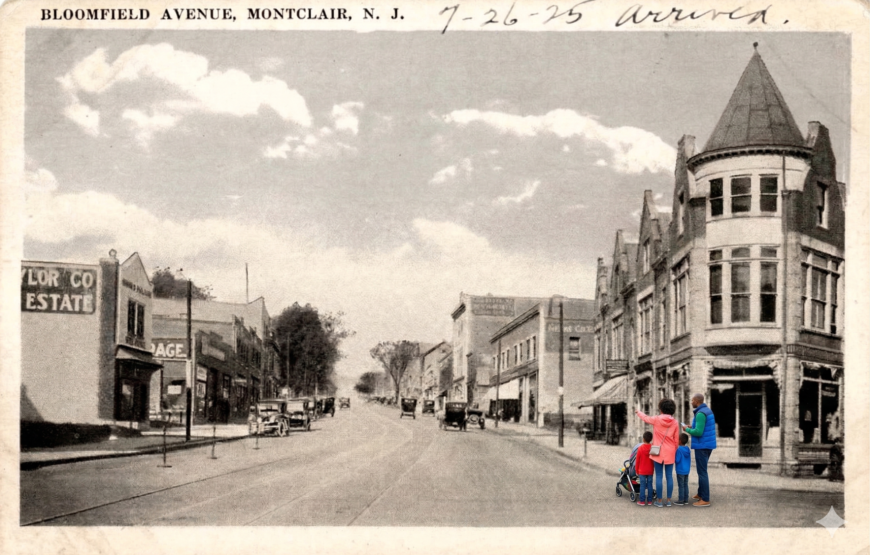
Montclair Center is the commercial and cultural heart of the township, anchored by Bloomfield Avenue and consistently ranked as the most walkable district in New Jersey. You’ll find luxury apartment complexes like Valley & Bloom alongside independent bookstores, coffee shops, and restaurants representing cuisines from across the globe.
The Walnut Street corridor — tucked between the train station and the firehouse — is more understated but just as essential. It’s home to the Saturday farmers’ market and, most importantly, Ray’s Luncheonette, the little diner that has been a Montclair institution for over 60 years. Farnoosh and I ate there recently for our Farnoosh and Mike Eat Food series, and it is exactly what a neighborhood breakfast spot should be: honest food, fair prices, family-run, and quiet enough that you can actually have a conversation. Angelica Flores, who has run Ray’s since she was a teenager, puts it simply: “We love to create food from our hearts.”
The South End: The Best-Kept Secret
The South End is where Montclair’s diversity and history are most visible. It’s a neighborhood that features the MLK Peace Garden, Nishuane Park, and a housing stock that tends to offer better value than the north end of town. If you’re a first-time buyer in Montclair’s market, the South End is worth a serious look.
It’s also a neighborhood with a complicated history. As we covered in depth in Montclair’s Magnet Schools at a Crossroads, the South End’s Glenfield School was the explicit target of a gerrymandered redistricting plan in 1933, designed to segregate Black students from white students. That history eventually gave rise to the town’s celebrated magnet system — and it’s a history worth knowing if you’re going to call Montclair home.
The Schools: What You Need to Know in 2026
Education is, without question, the defining issue for most families moving to Montclair. Here’s a clear-eyed look at where things stand.
The Magnet System: A Long History, Now Under Pressure
Montclair’s public school system doesn’t work like most. Rather than assigning students to schools based on where they live, the district uses a “Magnet System” that lets families choose schools based on specific educational themes — from STEM to Montessori to Visual and Performing Arts. The system was built in the late 1970s as a desegregation tool, and for nearly fifty years it has been one of the most distinctive features of this town.
Here’s every school in the current district:
| School | Grades | Magnet Theme |
|---|---|---|
| Nishuane Elementary | K–2 | Gifted and Talented |
| Hillside Elementary | 3–5 | Gifted and Talented |
| Bradford Elementary | K–5 | The University Magnet |
| Charles H. Bullock School | K–5 | Environmental Science |
| Edgemont Elementary | K–5 | Montessori |
| Northeast Elementary | K–5 | Global Studies |
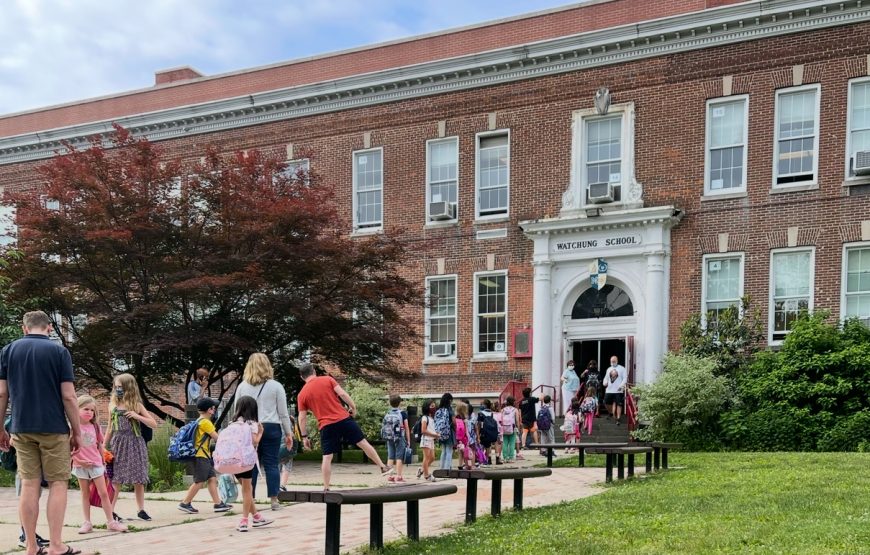
| Watchung Elementary | K–5 | Science and Technology |
| Buzz Aldrin Middle School | 6–8 | STEM |
| Glenfield Middle School | 6–8 | Visual and Performing Arts |
| Renaissance at Rand Building | 6–8 | Liberal Arts |
| Montclair High School | 9–12 | Comprehensive (inc. CGI, CSJ, STEM) |
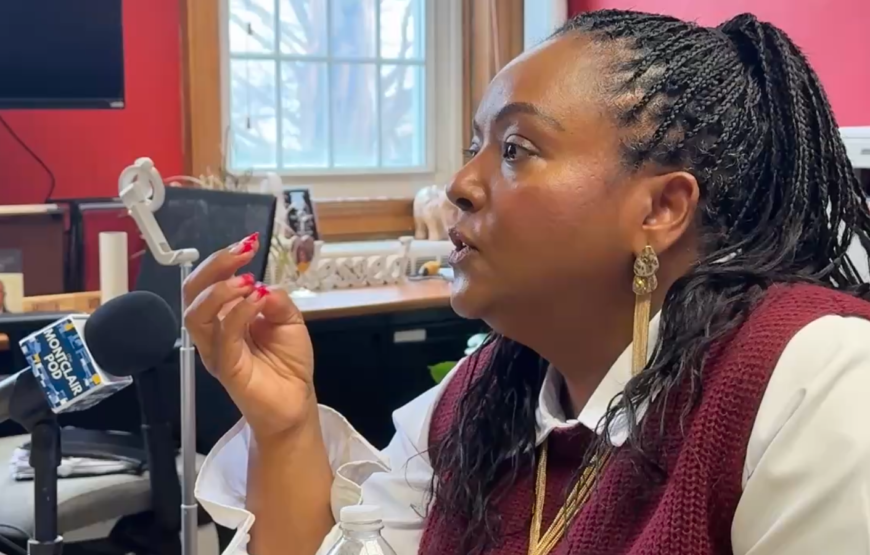
The crisis: The district is currently facing a $19.6 million budget deficit — its most severe fiscal test ever. Superintendent Ruth B. Turner has been direct about how we got here: “It’s really incompetence, it’s bad accounting… budgets were built on artificially low numbers.” On March 10, residents vote on a referendum to address the gap. Superintendent Turner has been clear about what’s at stake if it fails: a state-appointed fiscal monitor would take over, stripping the community of local control over the very magnet traditions that define Montclair’s schools.
The transportation bill alone — busing students across town to their chosen magnet schools — runs about $10 million a year. Federal funding for magnet programs has dropped roughly 75% in real dollars since 1979. The math has become very difficult.
We’ve been covering this story closely. For the full history and financial breakdown, read Montclair’s Magnet Schools at a Crossroads.
Starting Early: The Mini Mounties Pre-K Program
Before kindergarten even enters the picture, Montclair families have access to one of the better free public pre-K programs in New Jersey — and it’s worth knowing about before you need it.
The Mini Mounties program is the district’s Pre-K initiative, funded by the NJ Preschool Expansion Grant and designed to provide free, high-quality early education to eligible Montclair families. It’s not just a single school — for 2025–2026, the program expanded to 29 classrooms spread across four district locations (the Development Learning Center, Nishuane, Charles H. Bullock, and Hillside) and five community partner sites: Montclair Child Development Center (MCDC), Montclair Community Pre-K (MCPK), Montclair State University, Neighborhood Child and Infant Care Center (NCICC), and the YMCA.
To be eligible, children must be three years old by October 1st. Families who qualify for free and reduced lunch are prioritized in placement, but all Montclair residents are eligible for the free pre-K seats. Applications open each January through the district website, and spots fill fast — if you have a child turning three, you want to have this date on your calendar well in advance.
The full-day program runs 6 hours (8:30 AM–2:30 PM), with optional extended care available from 7:00 AM to 6:00 PM for an additional fee on a sliding scale. All Mini Mounties classrooms follow the Tools of the Mind (TOM) curriculum — a research-based early childhood model rooted in the developmental theories of Lev Vygotsky, focused on building cognitive, social-emotional, and self-regulatory skills.
One of the five partner sites, Montclair Community Pre-K (MCPK), also operates its own separate tuition-based classrooms for families who don’t land a free Mini Mounties seat or want to enroll outside the district lottery. MCPK is a private, non-profit preschool with a public mission — it’s the rare institution that genuinely serves both ends of the market. Tuition classes are mixed-age (3/4 and 4/5), and a sliding-scale scholarship program is available.
The bottom line: if you’re moving to Montclair with young children, the Mini Mounties program is one of the town’s most underappreciated assets — a free, full-day, research-based pre-K that feeds directly into the magnet system. Just don’t miss the January application window.
Private Schools
Some families are responding to the fiscal uncertainty with what we’ve been calling the “private pivot.” Montclair has a strong set of independent schools:
- Montclair Kimberley Academy (MKA) — The largest independent school in town (PK–12), with rigorous academics and dominant athletics.
- Montclair Cooperative School — Progressive, parent-involved, NS–8. If you want to be truly embedded in your school community, this is it.
- Lacordaire Academy — Catholic, PK–12, Upper Montclair, strong social justice mission.
- Immaculate Conception High School — Storied Catholic secondary school in downtown Montclair, serving the community since 1925.
- Fusion Academy Montclair — One-to-one learning model for students who need a different approach.
- Deron School — Specialized school for students with disabilities.
Montclair State University
Montclair State University was founded in 1908 and has grown into a nationally-ranked research institution with over 20,000 students. In 2026, it earned the No. 1 public university ranking in New Jersey from the Wall Street Journal/College Pulse, and entered the Top 30 public universities nationally. MSU ranks No. 9 in the country for social mobility — graduating low-income students at a nationally exceptional rate.
The university’s presence shapes the town in real, daily ways: the Kasser Theater brings world-class performance to North Jersey, the MSU Galleries anchor the town’s arts scene, and the Center for Cooperative Media supports the local journalism ecosystem.
Real Estate: Welcome to the Hunger Games
There is no soft way to say this: the Montclair real estate market is brutal.
As of December 2025:
| Metric | Montclair |
|---|---|
| Median Home Sale Price | $1,600,000 |
| Sale-to-List Ratio | 123% |
| Avg. Days on Market | 16–25 days |
| Active Inventory | ~53 homes |
That sale-to-list ratio — 123% — means the average home in Montclair sells for nearly a quarter more than its asking price. Realtor Karin Diana, who runs The Home Collective and has been a regular contributor to the Pod, describes the pace of the market plainly: “The market in Montclair usually moves within one weekend. You have typically 30 minutes to look at a property and offers are due two days later.”
If you’re planning to buy here, preparation is everything. Our Spring 2026 Home Buying Guide walks through the steps. The short version: get pre-approved early, hire a hyper-local agent, and read every contract before you’re in the heat of an offer.
The school budget crisis has introduced a new variable into the equation. Some buyers are pausing, wondering whether the district’s fiscal instability changes the value calculus. But so far, inventory remains limited and demand remains high.
Food and Drink: The Culinary Capital of North Jersey
Montclair’s restaurant scene consistently punches above its weight. Farnoosh and I have been eating our way through town for our Farnoosh and Mike Eat Food series, and here’s what stands out:
Libelula — Modern Peruvian, off Bloomfield Avenue. Owner Samanez told us the restaurant is designed “to entice your senses — and make you go, wow.” It delivers. The ceviche alone is worth the trip.
Qahwah House — A genuine education in Yemeni coffee culture. Employee Abraham explained to us that Yemeni coffee is organically sun-dried, which gives it a natural chocolate-forward flavor profile. You won’t find this experience at your neighborhood Starbucks.
Ray’s Luncheonette — As mentioned: essential. Sixty-year-old institution, secret menu, under $20 for a full breakfast. Go.
The Splendid Rooftop at MC Hotel — Farnoosh described it as feeling like a sports bar on the fifth floor of your Upper East Side townhouse. That’s exactly right. Great for drinks, great views.
Shopping: Independent and Proud of It
One of the things locals take genuine pride in is Montclair’s resistance to chain retail monoculture. The town’s shopping landscape is dominated by independent boutiques — and two extraordinary bookstores.
Watchung Booksellers in Watchung Plaza is a proper literary hub — curated, community-oriented, with regular author events that draw crowds from across North Jersey.
Montclair Book Center on Glenridge Avenue is something else entirely: a multi-floor labyrinth of new and used books that Farnoosh has accurately described as a “treasure hunt.” It’s the kind of place you go in looking for one thing and emerge two hours later with six books you didn’t know you needed.
Beyond the bookstores: Upper Montclair has your Williams-Sonoma and Talbots alongside local gems like Little Daisy Bake Shop. Montclair Center has Anthropologie alongside Culture Couture and Pazzazed. The Walnut Street stretch hosts artisan markets and specialty shops like Velvet Lush Studio and Last Minute Market.
Getting Around: Six Stations, One Great Commute
Montclair is one of the best-served commuter towns in New Jersey. Six NJ Transit stations on the Montclair-Boonton Line — Bay Street, Walnut Street, Watchung Avenue, Upper Montclair, Mountain Avenue, and Montclair Heights — put residents at Penn Station in 35 to 50 minutes on a weekday.
A few caveats worth knowing:
- Weekend rail access is limited to Bay Street (with a transfer).
- DeCamp Bus Lines, which served Montclair for nearly a century, discontinued service in April 2023. NJ Transit has absorbed several of those routes (the 191, 192, and 195), and Boxcar Transit offers a luxury private motorcoach alternative with Wi-Fi and power outlets.
The town has also been actively investing in pedestrian safety through its Vision Zero initiative — adding protected bike lanes, crosswalk improvements, and traffic-calming “bump-outs” as the town grows denser.
The Bottom Line
Montclair is a town that asks a lot of you — in home prices, in civic engagement, in attention to what’s happening in the school district and on the town council. In return, it gives you genuine community, walkable streets, world-class food, a short commute to New York, and the kind of intellectual and cultural life that most suburbs can only gesture at.
2026 is a complicated year here. The school budget vote on March 10 matters. The real estate market isn’t going to suddenly become accessible. And the town is doing the hard work of figuring out what “gentle density” means in practice.
But if you ask most Montclair residents — and we do, every week on the Pod — they’ll tell you the same thing: this is exactly the kind of place worth fighting for.
KEY TAKEAWAYS
- Montclair’s real estate market is among the most competitive in NJ — median sale price $1.6M, homes often selling 23% over asking.
- The $19.6M school budget deficit is the defining civic issue of 2026. A March 10 referendum could determine whether the magnet school system survives as-is.
- The town is served by 6 NJ Transit stations and 35–50 minute commutes to Penn Station.
- The restaurant and cultural scene rivals much larger cities.
- The magnet school system — built in the 1970s as a desegregation tool — remains unique in the country.
FREQUENTLY ASKED QUESTIONS
What is the average home price in Montclair, NJ in 2026? As of December 2025, the median home sale price in Montclair is $1,600,000. Homes typically sell within 16–25 days and at a 123% sale-to-list ratio, meaning most homes sell significantly above their asking price.
How are Montclair’s public schools organized? Montclair uses a district-wide magnet school system, where families choose schools based on educational themes rather than neighborhood assignment. The system serves students from pre-K through 12th grade across 11 schools.
Is Montclair, NJ a good place to live? Montclair consistently ranks among the best places to live in New Jersey for its walkability, restaurant scene, cultural amenities, and commuter access to New York City. The town is in the midst of a significant school budget challenge in 2026, which is worth factoring into any decision to move here.
What train line serves Montclair, NJ? Montclair is served by the NJ Transit Montclair-Boonton Line, with six stations: Bay Street, Walnut Street, Watchung Avenue, Upper Montclair, Mountain Avenue, and Montclair Heights. Weekday commutes to Penn Station take 35–50 minutes.
What is the Montclair magnet school crisis? The Montclair Public School District is facing a $19.6 million budget deficit in 2026, driven in part by $10 million in annual transportation costs for the magnet system and a steep decline in federal magnet school funding. A community referendum on March 10, 2026 will determine the district’s next steps.