📍Mend Lymphatic Wellness Center, 209 Cooper Ave Floor 1, Suite 5B-C, Upper Montclair, NJ 07043
This sponsored feature is part of a yearlong series called Farnoosh and Mike Get Healthy. If you’re a business owner and would like to inquire about spotlighting your wellness services or products, please get in touch.
On a quiet stretch of Cooper Avenue in Upper Montclair, an unassuming brick building hints at another era. More than a century ago, it housed horses—part of a livery where commuters began their daily journey into New York City. Today, the building is still devoted to movement, but of a different kind.
Inside, Mend Lymphatic Wellness Center offers a form of care that many patients didn’t know they needed until they found it.
“The lymphatic system performs a couple of primary duties. It’s most important duty is to generate immune cells, and it also performs the duty of transporting the immune cells from the lymphatic system to wherever in the body those immune cells need to go to attack whatever invader is in the body, whether it’s bacteria or virus.”
The System Most People Don’t Think About
At the center of Mend’s work is the lymphatic system—a network of vessels and nodes that plays a critical role in immunity and fluid balance, yet remains largely overlooked in everyday health conversations.
“The lymphatic system generates immune cells and transports them throughout the body,” says the center’s founder, Rena Ambrose. “But it’s also constantly managing fluid levels.”
When that system isn’t functioning optimally, the effects can be subtle but persistent: bloating, puffiness, a sense that something just feels off.
VODDER TECHINIQUE
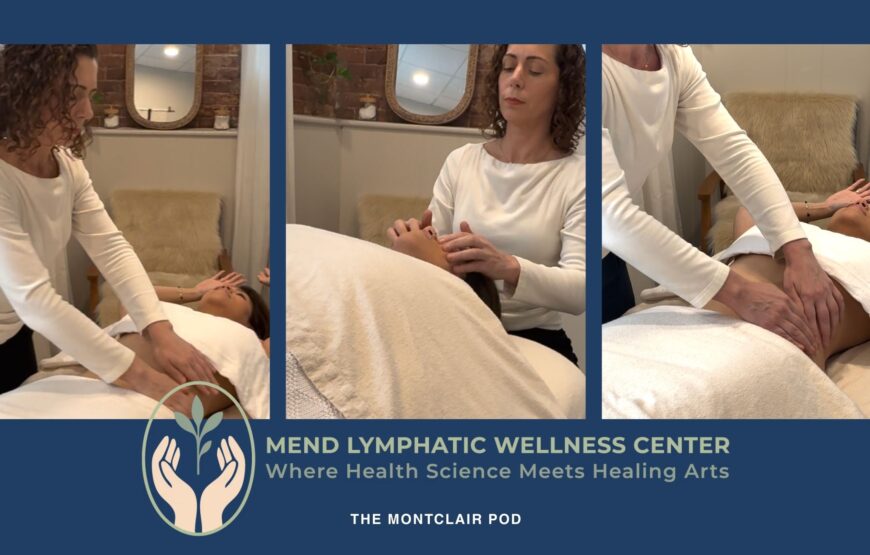
At Mend, Ambrose practices the classical Vodder technique, developed in Europe nearly a century ago and is still considered the gold standard for lymphatic treatment worldwide. The Vodder technique is a specialized form of manual lymphatic drainage developed in the 1930s by Danish physiotherapist Emil Vodder. It uses light, rhythmic hand movements to stimulate the flow of lymph fluid through the body, helping reduce swelling and support immune function. Unlike traditional massage, the technique focuses on the skin and superficial lymph vessels rather than deeper muscle tissue. It is commonly used to manage conditions such as lymphedema and to promote recovery after surgery. Practitioners are trained to follow specific sequences that encourage proper drainage pathways while avoiding excessive pressure.
A Gentle Technique With Serious Applications
Ambrose’s work focuses on manual lymphatic drainage, a technique developed in Europe nearly a century ago and widely regarded as the gold standard for supporting lymphatic function.
Unlike deep tissue massage, the treatment is remarkably gentle.
“I think of it as smoothing out the wrinkles on a blanket,” Ambrose says.
The goal is not force, but flow—helping the body move fluid more efficiently and restore balance in a system that operates quietly, until it doesn’t.
A Clinical Approach to WellnesS
Ambrose did not arrive at this work through a traditional spa background. She brings a clinical lens, holding dual licenses as a physical therapist assistant and massage therapist, and is among a small number of providers in New Jersey certified to treat the head and neck.
The distinction matters.
Many of her clients are not simply seeking relaxation. They are recovering from surgery, navigating cancer treatment, or managing chronic conditions that require a more informed, medically grounded approach.
Where Women’s Health Comes Into Focus
Increasingly, however, Ambrose is seeing a different kind of patient: women in transition.
From those trying to conceive to those navigating postpartum recovery—and especially those in perimenopause and menopause—her practice has become a quiet hub for women dealing with the physical effects of hormonal change.
“As we age and our hormones shift, it can disrupt our fluid dynamics,” she explains. “That’s when people start to feel tight, swollen, or fatigued.”
For many, lymphatic drainage offers relief in ways they hadn’t previously considered.
What Happens After You’re ‘Cleared’
Beyond the physical treatment, Ambrose sees her work as filling a gap in the healthcare system.
“A lot of women are discharged and told they’re fine,” she says. “But they don’t feel fine. There’s no ongoing support.”
Mend was designed to be something different—a “third space” that exists between the clinical environment of a doctor’s office and the demands of everyday life. A place where healing can continue, even after formal care has ended.
Relief You Can Feel—Sometimes Immediately
Clients often describe the results in unexpected ways. Some report feeling lighter, calmer, even transformed after a session.
Others notice more immediate, practical changes.
“I’ve had clients call me the ‘poop whisperer,’” Ambrose says with a laugh. “It brings me joy.”
The comment, while lighthearted, speaks to a broader truth: when the lymphatic system begins to function more efficiently, the effects can ripple throughout the body.
A Different Kind of Care in Montclair
In a town where wellness trends often blend seamlessly with everyday life, Mend occupies a unique niche—rooted in science, but responsive to needs that are often dismissed or misunderstood.
And in a building once dedicated to transporting people into the city, the work continues.
Only now, the focus is inward—helping bodies move, circulate, and, in some cases, finally feel at ease.