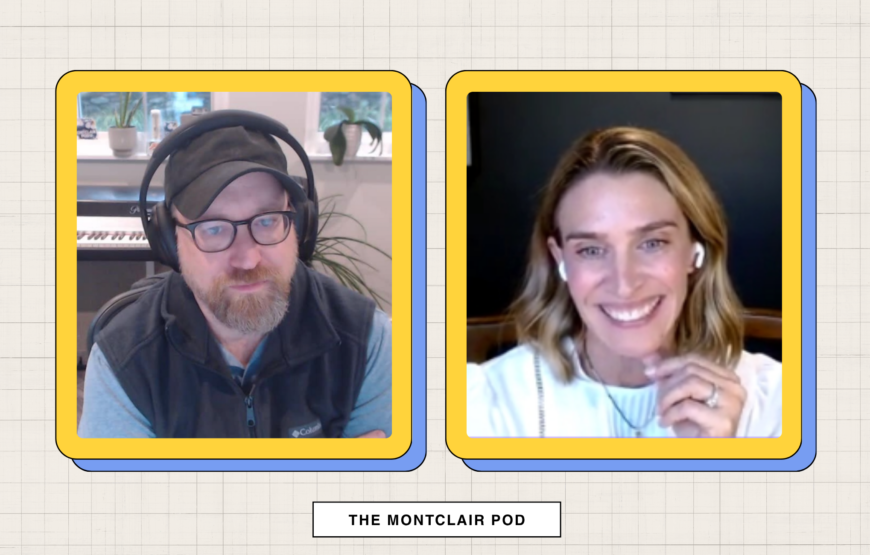
One of the most honest and grounding conversations we’ve had on the podcast was with psychotherapist Maris Pasquale Doran, who doesn’t just work with people in the “sandwich generation”, she’s lived it herself. With years of experience as a clinician and firsthand experience navigating her father’s illness and passing, Pasquale Doran brings a perspective that is both deeply professional and profoundly personal and offers insight that is especially helpful for anyone confronting the realities of aging, caregiving, and end-of-life planning.
“You’re carrying so much angst and weight, and often the person you love most is the one who feels it,” she reflects. What she shares goes beyond logistics and policy, diving into what this phase of life truly feels like; the stress, the grief, and the quiet, everyday challenges of caring for aging parents while raising children.
🎧 If you or a loved one are living (and aging) in Montclair, these are conversations worth having now, not later. Listen to the full conversation below with Maris, Senator Andy Kim, and other local aging experts.
What It Means to Be “Stuck in the Middle”
At its core, the “sandwich generation” is exactly what it sounds like. “It’s being caught between two generations,” Pasquale Doran explains. “You have aging parents, and you have your own children, and you’re right in the middle, often caretaking across both.”
Simple in definition, but in practice, it’s anything but. Because this isn’t just about time management or logistics. It’s emotional, financial, and, for many people, completely uncharted territory. You’re showing up for your kids, often at critical stages of their lives, while also navigating the slow and sometimes sudden decline of your parents. And layered on top of that is the reality of right now. Healthcare is more expensive and more complicated than ever. Job security feels shakier. The assumption that each generation will do better than the last is no longer a given. And many people are hitting this phase of life without a clear roadmap, financially or emotionally.
As Pasquale Doran puts it, a lot of people aren’t just overwhelmed, they’re unprepared. And in many cases, these conversations aren’t even happening until families are already in crisis. Which is exactly what makes them so important to start now.
Living in Constant “Fight or Flight”
When we asked about the real burden of being in the sandwich generation, Pasquale Doran didn’t hesitate. For many people, she said, it feels like living in a constant state of “fight or flight.” She describes it in almost primal terms. Like stepping out of a cave, hearing something rustle, and immediately your brain is on high alert, scanning for danger. That response is hardwired, and in this case, it’s not misplaced.
“Aging and losing a parent is a real threat,” she explains. “We’re not making that up.” The problem is, everything else doesn’t stop. Work responsibilities don’t ease up. Kids still need you. Bills still come. Life keeps moving, even as something deeply destabilizing is unfolding in the background, or sometimes right in front of you. And it’s not always a single moment of crisis. Often, it’s the slow, everyday decline that quietly reshapes everything, without ever announcing itself as the “big” moment that demands attention.
At the same time, many parents are watching their own kids move toward independence. Middle school turns into high school, and suddenly you’re no longer directing their lives, you’re watching from the sidelines. They’re forming their own identities, leaning more on peers, and slowly pulling away in the way they’re supposed to. Which is where the emotional collision happens. You’re trying to hold onto the final years of having your kids fully under your roof, while also being pulled toward a parent who increasingly needs more from you. One chapter is closing while another is unraveling, and both demand your attention in completely different ways.
It’s not just stressful. It’s disorienting. As Pasquale Doran puts it, many people are doing their best to show up in every role, parent, child, partner, professional, but underneath it all, their nervous system is constantly activated. And learning how to regulate that, she says, isn’t a luxury. It’s essential.
The Impact on Couples and Caregiver Burden
The sandwich generation isn’t just stressful for individuals – it can strain relationships too. Pasquale Doran points out that couples often experience this phase very differently, depending on temperament, past roles, and who is taking on the bulk of caregiving responsibilities. “This road is wildly bumpy,” Pasquale Doran says. “There’s no way to smooth the pavement. The best thing couples can do is recognize how deeply uncomfortable this phase is, and honor that in each other. That builds a ton of strength.”
She also notes that old family dynamics often resurface. Many people slip back into roles they thought they had outgrown, both in their marriages and within the family of origin. Historically, women take on the larger share of caregiving, not just for children but also for parents and even spouses. This creates what the literature calls a caregiver burden—a combination of time, responsibility, and mental load.
“The mental load is enormous,” Pasquale Doran explains. “It’s not just showing up physically. It’s keeping track of appointments, medications, symptoms with constantly changing information. Suddenly, you become a nurse, a scheduler, an advocate. It’s a full-time job.”
Couples who communicate openly about this burden, share responsibilities, and acknowledge the weight each person carries tend to navigate it more successfully. But for many, it’s an intense, ongoing challenge. One that requires awareness, patience, and a lot of compassion for each other.
Navigating the Healthcare System and Staying Regulated
One of the biggest stressors for the sandwich generation, Pasquale Doran explains, is the reality of navigating healthcare. Especially when a parent requires being moved between multiple facilities or states. Even high-functioning families with resources often find themselves feeling like they suddenly need a crash course in oncology, medications, or facility protocols.
“The only person who is truly in charge of your healthcare is you,” Pasquale Doran says. “And if you can’t advocate for yourself, or don’t have someone next of kin who can, it can be overwhelming and terrifying.” Mike shares a personal example: even after verifying his father’s medications with a skilled nursing facility, errors persisted for weeks, adding enormous stress. Pasquale Doran notes that this isn’t unique. Healthcare can feel fragmented, expensive, and unpredictable, layering more anxiety onto an already full plate of responsibilities. That’s where nervous system regulation comes in. Pasquale Doran emphasizes the importance of learning to respond instead of react. “We are carrying so much angst, weight, anxiety, and stress,” she says. “And often, the people we love most end up being the recipients of that tension.”
Tools for Managing Stress and Guilt
Small, deliberate actions including breath work, stepping outside for a few minutes, short bursts of exercise, or even a cold splash of water on the face can help reset the nervous system in real time. It’s not an instant cure, but neuroscience shows it helps us engage more thoughtfully with the chaos around us, rather than letting it control our interactions and relationships. For families balancing caregiving, work, and parenting, these moments of regulation are critical. They don’t remove the challenges, but they give caregivers a chance to show up fully, without the emotional volatility that burnout often brings.
Even with strategies like exercise, meditation, or breathwork, Pasquale Doran emphasizes that caregivers will still feel anger, stress, and frustration. The goal isn’t to eliminate the emotion, but it’s to help respond rather than react. That subtle shift can prevent the spirals of shame and guilt that often follow, especially when juggling multiple responsibilities. “Being able to be responsive helps us communicate better and removes that cycle that most of us get into,” she explains.
Medication can also be a helpful tool. While Pasquale Doran doesn’t prescribe, she strongly supports consulting a physician when anxiety or depression becomes overwhelming. “Think of it like a knee injury,” she says. “You use a brace to support your strength while you do physical therapy. Medication can often be one tool to help manage while the world is on fire and while you’re implementing all the other systems.”
Time, however, is always scarce. Many caregivers are in the midst of ongoing crises, with little room for their own self-care. Add to that family dynamics like siblings living far away, divided responsibilities, and all the guilt that comes with feeling like you’re never doing enough. It’s no wonder that so many feel the emotional load is crushing.
Pasquale Doran reminds us that these feelings are universal. Whether it’s worrying about seeing a parent enough, handling sibling relationships, or anticipating your own future, guilt and anxiety are part of the landscape for the sandwich generation.
And for those with children about to launch into adulthood, the timing only intensifies the emotional stakes. One moment you’re fully guiding and supporting your child, and the next, they’re stepping out into the world just as your parents’ needs are demanding more attention. It’s a complicated, emotional balancing act and learning to manage it is as much about mindset and communication as it is about logistics.
Building Community and Practicing Mindfulness
Beyond therapy and self-care strategies, Pasquale Doran is in the process of launching a new online support group designed specifically for midlife mothers navigating the sandwich generation. The group will provide a space to connect, share experiences, and address the often taboo feelings that come with watching both children and parents age simultaneously.
“Many people feel isolated,” Pasquale Doran explains. “You might be at a party and everyone asks how you are, and you can’t just say the truth—you’re not good. That guilt and isolation can be heavy. This group is about breaking that silence, sharing nervous system regulation tools, and exploring identity as it shifts during these stages of life.”
Mindfulness, she notes, is a key part of the program, but it doesn’t have to mean formal meditation. “Mindfulness is being present in the moment,” she says. “You can do it in the shower, when brushing your teeth, even while walking. It’s about noticing your experience, the sensations, the moment you’re in. It trains your brain to be aware, which helps regulate your nervous system and reduce stress in daily life.”
Small practices like this, combined with supportive communities and professional guidance, can help caregivers manage the emotional, mental, and logistical load of the sandwich generation. They don’t remove the challenges, but they make them more navigable, providing tools to respond thoughtfully rather than react impulsively.
For those balancing aging parents, launching children, and their own lives, Pasquale Doran says the takeaway is clear: you are not alone, and support is available if you seek it.