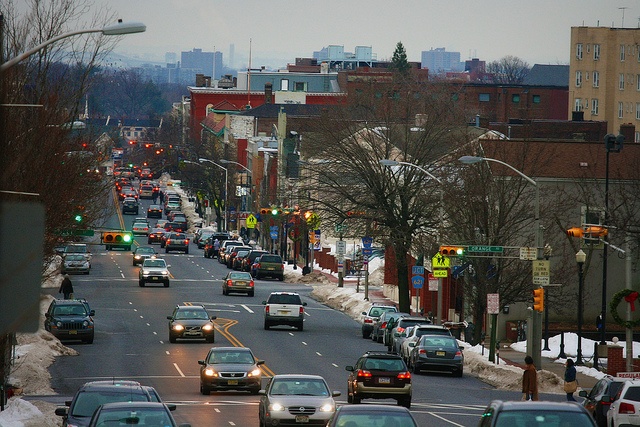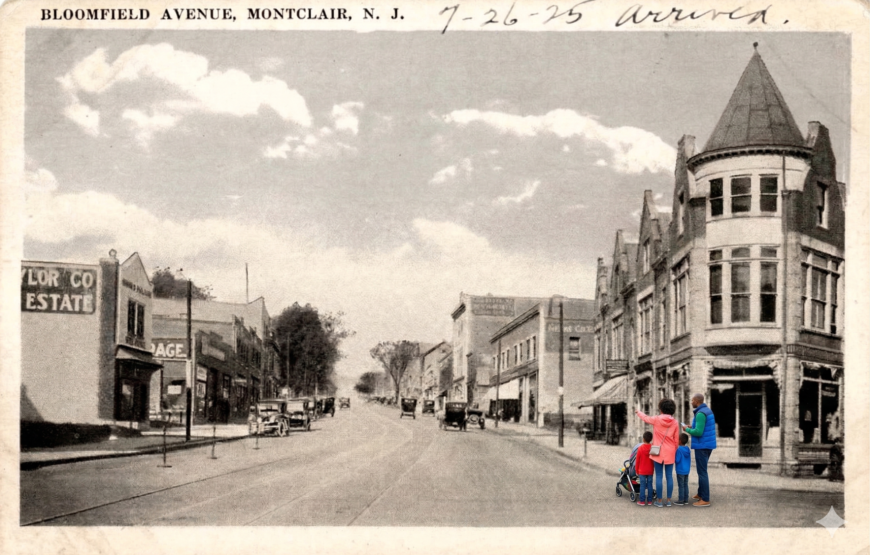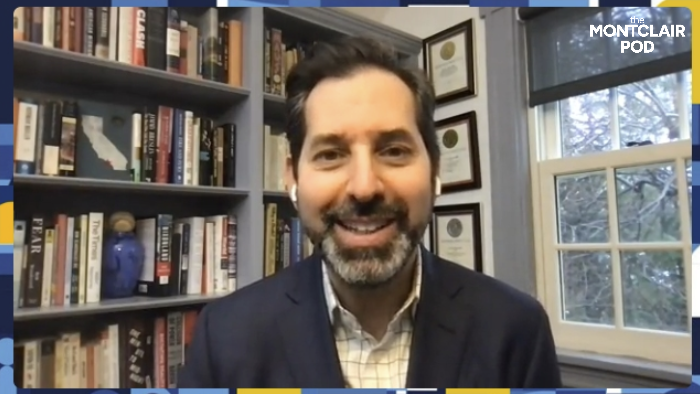
Montclair, known for its tree-lined streets and vibrant downtown, has long been considered a safe town, but some intersections tell a different story. David Folkenflik, a longtime resident and NPR reporter, began noticing risky driving patterns near his home on both quiet residential streets to the busier corridors of Upper Montclair. Over time, the traffic danger became painfully personal when in 2023, his 83-year-old mother was struck and killed at a busy intersections in Montclair.
In the months that followed, the longtime journalist began asking difficult questions about traffic safety, infrastructure, and accountability in Montclair. His story highlights how a series of warnings, a devastating loss, and a community’s response intersect with the town’s broader push to make its streets safer for everyone.
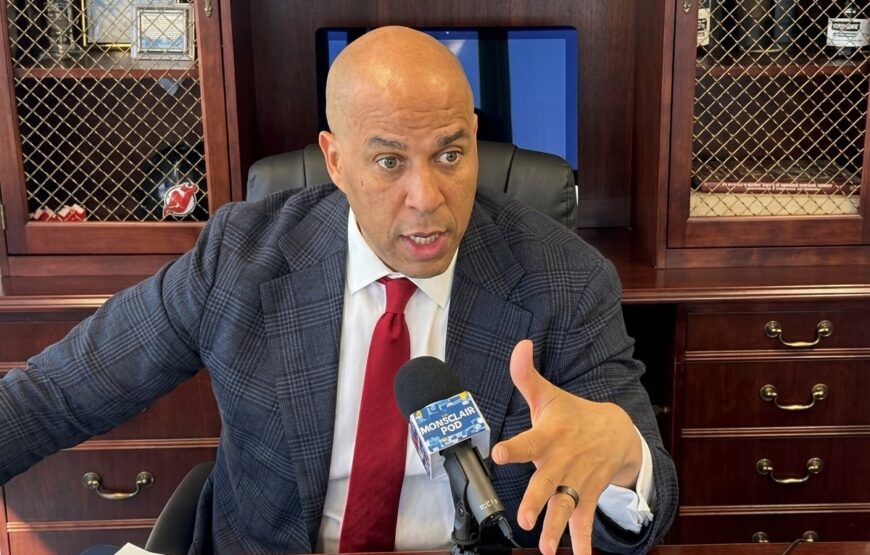
This week on the Montclair Pod, we discuss traffic safety and the practical changes, some simple and low-cost, that could make Montclair’s streets safer for everyone. Listen to the full episode below.
A Problem Waiting to Happen
Folkenflik said he began noticing troubling driving patterns at intersections near his home and across Montclair’s downtown areas. Over time, the consequences became hard to ignore. “You just saw cars smack into each other,” he said. One of the biggest problems, he said, involves risky left turns at intersections. “I’ve never seen a thing where people come to the four-way stop. And when the light turns green, they expect to be able to turn left ahead of incoming traffic and if incoming traffic is not graciously allowing the guy turning left on the other side to go, that guy will then try to speed ahead of you.” Folkenflik said this type of maneuver creates serious risks not only for drivers but also for pedestrians.
The danger became especially clear when crashes began reaching his property. “Twice, cars ended up on my property through accidents. One slammed into my front lawn, another struck our trees. There was nothing but blind luck that no pedestrians were on the sidewalk at the time.” Those incidents prompted him to contact town officials, but each conversation often felt like starting over. He had documented his concerns through emails and phone calls, yet even after reaching out multiple times, officials kept saying a study would be needed and warned it could take a long time.
Despite his repeated efforts, Folkenflik said the concerns never received sustained attention. “I’m sure people were of goodwill and overwhelmed or what have you, but it did not get the attention that it needed,” he said. “I felt that calling five times about something as a homeowner in good faith, documenting things, sharing them, doing my best to flag things wasn’t getting anywhere.”
Tragedy Strikes Despite Warnings
The danger became painfully personal in October 2023, when his 83-year-old mother was struck and killed at a busy Montclair intersection. Folkenflik was coaching his youngest child’s recreational sports team and was not home when his 83-year-old mother, who had recently moved in from California, went out to meet a friend for lunch. “It turned out mom had been struck by a truck. You’re talking about 12:15 in the afternoon on a beautiful sunny fall day without a cloud obscuring any of the sunlight,” Folkenflik said. “A large pickup truck that he used to haul trees in his tree hauling business, slammed into her going about 17, 18, 19 miles an hour. And she died almost instantaneously.” Folkenflik acknowledged, “the people there did a wonderful job of trying to be with her if there was any chance of protecting her, just giving her dignity in her last moments.” He said the police response was immediate and compassionate. “In the afternoon that it happened, police were incredibly responsive, thoughtful and sensitive and offered me numbers of people to talk to at the department to follow up in that moment,” Folkenflik said.
In the days and months that followed, Folkenflik said he met with the police chief, the deputy chief and the acting town manager to discuss the intersection’s shortcomings. “I think there’s an acknowledgement that the town, the department, the collective, whoever takes responsibility for the welfare of the citizens of Montclair and those passing through failed,” he said. Folkenflik said outdated infrastructure and a lack of pedestrian signals contributed to the danger. “The intersection was not wired properly enough to be able to give people enough time to cross the streets. There were no flashing symbols as to when you could walk or not walk, which are cues for pedestrians and for motorists, as well as everybody else who passes. There’s no delay. There are all these things they put into place.”
After years of delays, the Montclair Township released a study where they reported 28 serious collisions at that very same Belleuve Avenue & Park Street intersection over a three year period. In response, Montclair recently upgraded the busy intersection, and the changes have made a noticeable difference in safety. “It works a lot better now. I think it’s much safer. It’s probably one of the safer intersections of that degree of traffic that we have,” said Folkenflik. Still, he said the process revealed frustrations with how local safety concerns are handled. “I don’t want to pine over the sense of outrage and anger I felt and feel about the blitheness with which my concerns were handled, but there is a responsiveness quotient that we deserve as citizens.”
Vision Zero: Turning Commitment into Results
While Montclair is often considered a safe town, some intersections tell a different story. Folkenflik called the town’s adoption of Vision Zero a critical step, but stressed that the initiative must produce real, measurable results. “The Vision Zero thing was a welcome thing to come along. Under previous and current leadership it has been embraced, but they needs to commit to it. Some of those things will be expensive and some of them won’t be expensive at all, but will require that attention be paid,” he said.
He explained that improving traffic safety requires more than careful driving; the streets themselves must be structured to encourage safer behavior. Folkenflik pointed to an intersection at Valley Road and Bellevue Avenue, where county upgrades added a four-way signal and better pedestrian signs. “I was promised as a demonstration that there would be at least a seven to eight second delay. The delay however adds a couple of minutes, maybe two minutes, on to a trip across town, but in the aggregate, you’re going to make things much safer.”
He also highlighted small, cost-effective solutions like painted murals at intersections that can slow traffic and enhance pedestrian safety.
Civic Engagement and Accountability
Montclair has the resources to address traffic safety concerns, and residents expect meaningful action. “This is not an impoverished community here. This is a community with resources. We need to be able to show that we can get things done,” Folkenflik said. Residents often grow frustrated when warnings go unheeded. “It makes people feel like there’s no accountability ultimately,” he added.
He also reflected on the town’s part-time, often unpaid governance structure, where leaders frequently hold multiple roles. “We live in interesting times. These are the circumstances and the structures. Montclair deserves to have governance that is reflective of the vibrance of the life, the diversity, the texture of the people who live here and the community that it serves. And it also is incumbent on us all to take a part in that, to make sure it happens and not sort of check out,” he said.
Folkenflik highlighted practical interventions under Vision Zero, from murals to lane markers, that help drivers slow down. He cited examples in Glenridge, New Jersey, and Long Beach, California, where low-cost measures such as painted intersections or reflective pylons narrow lanes to make drivers more cautious. “They don’t look exactly like the pylons at the end zone of the NFL. They’re hard plastic with reflectors. They require you to turn a little wide to the right on a turn and narrow the lane, which makes you slow down,” he said.
“There are times where four-way stops are put in and people still blow through it. We have to find ways to take care of the people who take care of us and the people who rely on the town for their lives.”
At its core, Folkenflik said the effort to make Montclair’s streets safer reflects a larger sense of civic responsibility shaped by his own life. “I’m a reporter and it’s great to report on big things with national implications, but the story of something specific and seemingly personal speaks to the quality of life for us all here,” he said. He also reflected on his mother, Vivian Folkenflik, a respected liberal arts professor who emphasized critical thinking and mentoring. “She gave me the bumper sticker as a kid: think globally, act locally. It’s how I’ve often reported, but here we are,” he said.