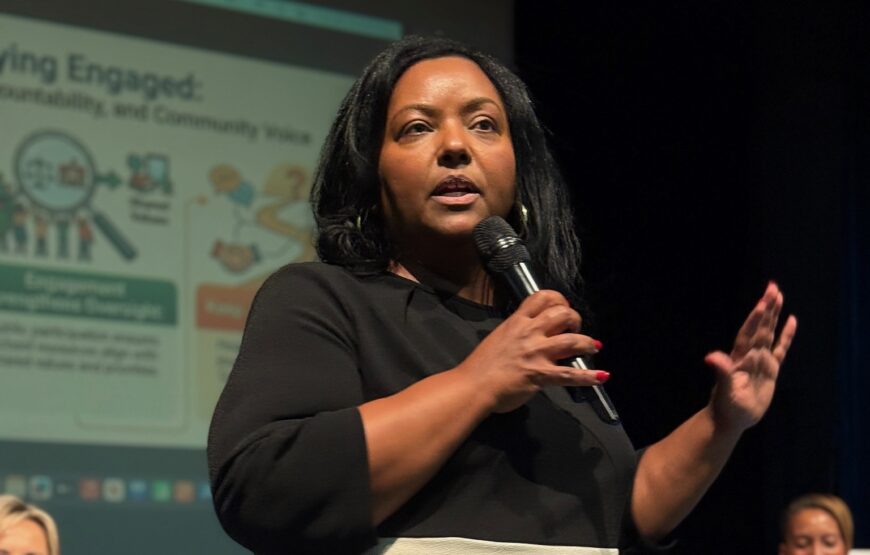
Following last week’s episode on the origins of the magnet system, we pick up the conversation at a critical crossroads—one where values, finances, and state oversight collide. We attend the latest school budget town hall, where Superintendent Ruth B. Turner and district leaders lay out the long road ahead, explain the district’s structural deficit, and address growing anxiety around the possibility of a state monitor and what that would mean for local control.
We break down what we heard at the meeting, including important clarifications about the revised ballot questions, the limits of state aid, and why a “no” vote does not guarantee relief. We also reflect on powerful public comments from parents—particularly around transportation—and why buses are not a luxury, but a cornerstone of access and inclusion in Montclair.a
A recording of the town hall is available here, and the presentation shared during the meeting can be found here .
To help put the moment in national context, we’re joined by Richard Kahlenberg, one of the country’s leading experts on school integration, education policy, and economic inequality. We talk candidly about why magnet schools emerged in the first place, what decades of research actually show about integration and student outcomes, and the real risks districts face when the cost of integration comes under pressure.
We also share a preview of our upcoming conversation with outgoing New Jersey Attorney General Matt Platkin, where we ask the questions many parents and taxpayers are wondering about: when does financial mismanagement cross into fraud, who has the authority to investigate, and what accountability can realistically look like.
Plus, we round out the episode with local news—from new statewide cellphone restrictions in schools, to staffing shakeups at Town Hall, to a one-year look back at the school closure that shocked the community.
RSVP for free for tonight’s event with Farnoosh and Hannah Cole, author of Taxes for Humans, at Lackawanna Plaza.