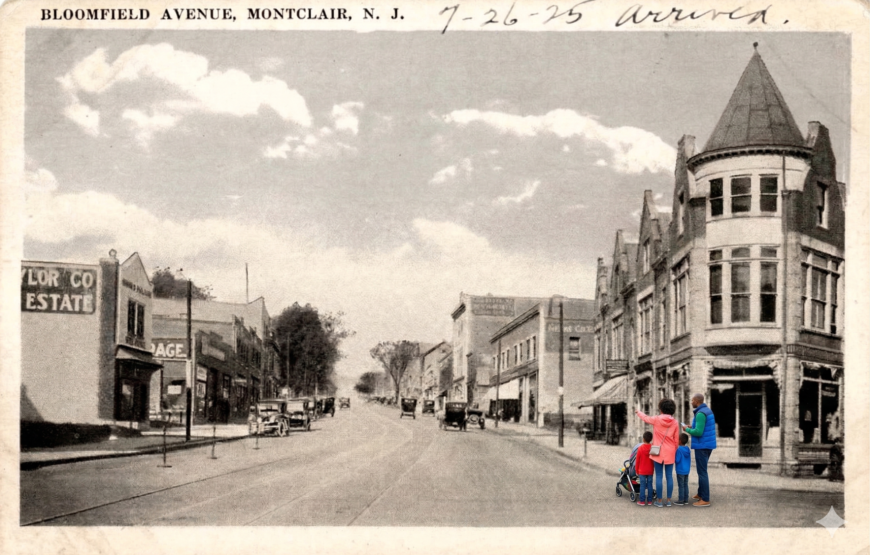
Montclair has a secret history as New Jersey’s cannabis trailblazer, but today it’s a “cannabis desert” with no open recreational shops. This episode of the Montclair Pod digs into why, despite resident demand and millions in potential tax revenue, it’s tricky to open a legal dispensary.
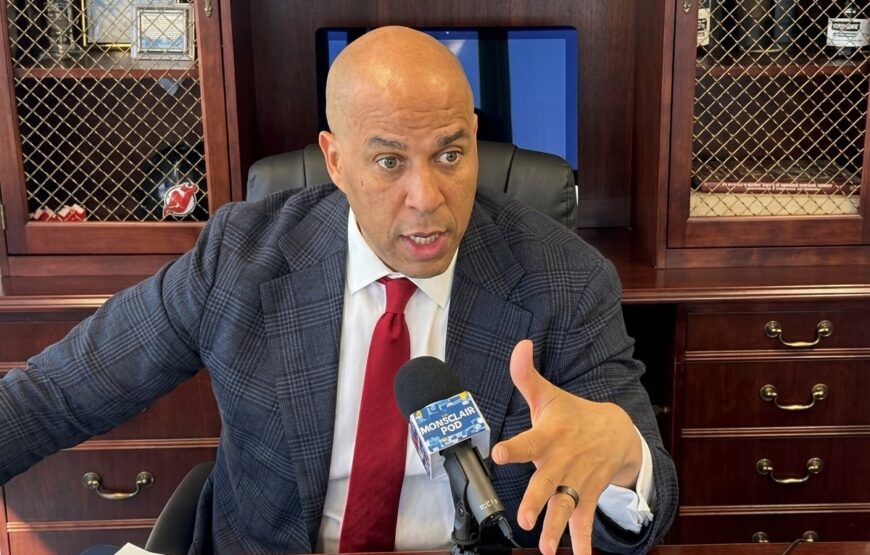
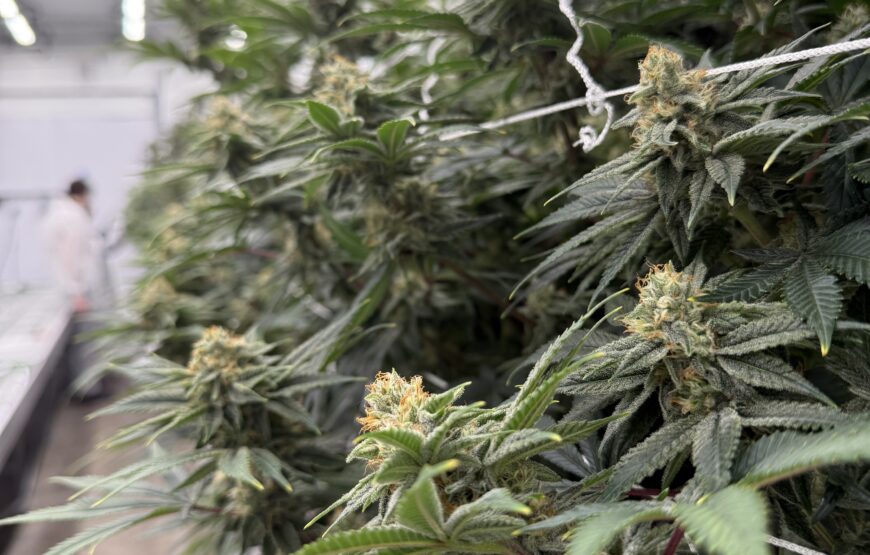
We interview Jake Kushner from Kush Connections who is opening a retail dispensary on Bloomfield Avenue and Andrew Marshall from Genuine Grow who owns the town’s first and only cultivation facility on Pine Street, to learn more about the history and the future of Cannabis in Montclair.
the path to NJ legalization
New Jersey’s path to cannabis legalization began with an extremely restrictive medical program launched in 2010, where only more severe conditions initially qualified. In time, the state expanded who could qualify, adding conditions like anxiety in 2018, marking a move toward wider access for more New Jersey residents. At the time, a quick ten-minute telehealth visit and about $200 were enough to secure a medical cannabis card.
In 2020, New Jersey voted to allow for recreational legalization retail stores to open and in 2022, Montclair played a key role in New Jersey’s cannabis history as the home of Greenleaf Compassion Center, the state’s first licensed dispensary founded by a former Newark police officer. Greenleaf later sold to multi-state operator Ascend, who ran the cannabis shop from 2021 to 2024. This marked the closing of the first and last recreational cannabis distributer.
Marshall shared his thoughts on why Ascend didn’t work out in Montclair; “Their vault was too small from what I heard. They didn’t have enough POS stations that they wanted. And everyone knows parking was a nightmare over there. So, for in and out traffic, it was horrible because no one wants to park on Bloomfield Ave,” he said, illustrating how practical considerations like space, traffic, and accessibility can drive major business decisions in the cannabis industry.
why opening a dispensary takes so long?
Even though the retail sale of recreational cannabis is legal, the process of starting up a legal dispensary is time consuming and requires jump through many regulatory hoops. New Jersey’s cannabis businesses must satisfy both state regulators and local officials, since the Cannabis Regulatory Commission (CRC) issues licenses while municipalities control zoning and have the power to approve or block operations. Although many towns initially opted out after legalization, Montclair opted in early, and local councils must still pass a resolution of support before the state grants a final annual license.
Business owners face a costly catch-22: they must secure a leased storefront to get local approval, yet they cannot open until the state issues their license, leaving them paying rent on an empty space for months or even longer. This financial strain has contributed to a local “cannabis desert,” where Montclair currently has no operating dispensary.
Kushner explained how local zoning rules designate where dispensaries can operate. “They gave us like five blocks of Bloomfield Ave and like one block of Valley Road,” he said, highlighting how the municipality shapes the landscape for cannabis businesses.
Kushner also pointed out that launching a cannabis business in New Jersey comes with plenty of challenges. “There’s a lot of red tape and hurdles that you got to go through in order to make one of these businesses work. But, it can be very rewarding once you get to the point where you’re operating. But definitely a lot of obstacles,” he said. Another major hurdle, he explained, is raising capital. Because cannabis is still federally illegal, most banks won’t issue loans, forcing entrepreneurs to get creative with funding which becomes a barrier that prevents many licensed businesses from ever opening.
Marshall highlighted just how long and complicated the process can be to open a legal cannabis business in New Jersey from the cultivation perspective. “We had to apply for the license from the township. We had to go through the planning board and zoning process. And then I had to go back to the state and actually get the full license back from the state. And then we had to get funding. We had to do construction. Now we’re finally growing legally three and a half years later,” he said, showing that even after securing approvals, patience and persistence are essential.
dispensary income projections
Right now, anyone in Montclair who wants legal cannabis has to drive to nearby towns like Bloomfield or Clifton, and that means Montclair is missing out on major tax revenue. State data shows just how big the opportunity is: according to a 2025 report from analytics firm Headset, the average New Jersey dispensary brings in more than $17,000 a day, or about $6.2 million a year. And that is only the middle of the pack. High performers can reach far more. Ascend’s Rochelle Park location, for example, reported it was tracking toward more than $50 million in annual revenue in 2023.
Even conservative estimates show how much money a Montclair shop could generate.
- A quieter, lower volume retailer might pull in around $3 to $4 million a year.
- A typical store would likely land near the state average of $6.2 million a year.
- And a well positioned, high traffic dispensary on Bloomfield Avenue could reasonably clear anywhere from $15 million to $25 million annually.
local tax incentives
If Montclair’s three approved dispensaries perform at just the state average, they would generate more than $370,000 a year in local tax revenue. But if they operate on the higher end of the spectrum, that number could climb past $1.5 million annually—money the town is currently missing out on, along with the $15,000 application and renewal fees each business must pay. That kind of revenue could easily help patch potholes or soften school budget shortfalls.
THE FUTURE OF CANNABIS IN MONTCLAIR
So who’s positioned to finally bring dispensaries back to Montclair? There are three approved three retail licenses that will be heading to town in 2026: Night Owl, planned for the former DLV Lounge site on Bloomfield Avenue; Citrus NJ, proposed for 586 Bloomfield Avenue; and Kush Connection, the one with the neon sign in the old luxury car dealership building across from the MC Hotel.
Kushner emphasized the resilience of the cannabis market. “It’s recession proof and it’s also like if there’s a war or something, the great thing about cannabis is people are always going to want to feel better,” he said, pointing to the consistent demand that makes the industry attractive despite its challenges.